


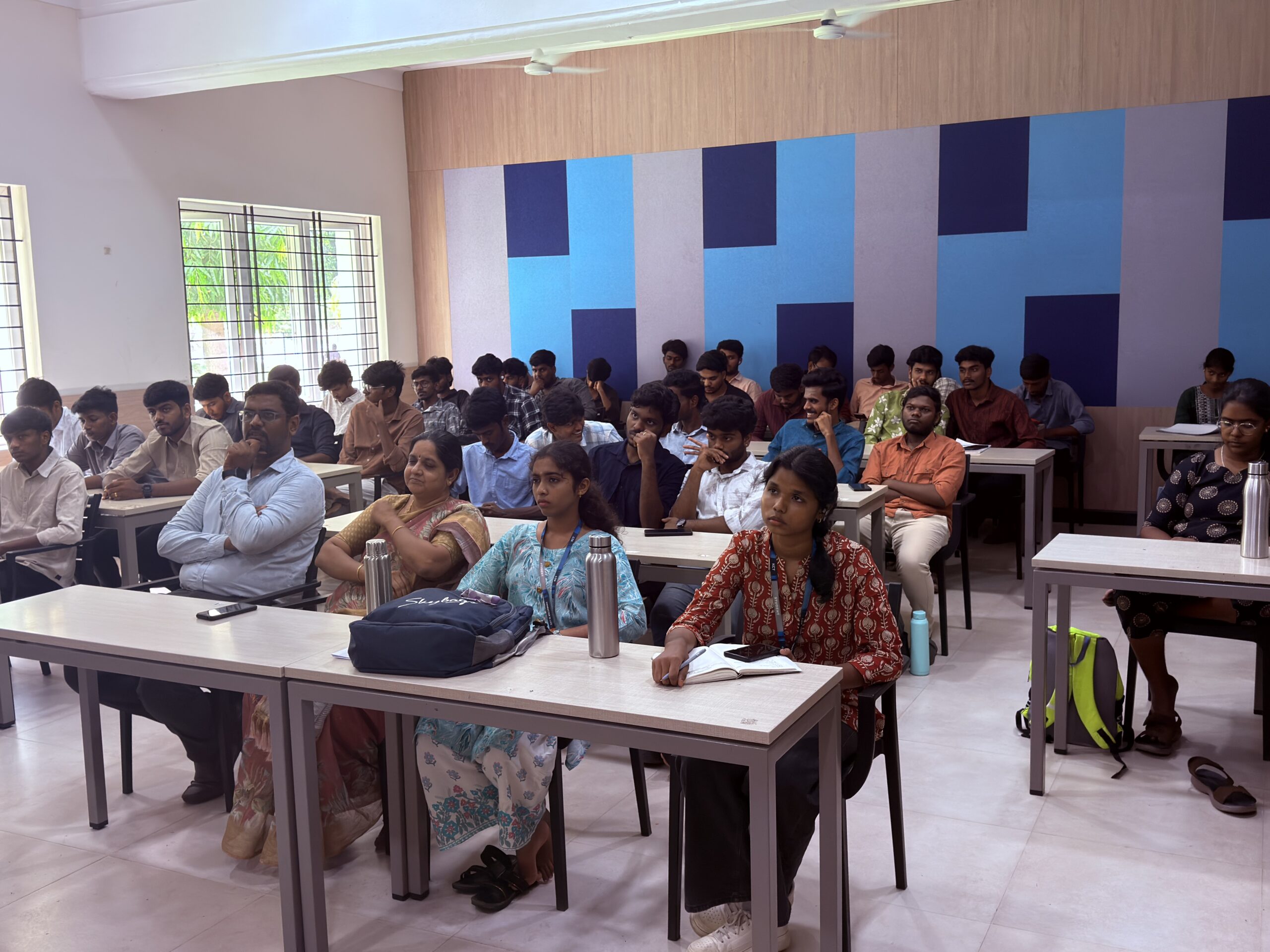
Kumaraguru College of Technology [KCT] as part of American Association of Textile Chemists and Colorists’ (AATCC) Student Chapter inauguration, organised a technical event to interact with students on the applications of cotton and nonwovens in technical textiles, informs Dr Seshadri Ramkumar.
Interest is growing in developing advanced textile products in a sustainable fashion.
On August 13, 2026, Coimbatore, India-based Kumaraguru College of Technology [KCT] as part of American Association of Textile Chemists and Colorists’ (AATCC) Student Chapter inauguration, organised a technical event to interact with students on the applications of cotton and nonwovens in technical textiles. I was delighted to address students and faculty via online although it was late night for me in Lubbock, Texas on August 12, 2026.
While welcoming students and other participants, Dr M Saravanan, Head, Department of Textile Technology, KCT mentioned that the student chapter is first of its kind at KCT, which emphasises the need for international collaboration when India is implementing free trade agreements with many countries around the world, like United Kingdom.
In talking about the need for sustainable technical textiles, Professor A. Pavendhan, Associate Dean-Textile Cluster at KCT stated, “In textiles sector, for growth, it is vitally important to develop sustainable technical textiles using cotton and other fibers such as milkweed and innovative nonwoven technologies.” The KCT-AATCC collaborative platform will play a pivotal role in strengthening global academic network, empowering our engineering students with advanced industry exposure and practical research insights.
The technical presentation involved live demonstration of industrial products from cotton as well as showcasing nonwoven wipes. Such efforts are aimed at not only enhancing technical knowledge but also to increase interest in textiles among high school and college students. The presentation began with an understanding on sustainability which is built on four legs [4Es]: 1) Environmental; 2) Energy; 3) Economic; 4) Elemental (Material and Manufacturing). The highlight of the talk was that there are opportunities for textiles in developing smart materials, defense textiles and high-tech medical textiles. A good example is University-Industry collaboration that led to the commercialization of a wipe developed at Texas Tech University. USA-based First Line Technology diversified the application of FiberTect wipe beyond decontamination to be part of a standard dry wipe procedure including wiping toxic particles like Fentanyl.
Students were able to visualize oil absorption by raw cotton-based needlepunched fabric. A welcoming aspect of the presentation was interaction by students on technical aspects like what is the oil absorption value of different cottons. An interesting question has been how Kapok is different from cotton in absorption. These interactions show that undergraduate students are interested in developing functional textiles from alternative fibers.
Leading organizations like USA-based Cotton Incorporated and National Cotton Council are involved in efforts to find alternative applications for cotton and more importantly engage with Gen Z and new consumers. The event focused on such efforts by addressing students in a textile manufacturing region in India.
Commenting on the program, Professor Pavendhan stated, “The live virtual demonstration of cotton-oil absorbency, alongside the showcasing of developed prototypes like cotton face masks, brought abstract concepts into clear focus. It was inspiring to see how established, scalable technologies—specifically needlepunching—can be repurposed to engineer innovative, value-added products for filtration, healthcare, and protective textiles.”
The talk endeavoured to reach out to young students who are from textile belt in India such as Coimbatore and kindled interest among them to think about technical textiles from cotton wherever applicable. In addition, the talk highlighted the different supportive schemes AATCC can offer to enhance their research experience, and global engagement.
Highlighting the collaboration with AATCC, Professor M. Saravan pointed out, “KCT-AATCC collaboration focuses on professional engagement through technical learning and promoting innovation among students. The event embodied this vision by providing our final-year students with direct exposure to global research standards, bridging foundational academia with cutting-edge industry practices.”
The event can be viewed at:
About the author:
Dr Seshadri Ramkumar is a Professor, Nonwovens & Advanced Materials Laboratory in Texas Tech University, Lubbock, TX, USA.