


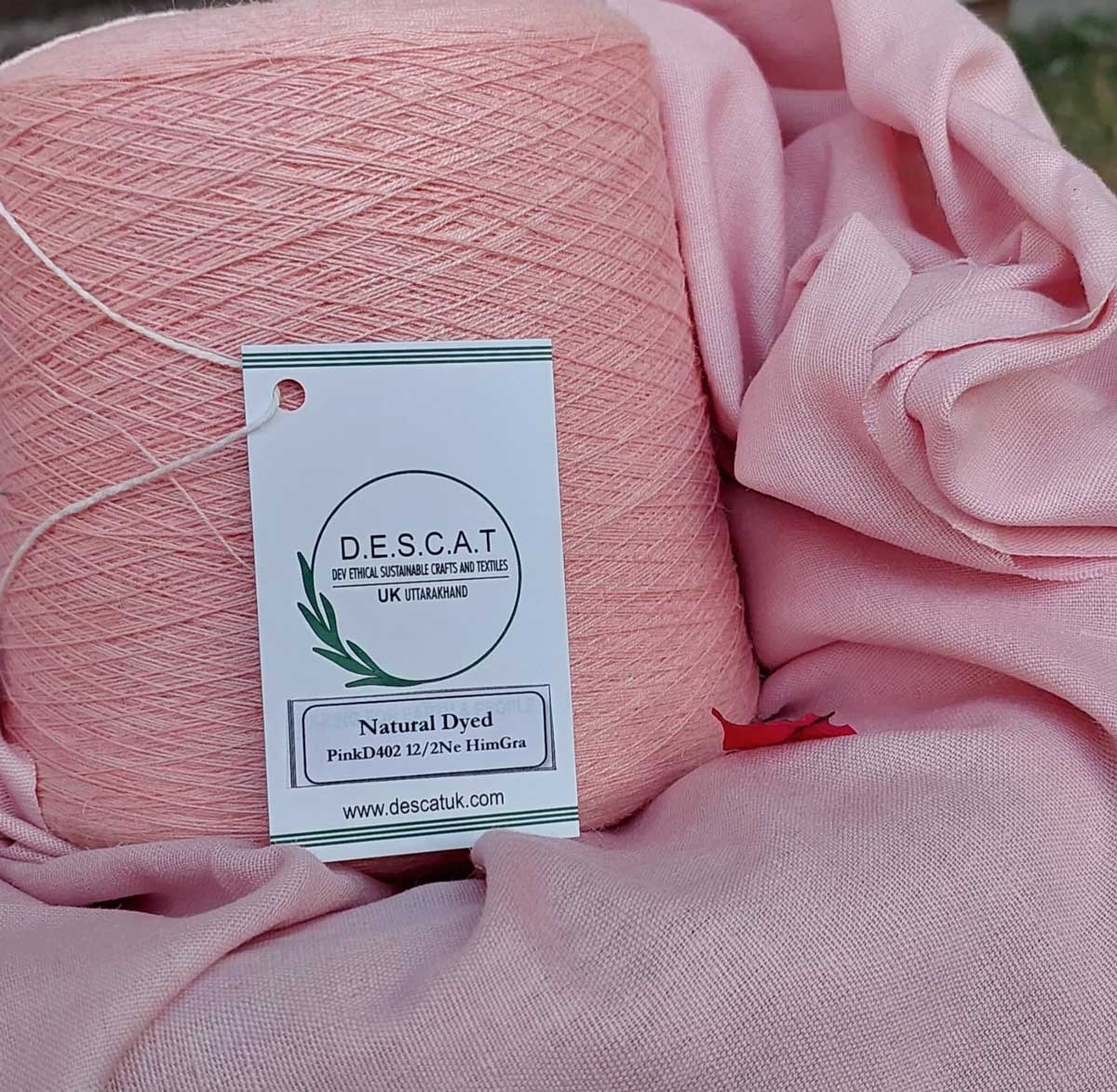
HimGra is redefining sustainable textiles by transforming a neglected Himalayan plant into a premium natural fibre. Divya Shetty explores how natural fibres are reshaping the textile industry.
HimGra is not just a textile innovation venture—it is the outcome of a deeply personal journey shaped by lived experiences, professional expertise, and a long-standing commitment to rural development. KD Sharma, Founder, HimGra, emerged from the intersection of sustainability, science, and social impact, with a mission to create a natural fibre value chain that can transform livelihoods in Uttarakhand while offering the textile industry a powerful alternative to conventional fibres.
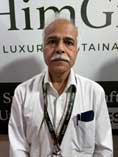
KD Sharma, Founder, HimGra
Sharma, a textile professor by profession, has spent nearly 35 years in the textile sector. However, the idea for HimGra was not born in a laboratory or a boardroom. It originated in the villages of Uttarakhand, where he spent his childhood and observed a pattern that continues to define many hill communities even today—women, children, and elderly people forming the majority of the population in villages because working men migrate to other states in search of employment.
This reality remained with him throughout his career. Years later, while serving as Director of Industries in the Government of Uttarakhand, Sharma returned to the same region and found that the socio-economic situation had not changed significantly. The absence of sustainable livelihood opportunities for rural women remained a persistent issue.
The turning point came unexpectedly during one of his village engagements. While waiting for women to arrive for a meeting, Sharma noticed a plant growing unused in a corner. When he asked about it, the women dismissed it, saying, “Sir, this is a useless plant. We only use it as cattle feed.”
That single remark became the spark that initiated a research-driven journey. Sharma began investigating whether this neglected plant could be transformed into something valuable. Drawing upon his extensive professional network and decades of textile experience, he initiated exploratory research and approached IIT Mandi, where the concept was selected for further development.
Through the incubation and research process, the plant revealed a surprising and highly valuable characteristic: it possessed a hollow fibre structure. This discovery proved to be a breakthrough, as hollow fibres are known for exceptional textile properties including high water-holding capacity, strong insulation, and a natural lustre. Among natural fibres, only silk is known to share a similar hollow structure, positioning HimGra’s fibre as a strong contender in the premium sustainable textile category.
With research funding support, Sharma and his team advanced toward converting the fibre into yarn and fabric. HimGra’s innovation also received recognition at Fashion for Good, where the company gained mentorship and strategic support to strengthen its product development pathway.
Thus, HimGra began its journey—built on the dual objective of delivering sustainable textile solutions while creating livelihood opportunities for rural women in Uttarakhand.
Overcoming the early challenges
Like most startups working in deep-tech or sustainable material innovation, HimGra faced challenges at every stage of its early development. Sharma’s experience reflects the reality that innovation is rarely limited to product development—it must also address human mobilisation, supply chain readiness, and market scalability.
The first major hurdle was mobilising and convincing rural women to participate in fibre collection. Once that stage was addressed, the next challenge involved persuading textile processing units and companies to work with a fibre that was new, unconventional, and unfamiliar. The fibre required experimentation, processing adaptation, and technical validation, which many players were initially hesitant to invest in.
However, as HimGra began engaging with brands, another critical issue emerged: volume and scalability. Brands often show strong interest in sustainable innovations, but adoption depends heavily on the ability to supply consistent quantities at predictable pricing.
To address this barrier, Sharma and HimGra adopted a two-pronged strategy. The first was to engage with designers and premium brands—segments where innovation and differentiation are valued, and where price elasticity allows early-stage sustainable fibres to enter the market. The second strategy was to build a cultivation model to ensure long-term volume generation.
Since the crop can grow on barren land, it does not compete with agricultural land used for food production. This became a strategic advantage, as it allowed HimGra to position the crop as an environmentally and economically viable alternative livelihood solution.
Sharma presented the model at the Hima Innovation Challenge, where HimGra received funding support. With that support, the company initiated cultivation across 9 hectares. As the crop is perennial, it continued growing without the need for frequent replantation, enabling HimGra to expand cultivation further. Today, the cultivated area has reached 18 hectares.
This cultivation-driven volume generation is not just a production strategy—it is also a tool for long-term economic stability. By increasing supply, HimGra is working toward achieving better pricing, stronger brand adoption, and improved income opportunities for the communities involved.
Challenging the cost myth
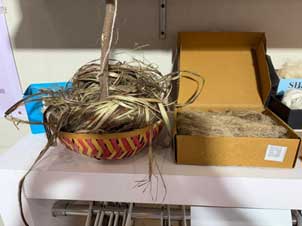
One of the most persistent misconceptions in the sustainable textile space is that organic and eco-friendly products are always expensive. HimGra’s approach highlights that the cost of sustainable materials is not inherently high—it is often linked to volume, scale, and value chain maturity.
At its current stage, HimGra fibre costs around 15–20 per cent more than linen. However, Sharma points out that linen pricing itself is not stable because much of it is imported from Europe and is subject to global uncertainties, fluctuating trade conditions, and supply disruptions.
HimGra’s internal calculations indicate that once the company reaches a production capacity of two tonnes per day, the fibre cost could become comparable to imported fibres. The central requirement is scaling cultivation and strengthening the value chain.
However, Sharma emphasises that scaling cannot be achieved by a startup alone. HimGra requires the participation of the broader textile ecosystem—including brands, businesses, and industry stakeholders—to invest in cultivation and volume expansion.
This is why HimGra is building a complete value chain model, focusing on traceability from farm to fashion. Such a model allows brands to directly support the ecosystem and simultaneously meet growing global demand for transparency in sourcing and production.
Expansion into home textiles
Home textiles represent a natural expansion for HimGra, as the fibre’s characteristics align well with the needs of this category. Insulation, softness, and moisture retention are highly valued in home products such as bedding, throws, upholstery, and furnishing fabrics.
To develop products in this segment, HimGra collaborated with Moon Spinners, a textile mill based in Vijayawada. Together, they developed a home textile line crafted by women involved in the ecosystem. This line was named the “Harvest Collection.”
The collection was showcased and received a strong market response, validating the fibre’s potential not only as an apparel material but also as a home textile solution.
The home textile category also offers an advantage in terms of scale, as demand volumes can be larger and product development can expand across multiple sub-categories—from furnishing to decorative textiles—providing HimGra with greater commercial reach.
Sustainable livelihood vision
HimGra’s vision extends beyond becoming a globally recognised fibre brand. Sharma’s long-term goal is rooted in impact—ensuring that the communities involved in cultivation, collection, and weaving gain lasting benefits.
The women engaged in the ecosystem are among the most vulnerable to climate change and the disruptions caused by fast fashion. In hill regions, the consequences of environmental imbalance—landslides, unpredictable seasons, and unstable livelihoods—are deeply felt.
At the same time, traditional weaving communities and handloom ecosystems are struggling for survival. Many looms are becoming inactive, and craft-based textile heritage is gradually weakening.
HimGra aims to address these challenges through a sustainable livelihood ecosystem. The company is working toward connecting rural producers and artisans with designers and global brands, ensuring that traditional textile culture is not only preserved but strengthened through contemporary demand and responsible sourcing.
In the next 5 to 10 years, Sharma envisions HimGra as a platform that supports women farmers, revitalises craft communities, and builds a globally relevant sustainable fibre supply chain originating from the Himalayas.
Rather than positioning success solely as commercial growth, HimGra’s vision is based on creating a model where sustainability, innovation, and community development grow together—offering a blueprint for how the future of textiles can be both profitable and responsible.