Close Menu
Indian Textile Journal
  • Home
  • Textile Machinery
    • Allied Equipment and Accessories
    • Automation
    • Dyeing, Processing & Finishing
    • Knitting
    • Printing
    • Spinning
    • Weaving
  • Tech Textiles
  • Sustainability
  • Resources
    • Trade Fair
    • Events
    • Videos
  • Interview & Opinion
  • Subscribe Now
  • Advertise
  • Digital
  • Apparels & Garments
  • Fibres & Raw Materials
  • Home Textiles
  • Industry Update
Facebook X (Twitter) YouTube LinkedIn
Indian Textile Journal
Epson
  • Home
  • Textile Machinery
    • Allied Equipment and Accessories
    • Automation
    • Dyeing, Processing & Finishing
    • Knitting
    • Printing
    • Spinning
    • Weaving
  • Tech Textiles
  • Sustainability
  • Resources
    • Trade Fair
    • Events
    • Videos
  • Interview & Opinion
  • Subscribe Now
  • Advertise
  • Digital
  • Apparels & Garments
  • Fibres & Raw Materials
  • Home Textiles
  • Industry Update
Indian Textile Journal
Home » Zero raw silk import by 2020: CSB
Industry Update

Zero raw silk import by 2020: CSB

By December 23, 20161 Min Read
Share Facebook Twitter LinkedIn WhatsApp Copy Link
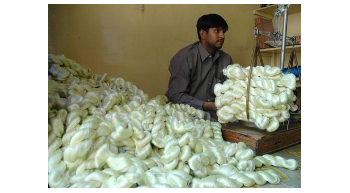
India is marching towards self-reliance in raw silk and plans to bring down imports to zero level by 2020, according to K M Hanumantharayappa, Chairman, Central Silk Board (CSB). With consistent supply of raw silk of high quality in adequate quantities and increased production of bivoltine silk, India will be able to attain self-sufficiency in silk.
CSB has been making concerted efforts and is developing new technologies for quality cocoon production and its conversion into silk yarn of global standards. Currently, the silk production is around 28,000 tons of which 10,000 tons account for crossbreed Mulberry variety.
There is a gap between silk production and demand. Besides shortage of skilled manpower is forcing imports. To bring this to an end, the Central Silk Technological Research Institute (CSTRI) under funding from the board has developed indigenous Automatic Reeling Machine (ARM) and it will be supplied to reelers from next year. The Board is launching its second Centre of Excellence (CoE) at its headquarters in Bengaluru.
Previous ArticleAEPC presents Export Awards
Next Article Chinese firm plans to invest in USA

Related Posts

Vipul Organics starts operations at greenfield facility in Sayakha, Gujarat

August 24, 2026

“The value of handloom lies precisely in the time, skill and human effort that goes into making it.”

August 21, 2026

Vipul Organics Q1 FY27 PAT rises 99.75% as revenue grows 38.44%

August 18, 2026
Recent Posts
  • Rohleder advances warp preparation with Karl Mayer’s Multi-Matic
  • Developing long-term solutions for Indian traditional textiles
  • Fashion meets function: How performance-driven fabrics are influencing buying decisions
  • Dr Alan Hudd: Implementing our technology protects mills from tightening regulatory penalties
  • Why efficiency will define the next phase of India’s textile growth
  • Maspar introduces ‘Serene Haven’: Redefining soft living through sustainable, quiet luxury
  • Vipul Organics starts operations at greenfield facility in Sayakha, Gujarat
  • “The value of handloom lies precisely in the time, skill and human effort that goes into making it.”
Facebook X (Twitter) YouTube LinkedIn
  • About us
  • Contact us
  • Privacy Policy
  • Terms and Conditions

SISTER PUBLICATIONS

Construction World Equipment India Industrial Product Finder Infrastructure Today

© 2026 Indian Textile Journal. All Rights Reserved.

Type above and press Enter to search. Press Esc to cancel.