

SIMA Texfair 2026 – Advancing textile innovation and industry collaboration
The 2026 edition served as a dynamic platform for industry collaboration, innovation exchange and future-focused growth.
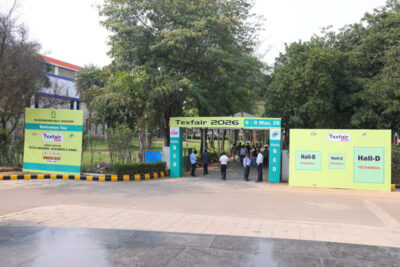
The Southern India Mills’ Association (SIMA), Coimbatore organized Texfair 2026, 15th of its kind. The largest Expo for Textile Machinery, Accessories, Spares and other supporting services during March 6-9 at CODISSIA Trade Fair Complex, Coimbatore.
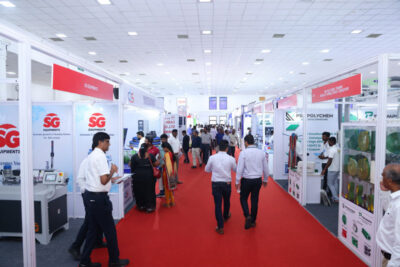
Texfair 2026 has once again reinforced the importance of technological innovation and collaboration in strengthening India’s textile industry. The four-day Exhibition brought together Manufacturers, Suppliers and Industry experts from across India and abroad to showcase the latest developments in Textile Machinery, Accessories and Spares. The event featured over 240 exhibitors and 258 stalls, with participants from Coimbatore, Mumbai, Ahmedabad, Bangalore, etc., including several exhibitors from Countries such as Switzerland, Germany, Italy, China, Egypt, etc.
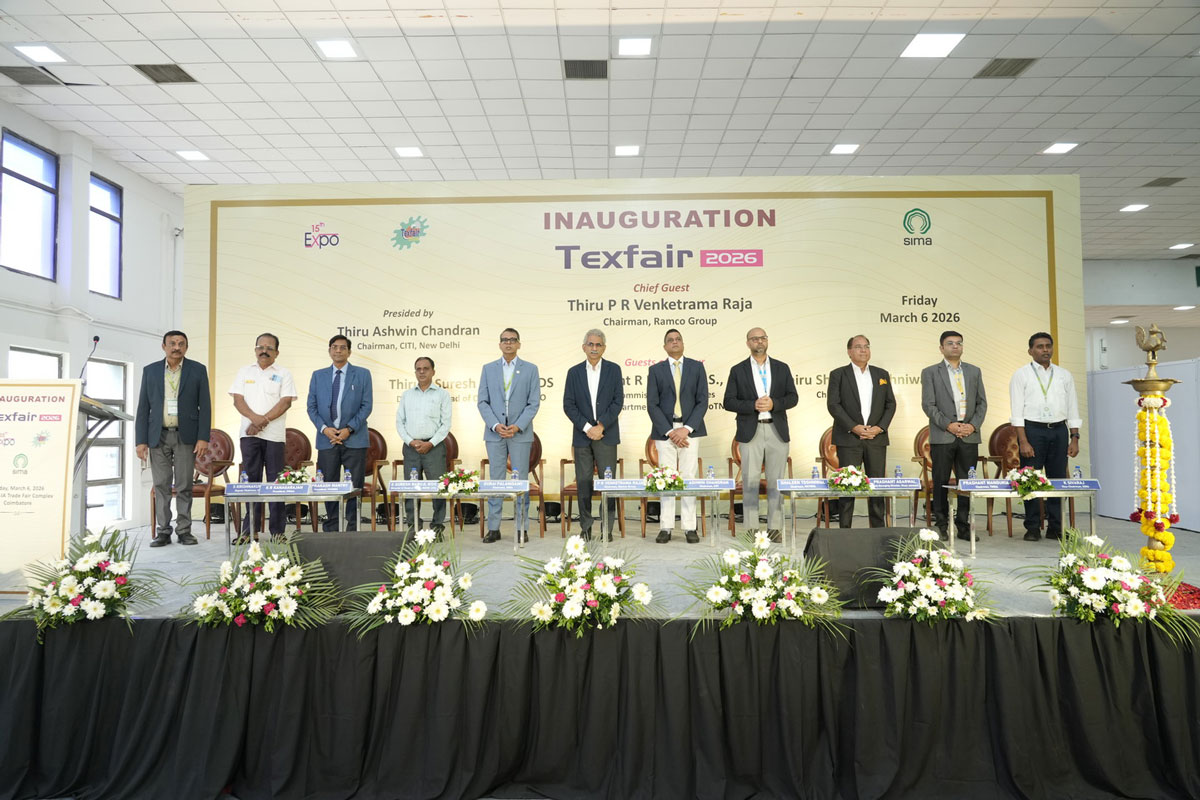
At the inaugural function of Texfair 2026 held on 6th March 2026, Durai Palanisamy, Chairman, SIMA, delivered the welcome address. The function was inaugurated by Chief Guest P R Venketrama Raja, Chairman, Ramco Group, and presided over by Ashwin Chandran, Chairman, Confederation of Indian Textile Industry (CITI).
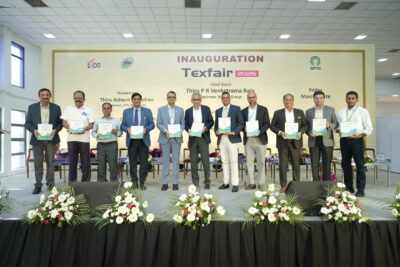
The Guests of Honour included Suresh Babuji, IEDS, Head of Office, MSME Development and Facilitation Office; Shaleen Toshniwal, Chairman, Man-Made and Technical Textile Export Promotion Council (MATEXIL); K R Kanagarajan, President, ITMAA; Omprakash Mantry, President, ITAMMA; and Prashant Mangukia, Chairman, TMMA.
The inaugural function also featured the keynote address by Prashant Agarwal, Joint Managing Director, Wazir Advisors. Chairman of Ramco Group, P R Venketrama Raja in his inaugural address, said the four-day event is important as it showcases technologies that are available to bring down costs. In the last few years, the textile mills have been facing demand volatility, margin pressure and a constant need for investments. In the coming decade, the mills should focus on speed & responsiveness, quality & consistency, sustainable production, operation efficiency & productivity.
The Indian textile and apparel sector is targeting $350 Billion business size by 2030 and this needs sustained investments in advanced machinery, digitization, automation and smart manufacturing systems said Chandran. Sustainability is a defining trend, it is essential for long term business and involves costs. Businesses should look at it as long term investment he added.
Shaleen Toshniwal, Chairman, Manmade and Technical Textile Export Promotion Council, said that 70 per cent of global textile business is in the manmade fibre sector as it gives comfort to the users and performance. Technical textiles that uses MMF also have multiple applications. The technical textile industry in India is expected to grow to $50 Billion by 2030. The textile industry should focus on modernisation, innovation and sustainability, he said.
Prashant Agarwal, Joint Managing Director, Wazir Advisors, spoke on the benefits of the India’s Free Trade Agreements with the UK and the European Union. He concretely said that the buyers in these Countries are looking at alternatives to China and the Indian companies should offer scale and automation.
S Suresh Babuji, IEDS, Director of MSME Development and Facilitation Office, informed that the Central Government is setting up a tool Centre in Coimbatore on 14 acres, will be operational in two years and that it would promote the MSMEs in the engineering sector.
Summing up the needs of the industry in the current scenario, SIMA Chairman stated that the Central Government should remove the import duty on cotton and reinstate the Remission of Duties and Taxes. S Krishnakumar, Deputy Chairman, SIMA, briefed about SIMA Texfair 2026. Presidents of ITMAA, ITAMMA and TMMA offered felicitations. Vice-Chairman K Sivaraj delivered vote of thanks.
Coinciding with Texfair 2026, SIMA organized the SIMA AiTex Summit in the afternoon of 6th March 2026 at the CODISSIA Trade Fair Complex.
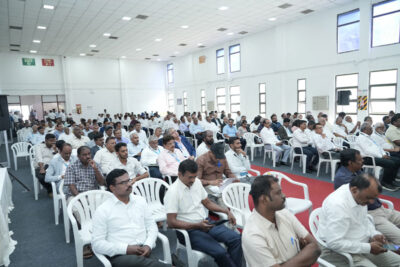
Artificial Intelligence (AI) and automation are rapidly transforming textile manufacturing by improving productivity, enabling the production of high-value products with consistent quality, reducing manual intervention & waste and facilitating predictive maintenance.
SIMA Chairman inaugurated the summit and stated that by leveraging AI, ERP integration, intelligent data extraction and real-time analytics, traditional manual and experience-driven processes can be transformed into structured, data-driven systems.
He further emphasized that the summit highlighted the need for widespread adoption of AI and digital technologies in the textile industry to enhance operational efficiency, strengthen global competitiveness and build a resilient and future-ready manufacturing ecosystem.
The expert sessions at the summit covered several key topics, including Leveraging Data and AI Technology for Overall Excellence, LMW e-Spares ERP Integration and Tracker, centralised ERP-integrated tool that captures forex exposures and maps them against hedge contracts to provide real-time visibility and improved financial risk management. Other sessions focused on Digital and Operational Automation in Textile Mills with EXIM Automation and Trade Compliance, Cotton Testing through HVI and AFIS Data Integration, Dispatch Entry Automation, and practical success stories on transforming spinning production from data to decision-making.
Saravanan Ramanujam, Principal Industry Business Development – Manufacturing at Amazon Web Services, along with Sreevigneshwaran, Manager – Presales at Petrus Technologies, highlighted how data and artificial intelligence can transform the operations of the spinning mills. The speakers explained that modern mills can move beyond intuition-based decision-making to measurable, data-driven performance systems. By leveraging AI and advanced analytics, mills can achieve operational excellence through improved quality control, reduced machine downtime, optimized production processes and better energy management.
Another important operational improvement was presented by Mathan Mohan C S, Head, Spare Parts and Components, Lakshmi Machine Works. He explained the challenges earlier faced by customers while generating spare part quotations through the company’s portal. The previous process required manual login and item selection, which made it time-consuming and prone to human errors.
By integrating the LMW API directly with the customer’s ERP system, the quotation retrieval and sales order creation processes have now been fully automated. This integration significantly enhances efficiency, reduces manual intervention and enables faster procurement of critical spare parts.
Financial risk management was another key topic addressed during the session. Subramanian Sharma, Director at Greenback, demonstrated how organizations can manage foreign exchange exposure more effectively using digital tools. A centralized ERP-integrated platform captures forex exposures and maps them against hedge contracts, enabling real-time visibility and better financial risk management. This approach helps exporters and manufacturers respond proactively to currency fluctuations.
Vaishak, Founder of Leverageaxiom, discussed automation solutions designed specifically for exporters and manufacturers handling EXIM processes. Many organizations still rely on manual Excel tracking, which often leads to missed obligation deadlines, data inconsistencies and scattered documentation. The proposed system fully automates EXIM workflows for users of Advance Authorization (AA), EPCG, RoDTEP and Duty Drawback schemes.
The platform eliminates the limitations of paper-driven systems by addressing common problems such as manual errors, delayed updates and fragmented documentation. Automated bots replace manual workflows by downloading license documents directly from the DGFT website and retrieving Bills of Entry or Shipping Bills from email systems. A Power Apps–based AI document extraction system processes the data and generates interactive dashboards. In addition, Power AI dashboards and automated email alerts provide summaries and timely notifications. With an extraction accuracy of nearly 99 per cent, the system operates with minimal manual intervention.
T Mani, Founder & CEO, Kalpatharu Software, showcased several AI-driven solutions designed specifically for spinning mills. One such innovation is an AI-based Cotton Mix Cost and Quality Predictor, which forecasts key quality parameters such as CV per cent, CSP, and waste percentage even before production begins. This enables mills to evaluate the cost implications and quality outcomes of different cotton mixes in advance.
Another solution presented was the AI-powered Power and Energy Cost Optimizer, which analyzes feeder-level energy consumption data to detect abnormal usage patterns. Based on these insights, the system recommends load optimization strategies, helping mills reduce energy consumption and lower power costs per kilogram of yarn produced.
The session concluded with a strong message – the future of spinning mills lies in the integration of AI, automation and data analytics. By adopting these technologies, mills can achieve greater operational transparency, improved productivity, and stronger financial and process control, paving the way for a more efficient and digitally empowered textile industry.
We thank all the exhibitors for showcasing their products and services, Top Management of the Industry and CEOs of mills for visiting & deputing their technical personnel and also the visitors from various textile clusters across the country for making the Expo yet another success event.
Apart from machinery displays, the fair served as an important networking platform where Manufacturers, Suppliers and Buyers exchanged ideas and explored new business opportunities. With a footfall of around one lakh visitors, the exhibition facilitated knowledge sharing and strengthened collaboration within the textile ecosystem.
