


Textile sector needs to focus on innovations that can lend itself to high-tech start-ups, says Seshadri Ramkumar, Professor, Texas Tech University, USA.
Industry and academia needs to collaborate to deliver useful products.
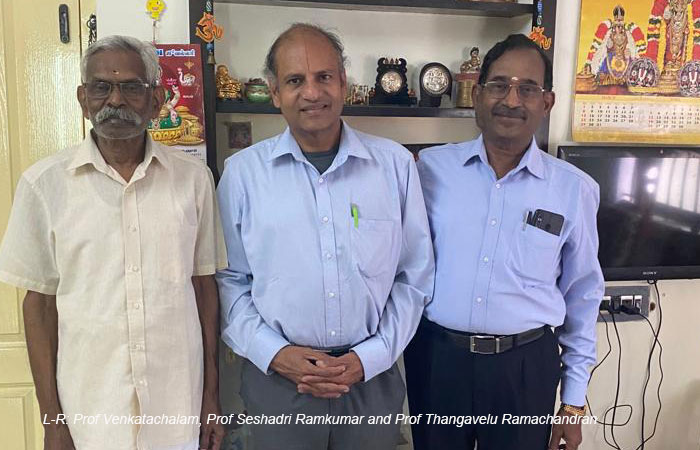
Last week, I had the distinct pleasure of visiting with two senior professors with collective teaching and research experience of over 70 years in the field of textiles and materials science, spending much of their career at Coimbatore-based PSG College of Technology.
As the textile sector is going through a tailspin, it was an opportune time to have tête-à -tête in Coimbatore with such experienced people to seek inputs to grow research in the field of textile materials.
Professor Thangavelu Ramachandran advised to have better handle on raw material situation. Stating that Tamil Nadu state has the largest number of spinning mills in India, it has to depend on other states for cotton and hence the industry has to work with farm level agencies to increase yield and quality. Government can look at supporting infrastructure facilities such as energy enabling cost savings and explore alternate energy usage.
Meaningful research that can help the industry with process improvements and product developments should be the next phase of academic research stated Professor Arunachalam Venkatachalam. Reminiscing how research was not given high priority in academia in 1976, when he joined the profession, he was pleased that research has become important part of academia these days. Now, research should be undertaken to ignite minds to develop ideas that will be of service to the society added Venkatachalam.
Emerging areas such as sustainability should get top attention by the industry according to the professors. Higher education institutions in the STEM field should have entrepreneurial development cells to cultivate “start-up,†mindset among students.
Growth will depend on next generation scholars who can generate jobs rather than depending on jobs. Textile sector needs to focus on innovations that can lend itself to high-tech start-ups.
In addition to focusing on research, students should be equipped with soft skills such as communication and have mindsets to face challenges opined Drs. Ramachandran and Venkatachalam.
Given the current situation in the textile industry, mission-linked research such as alternate fibres, value-added textiles, etc, to take the textile industry to the next phase is the need of the hour.
About the author: Dr. Seshadri Ramkumar, PhD, CText, FTI (UK), FTA (Honorary), TAPPI Fellow (USA) Professor, Nonwovens & Advanced Materials Laboratory , Texas Tech University, Lubbock, TX, USA. E-mail: s.ramkumar@ttu.edu
Website: http://www.tiehh.ttu.edu/sramkumar