

Rise of Smart Mills
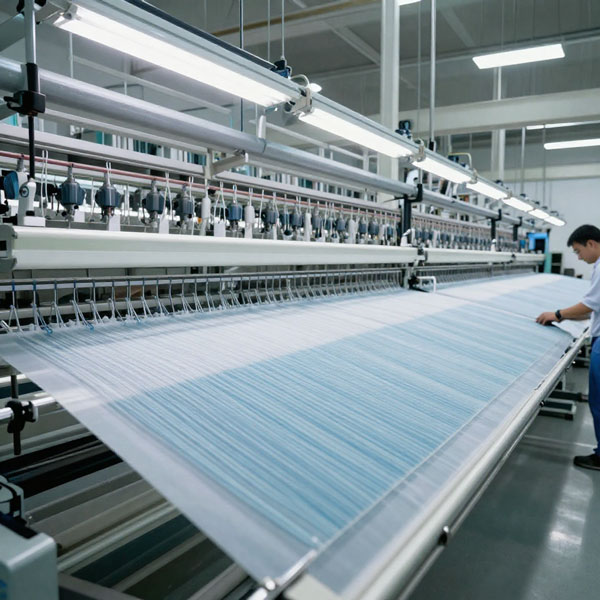
As circular practices gain momentum, innovations such as 3D knitting and 3D printing are transforming production practices. These technologies are limiting energy consumption and waste via more efficient and precise manufacturing processes, says Manoj Kumar Bansal.
Since ancient times, India’s textile sector has been renowned worldwide for cotton garments, handloom, handicrafts and more. Over the decades, the industry has undergone a significant transformation—evolving from a predominantly traditional, craft-driven ecosystem into a modern, technology-enabled and globally integrated manufacturing sector. In FY2024-25, the Indian textile industry was valued at $179 billion. Of this, the domestic market accounted for $142 billion while exports were worth $37 billion.
According to estimates, India contributes 3.9 per cent of all global textile supplies, especially to the EU and other developed markets. As innovation and a sense of sustainability sweep across the globe, in step with these trends, the domestic textile sector is being spurred by smart fabrics and green textiles. With a clear eye on the future, the Government of India is providing strong institutional support for smart fabrics and new-age textiles. This has nudged many private companies and public entities to get actively involved in the research and development of greener production processes and novel materials that meet global demand.
With customers, investors and regulators veering towards sustainable fabrics and circular fashion, green textiles are an attractive alternative. Green textiles are primarily produced via environmentally friendly production techniques. As a major textile-producing nation, India is well-placed to back the universal shift towards green fabrics. Supporting green textiles offers big benefits such as futureproofing India’s textile segment for the coming years while promoting its sustainability mission and the net-zero target for 2070.
Noteworthy institutional schemes
The Government of India must be applauded for various programmes facilitating the shift to green textiles. The Centre and State Governments have been working in unison to make the textile space safe, sustainable and technology driven. Some of the institutional initiatives include the PLI (production-linked incentive) scheme, PM MITRA (PM Mega Integrated Textile Region and Apparel) Textile Parks, National Technical Textile Mission and the QCO Withdrawal (Quality Control Order). Some elaboration of these four schemes is required.
The PLI scheme has an allocation of Rs 106.83 billion to help companies manufacturing man-made fibres and technical textiles. PLI is meant to incentivise firms investing in advanced materials production with modern machinery. Besides helping businesses adopt greener, smarter practices, it aims to create global standards for domestic textile plants while providing employment opportunities to local youth.
Coming to PM MITRA Textile Parks, the programme is meant to develop seven large-scale textile parks across India. Thanks to its outlay of more than Rs 44.45 billion, one remains confident that the project will help create vibrant clusters of textile manufacturing units in select locations. Such parks will allow textile makers to source fibre, manufacture fabrics and produce important textiles within these zones. After completion, each park could generate an investment of approximately Rs 100 billion, both national and international, giving a big fillip to the textile ecosystem and the local economy.
As for the National Technical Textile Mission, this was launched in 2020 with an allocation of more than Rs 14.80 billion. By supporting research, innovation and partnerships between startups in medical textiles, smart fabrics and other areas, it intends to boost India’s contribution in the technical textile realm globally. It is also funding 74-plus textile research labs throughout India to ensure additional investments in smart, functional fabrics.
Besides supporting sustainable, eco-friendly fibres like bamboo, hemp and cotton, it is introducing textile producers to novel manufacturing techniques. These include digital printing, dope dyeing and the use of natural dyes that help in optimising water usage while reducing chemical discharge.
Promoting smart textiles and sustainability
The drive towards sustainability must be seen in the context of India’s aim to make textiles a $350-billion industry by 2030. Of this, exports will account for $100 billion, based on the drive towards decarbonisation and digitalisation, alongside efforts to curb waste in its manufacturing segment. This will strengthen the domestic domain’s competitiveness in global markets and help attract more investments. Propelled by these efforts, textiles will contribute to almost 2 per cent of India’s GDP by 2030, even as it augments the country’s standing in the world market and is projected to generate 35 million domestic jobs.
The textile industry is undergoing a dual transformation as it embraces both clean power and circular materials. By integrating solar and wind energy, manufacturers are successfully reducing their carbon footprints and breaking their reliance on traditional fossil fuels. This shift toward sustainability is further bolstered by the widespread adoption of PET bottle recycling. By transforming plastic waste into recycled polyester, companies are fostering a circular economy that extends the lifecycle of synthetics and mitigates the ecological damage of plastic pollution. Together, these initiatives represent a significant move toward a more resilient and environmentally responsible production model.
Another notable trend is the rising interest in smart textiles. A subset of technical textiles using special man-made materials, smart fabrics are sometimes equipped with electronic sensors or allied devices that have select functions. Smart textiles are used in diverse sectors such as sports, healthcare, defence and agriculture. Some examples include uniforms that can track biometric data and fabrics with temperature control properties. Agricultural nets embedded with UV protection alerts and fabric that can adjust the insulation as per a wearer’s environment are other examples. Typically, such advanced fabrics allow real-time monitoring and analysis by integrating with mobile apps or cloud platforms.
Here, it is imperative to mention that the shift towards sustainability is part of the country’s circular economy drive. This concept is centred on the principle of limiting waste through recycling and upcycling of garments. Sustainable textiles are also promoted through zero-waste manufacturing processes and biodegradable fabrics. Environment-friendly fabrics include viscose, rayon, modal and natural materials such as linen, cotton, wool, hemp and mulberry.
The shift towards safe fabrics
Natural materials remain popular as organic garments made from such sources are both biodegradable and recyclable. Across each stage of the product life cycle, the raw materials, processes and produced goods are comparatively safe both for human beings and the environment.
As circular practices gain momentum, innovations such as 3D knitting and 3D printing are transforming production practices. These technologies are limiting energy consumption and waste via more efficient and precise manufacturing processes. For instance, with precise layering of garments, 3D printing restricts waste. In 3D apparel printing, textile firms are using recycled plastics and advanced materials to boost sustainability. Likewise, as dyeing techniques advance, water usage is limited while hazardous chemicals generally used to colour clothing are avoided.
Since a critical resource such as water is used extensively in textile production, manufacturers are actively embracing sustainable practices that include water conservation and the production of biodegradable textiles. Woven apparel and denim manufacturers in some regions have adopted zero liquid discharge technology that recycles wastewater. Besides, brands are limiting plastic usage and supporting the circular economy by moving towards eco-friendly packaging.
Buoyed by the ongoing trends towards sustainability and circularity, India seems well-placed to emerge as a frontrunner and global hub for smart manufacturing and sustainable textiles well before reaching its goal of Viksit Bharat@2047.
About the author:
Manoj Kumar Bansal is the Chief Transformation Officer & Chief Risk Officer at RSWM Limited.
