


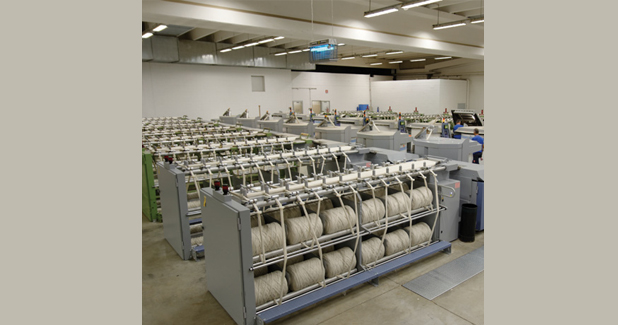
NSC, global specialists in machines for processing long staple fibres such as wool and wool-like fibres, are pleased to welcome their visitors to the forthcoming ITMA on their 500 m² stand and show them new versions of NSC’s core machines. The ERA combing machine in a multi-servomotor drive design. With this new drive, most of the settings will be possible via the main control screen. A wide range of materials have been tested on this new ERA combing machine and results are promising mainly for delicate material which has to be processed in a gentle manner. Also, despite the additional motors, power consumption remains low.
The GC chain gill also benefits from additional axes driven by servomotors which allows more settings on the main control screen. For its FMV vertical rubbing frame, NSC has also developed a multi servomotor drive for the axes. The bobbin build-up also benefits from a servomotor-controlled drive. All these new servomotor drives will allow more precise settings than using standard gearboxes which will enhance textile quality.
Furthermore, these new drives and technology allow recipes to be saved on each machine, data exchange between machines will be possible through a Manufacturing Execution System (MES – Industry 4.0), as is remote access to the machines in case of incidents through an Ethernet connection. All these new technologies on NSC machines follow the global trend towards user-friendly, tool-less machines, with accurate settings via the control screen to enhance textile quality.
The GC chain gill also benefits from additional axes driven by servomotors which allows more settings on the main control screen. For its FMV vertical rubbing frame, NSC has also developed a multi servomotor drive for the axes. The bobbin build-up also benefits from a servomotor-controlled drive. All these new servomotor drives will allow more precise settings than using standard gearboxes which will enhance textile quality.
Furthermore, these new drives and technology allow recipes to be saved on each machine, data exchange between machines will be possible through a Manufacturing Execution System (MES – Industry 4.0), as is remote access to the machines in case of incidents through an Ethernet connection. All these new technologies on NSC machines follow the global trend towards user-friendly, tool-less machines, with accurate settings via the control screen to enhance textile quality.