


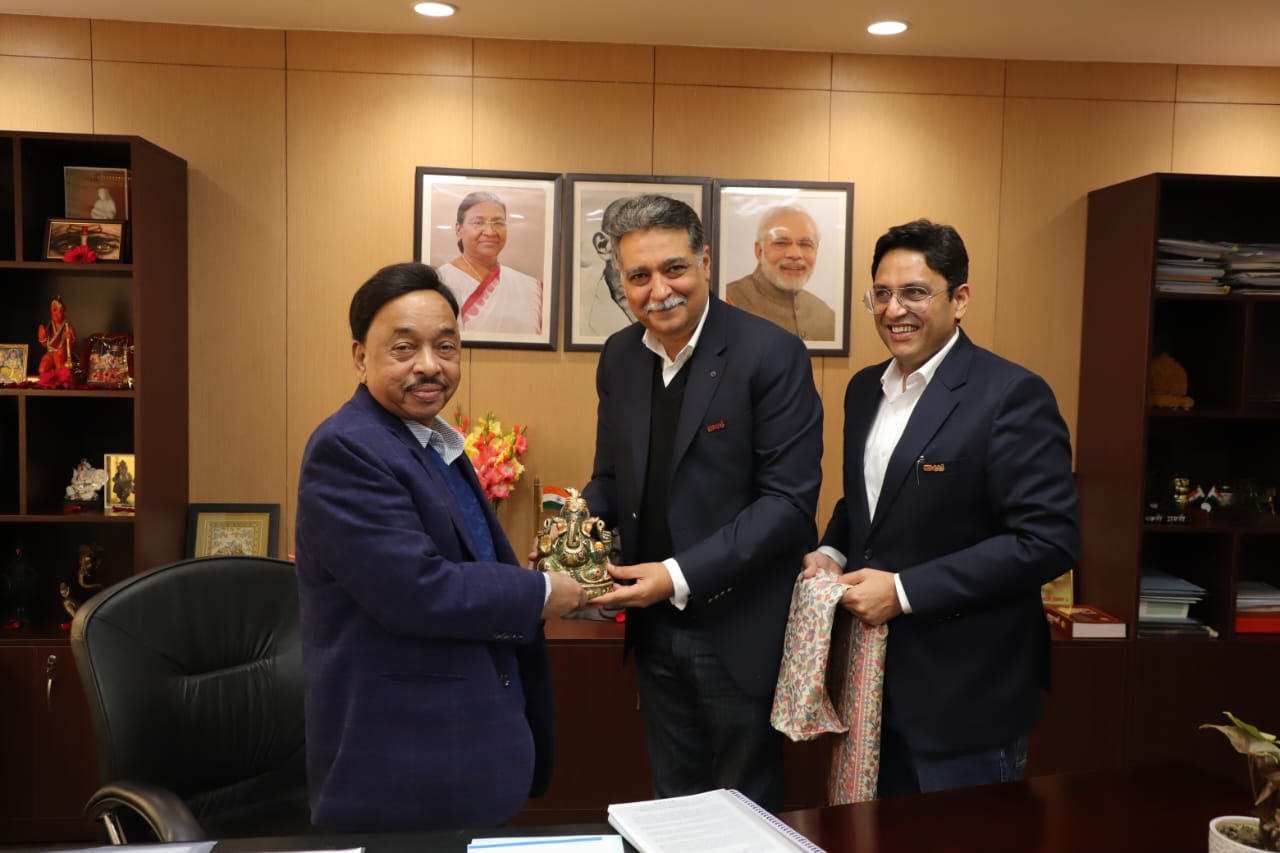
CMAI submits recommendations to Finance Minister.
The Clothing Manufacturers Association of India (CMAI) acknowledges the well-intentioned efforts of the Government of India in introducing the MSME Payment amendment to the Income Tax under Section 43 (b) (h), to address the challenges related to delayed and non-payment faced by the MSME sector.
While the government’s intentions are commendable, the specific dynamics of the Textile Industry, particularly the domestic garment industry, have resulted in significant adverse consequences due to the amendment.
Speaking about the consequences, Rajesh Masand, President, CMAI, said, “The protracted issue of delayed payments within the MSME sector has long hindered its growth, and it is commendable that the Government has taken steps to tackle this systemic challenge. Despite the government’s sincere efforts to alleviate the challenges faced by the MSME sector, the unique intricacies of the garment sector have given rise to apprehensions. Issues such as the cancellation of orders from retailers have started to emerge, raising concerns within the industry.â€
To address the issues and suggest solutions, CMAI has made a submission to the Minister of Finance and Corporate Affairs, Government of India. The submission explains the specific characteristics of the sector and puts forward recommendations to protect the interests of MSMEs in the industry.
Some of the inherent characteristics of the Garment Industry highlighted in the submission are:
- The Garment Industry, being extremely fragmented and informal in nature, is hugely dependent on intra-sector credit support extended among its players, and does not enjoy credit facilities provided by the formal Banking Sector.
- The normal credit period in the industry ranges from 90 to 120 days, often extending to 180 days.
- A major portion of the industry lies in the informal sector, which, though curtailed to some extent post the introduction of GST, is still a considerable force to recon with and a serious competitor to the smaller players in the formal sector.
Recommendations made by CMAI to further amend the Section are as follows:
- Withhold the immediate implementation of the Amendment
- Introduce the mandatory reduction in credit period over 3 years:
- A maximum period of 90 days by 31st March 2025
- A maximum period of 60 days by 31st March 2026
- A maximum period of 45 days by 31st March 2027
- Exempt payments from one MSME Member to another MSME Member from the ambit of this amendment.
A thoughtful transition to reform the credit structure, with a reduced period of 45 days, would be more beneficial suggested CMAI. This approach aims to enhance efficiency and financial stability without risking the closure of small units. Genuine and reliable buyers, with positive intentions, may gradually adapt their business models to the shortened credit period, fostering a more transparent and compliant business environment under Section 43(B)(h).