


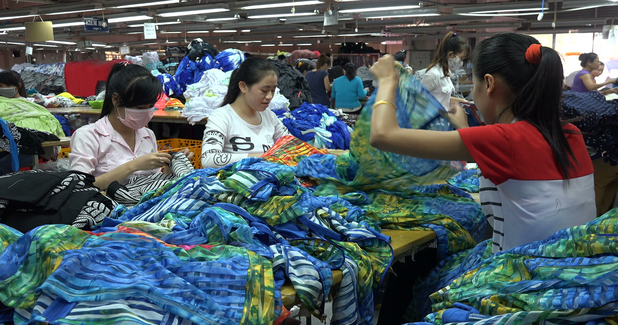
Vietnamese textile and clothing (T&C) enterprises are losing their competitiveness due to high costs of logistics services for exports, experts have said. According to statistics from the Vietnam Textile and Apparel Association (VITAS), textile and garment export value last year reached $31 billion, an increase of 19.2 per cent compared to 2016. Of the $31 billion in export value, the industry spent nearly $18 billion to import raw materials, including cloth, fibre and cotton, among others. However, the cost of logistics activities for textile and garment enterprises accounted for 9.1 per cent of total export turnover, around $2.79 billion.
According to VITAS, the cost of logistics services in Vi?t Nam is much higher than that of neighbouring countries and the region. In particular, logistics costs in the country are 6 per cent higher than in Thailand, 7 per cent more than in China, 12 per cent higher than in Malaysia and three times more than in Singapore. Despite reasonable labour costs, competitiveness has been affected by transport costs, surcharges at seaports, and limited seaport infrastructure. Ph?m Th? Thúy Vân, deputy director of marketing at the Sài Gòn Newport Corporation, Vi?t Nam’s leading container port operator, attributed high logistics costs to a number of reasons. “The current regulations on fees and charges for logistics services are high, making transport costs also relatively high, accounting for between 30 and 40 per cent of the cost of the products, compared to some 15 per cent in other countries,†she said.
For example, BOT charges on the HàN?i-H?i Phòng expressway for businesses from HàN?i and B?c Ninh are about $75 per trip, accounting for 40-42 per cent of the total trucking fee, while in Malaysia, the BOT fees account for only 6 per cent of trucking costs. In addition, the surcharges of shipping lines also contribute to the cost of logistics operations in the country. Experts said the expanded costs for logistics have significantly affected the garment and textile industry, which employs a large number of labourers and is hugely dependent on input importation, which results in a low added value.
Nguy?n Xuân Duong, chairman of the board of directors for the Hung Yên Garment and Textile JSC, said it was difficult for enterprises to be highly competitive because of the high cost of logistics. “The company has to spend around $5 million on logistics services for exports every year,†he said. In the first eight months of the year, exports of the garment and textile sector reached nearly $20 billion. This year, the garment and textile industry have set a target of $34-35 billion worth of exports. If achieved, the costs for logistics services would reach up to $3 billion, reducing the competitiveness of businesses. To address the challenges, many firms have applied technology to better manage to warehouse as well as optimise supply chains.