


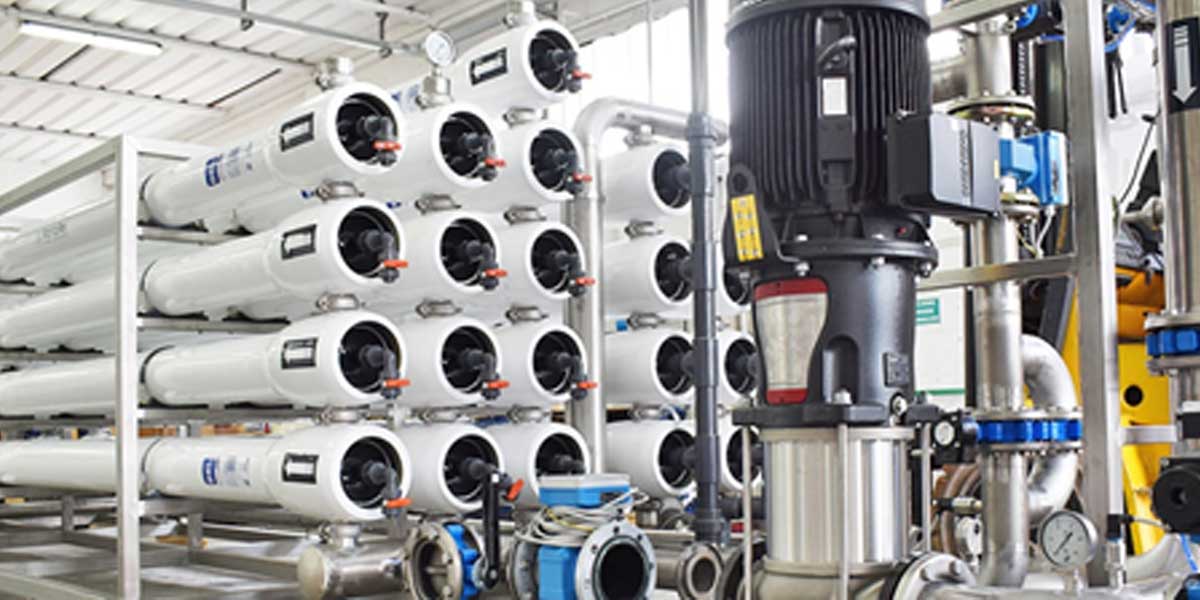
Treating wastewater is not only about reducing pollution but also enables water to be recycled, reduces operational costs and improves the overall efficiency of textile manufacturing operations.
It’s no secret that the textile industry is one of the largest consumers of water and a significant contributor to industrial wastewater pollution, particularly the dyeing and finishing sector.
Much is being achieved by textile technology innovators in the development of dyeing and finishing machines that use much less water, for example by non-contact spray application rather than the traditional bath immersion methods. At the same time, specialists in the formulation of dyes and auxiliaries have made huge strides in the replacement of damaging chemical components in their products.
Wastewater treatment in dyeing and finishing mills, however, remains essential to minimise environmental impact, comply with regulations and ensure sustainable production processes.
Treating wastewater is not only about reducing pollution but also enables water to be recycled, reduces operational costs and improves the overall efficiency of textile manufacturing operations.
At the forthcoming ITMA ASIA + CITME, Singapore this October, a number of companies in the design, engineering and full implementation of wastewater plants will be available to outline and discuss the options for maximising efficiency. These include Indian companies Unitop Aquacare and WTT International, Changzhou Kede, Keysino and Klean Environmental from China and Italy’s Panta Rei and Water Next Solutions.
Complex mixture
Wastewater from textile dyeing and finishing can contain a complex mixture of dyes, chemicals and auxiliaries that if discharged untreated can have severe environmental consequences.
Contaminants such as colourants, suspended solids, organic matter, heavy metals and toxic compounds pose a serious threat to water bodies, soil quality and aquatic life. Without proper treatment, these pollutants can disrupt ecosystems.
Treating wastewater in textile manufacturing involves multiple stages, each designed to remove specific contaminants. Initially, pre-treatment is carried out to remove large particles, oils and grease and prevent potential damage to the treatment system. This is followed by a primary treatment where suspended solids and floating materials are separated using physical or chemical methods.
Secondary treatment then focuses on breaking down organic pollutants through biological processes, using micro-organisms to degrade dyes and other biodegradable compounds. Advanced methods such as activated sludge systems, biofilters and sequencing batch reactors further assist in achieving the effective decomposition of pollutants.
A tertiary treatment is necessary to eliminate any remaining contaminants, including residual colour, heavy metals and organic matter. Techniques such as advanced oxidation processes, membrane filtration and activated carbon adsorption are commonly used to ensure that the treated water meets high-quality discharge standards. Additionally, the sludge generated during treatment is carefully managed through processes such as dewatering, drying and incineration.
With the right treatment methods such as reverse osmosis or ultrafiltration, textile manufacturers can also reclaim the treated wastewater for their own internal processing, reducing dependence on freshwater sources.
MBR technology
The latest biological treatment technologies, as pioneered for example by Milan-headquartered WaterNext SPA, can further reduce both operational costs and environmental footprint of effluent treatment plants (ETPs) compared to traditional chemical-based systems.
WaterNext’s biological systems leveraging membrane bio-reactor (MBR) technology as their backbone also generate non-toxic sludge that can be repurposed as organic manure and unlike conventional plants requiring a minimum of 10 operators, these systems can be managed by just one.
Fellow Italian company Panta Rei also supplies both biological and MBR systems and points out that the latter’s combination of a biological reactor and membranes guarantees the complete removal of suspended solids as well as the elimination of all other filtration process steps, such as the use of a clarifier, microfiltration and external ultrafiltration.
Shanghai headquartered Keysino has also enjoyed notable success in the installation of water saving and wastewater systems, specifically for dyeing and printing companies. Based on its independently developed membrane technology and several patented processes, the systems employ a combination of standard discharge treatment, wastewater reuse, mercerising alkali purification, alkali and dye reuse and salt-control discharge in order to save some 200,000 cubic metres of water daily for its customers.
Advanced nanofiltration technology
Meanwhile, ITMA ASIA + CITME, Singapore 2025 will also see the show debut of upcoming local company Mempure, the developer of a unique new hollow fibre nanofiltration membrane technology called Nanopure which has significant advantages over traditional reverse osmosis and nanofiltration systems.
Based on a specially engineered modified-polyethersulfone material with exceptional chemical stability and mechanical strength, the membrane’s precisely controlled pore size and charge-selective properties enable it to selectively filter out harmful particles and chemicals for the delivery of clean and purified water in a wide range of applications.
Nanopure’s performance has been confirmed during recent testing at the College of Environmental Science and Engineering at Tongji University in Shanghai, renowned for water and wastewater treatment research.
“We’re incredibly pleased with the performance of Nanopure in Tongji University’s testing,†says Mempure’s CEO Eugene Liu. “It reinforces our commitment to delivering sustainable, high-performance water treatment solutions that can make a real impact on global water quality.â€
All aspects of modern textile processing – and the many necessary operations surrounding each manufacturing plant such as water treatment – will be comprehensively covered at ITMA ASIA + CITME, Singapore 2025 this October.