


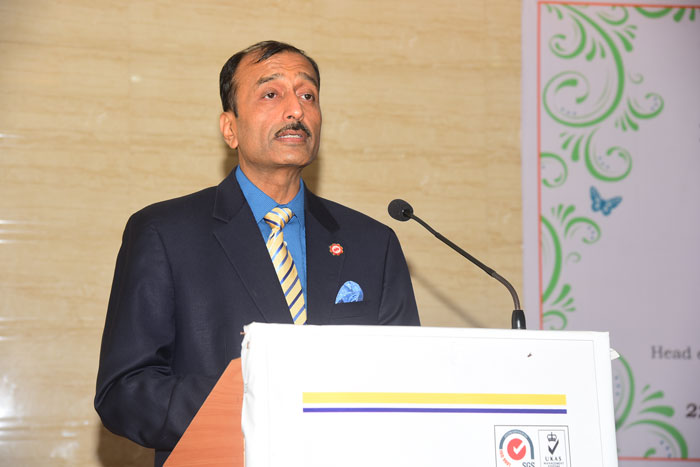
At a time when smart manufacturing is reshaping industrial competitiveness, Basant Fibertek is steadily advancing its digital and automation journey. In this interview, Kishore Khaitan, Managing Director, Basant Fibertek, shares how the company has integrated technologies such as IoT, MES, CNC systems and data-led process optimisation across its operations. He discusses the strategic shift towards LEAN manufacturing, the measurable gains in productivity, quality and sustainability, and how automation is helping address workforce challenges. Khaitan also outlines the next phase of transformation, including AI, robotics and Industry 4.0 readiness, as the company gears up to strengthen its global footprint and long-term competitiveness.
How have smart manufacturing practices (such as automation, digital monitoring, IoT, AI, or data analytics) been integrated into your production processes?
We have been adopting smart manufacturing practices since several years and intensified our efforts post Covid. Besides adding CNC machine tools and SPMs, we have also automated several of our other production processes, installed a MES software to plan and monitor production and improve coordination with purchase and sales, added I0T devices wherever feasible. We are currently exploring use of AI analytics to improve online process and quality control. One major initiative we’ve taken is of adopting LEAN manufacturing extensively to streamline process flow and eliminate bottlenecks.
What measurable benefits have you observed from adopting automation—such as improvements in productivity, quality, cost efficiency, energy management, or delivery timelines?
We look at Smart manufacturing as a strategic strength rather than as a labour saving or productivity improvement technology. The results have been truly amazing – production cycle times have reduced by upto 55 per cent leading to onetime delivery performance, process waste and power consumption has reduced both due to new energy efficient equipment as well as improved process flows, quality defects during process have reduced below 0.01 per cent. We have been able to free up 40 per cent floor space as compared to a very crowded and choking atmosphere when we started on our LEAN journey 2022/23.
The factory now looks more like a clean, bright, organised and spacious showroom rather than a typical production area!
How has automation helped your organisation respond to challenges such as labour availability, quality consistency, and sustainability requirements?
Availability of skilled as well as semi-skilled manpower is a huge challenge and automation and LEAN practices have helped us in two ways – reducing requirement of labour in tasks such as material handling, rework, fire-fighting, breakdowns, etc. This has direct benefit in quality and sustainability as well. But by far, the biggest takeaway has been in de-skilling of tasks, thus providing us the flexibility to use less skilled labour for what were earlier highly skilled jobs. Another big takeaway has been the immense improvement in work atmosphere, health and safety of employees, who are now much more relaxed and comfortable in their workspace.
What new technologies or process upgrades are you currently implementing or planning to implement to further enhance smart manufacturing capabilities?
Currently, we are planning to use robots to replace manual labour in assembling operations, incorporate more IoT devices to become Industry 4.0 compliant, develop AI applications for training, predictive maintenance and fault analysis, integrate smart design to reduce product development cycle time and further reduce our carbon footprint by adopting more sustainability measures for reducing power and water consumption. We already have rooftop solar power meeting nearly 50 per cent of our power requirement.
Looking ahead, how do you see automation shaping your company’s growth strategy and competitiveness over the next 3–5 years?
We have plans to expand globally in the coming years and for this, advanced automation is a pre-requisite, specially given the fact that our technology and processes are highly specialised and it takes to build the required technical expertise in the technical team. Additionally, the market demands better products, faster and cheaper. This can only be possible with higher productivity and scale, hence automation is an essential ingredient to build higher competitiveness.