


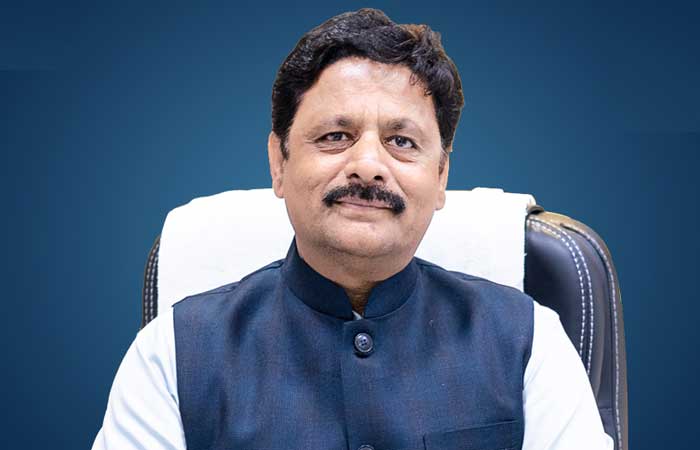
The Federation of Surat Trade & Textile Associations (FOSTTA) has played a pivotal role in the development of the Surat textile industry form last 40 years. Representing approximately 70,000 traders from 217 markets, FOSTTA actively collaborates with both the Central and State governments to address evolving fashion demands. Additionally, it fosters the development and promotion of new technologies, benefiting not only Surat but also the global textile market. Kailash Hakim, President, FOSTTA, shares insights with Divya Shetty in this interview on how Surat, particularly through his association, is contributing to the country’s overall textile exports.
How according to you has the Indian textile industry fared in exports over the past year?
Over the past year, India’s textile industry including Surat has demonstrated prosperity and growth in its export sector. During the April-October period of the fiscal year 2024-25, textile and apparel exports, including silks, increased by 7 per cent, reaching $21.35 billion, up from $20 billion in the same period of the previous financial year.
The Ready-Made Garments category led this growth, accounting for 41 per cent of total exports with $8.73 billion, and Man-Made Textiles at 15 per cent i.e $3.10 billion.
In summary, while the Surat textile industry has achieved commendable growth in exports over the past year, on-going efforts to address production challenges and regulatory limitations are essential to sustain and enhance this progress.
Which regions or countries are currently the largest importers of Indian textiles, and how have these markets evolved in recent years?
In recent years, key markets for Surat textiles and apparel have included Afghanistan, African countries, the United Arab Emirates (UAE), the United Kingdom, and Germany. Among these, Bangladesh and the United States emerged as the largest importers.
This growth is partly attributed to increased demand from US companies seeking alternative suppliers due to disruptions in Bangladesh’s garment exports.
Additionally, Surat’s exporters have been exploring and entering new regions, including Anguilla, Serbia, Georgia, Sweden, Cyprus, Azerbaijan, Iran, Zambia and Russia. Emerging markets such as Brazil and Vietnam have also been identified as having significant potential for India’s and textile exports.
What are the major challenges Indian textile exporters face in maintaining or increasing their market share globally? Are there emerging opportunities the industry is leveraging?
Surat textile exporters face several challenges in maintaining or increasing their global market share. Key issues include:
- Stiff competition from China and Bangladesh
- New markets such as Vietnam and Turkey are aggressively competing in textiles and apparel
- Rising raw material prices like yarn, dyes and chemicals, impact competitiveness
- Labour shortages and increased wages in India contribute to higher operational costs
- Maintaining global quality benchmarks is challenging, particularly for small and medium- scale manufacturers
- Limited use of advanced technologies and automation in the manufacturing process reduces productivity and efficiency.
- Stringent export regulations, especially in markets like the EU and USA, testing standards, and documentation requirements add to costs.
- High shipping costs and delays in logistics disrupt timely delivery, affecting buyer confidence.
- Many exporters struggle to build a strong global brand identity, unlike competitors like Zara or H&M.
- Trade tensions, such as US-China dynamics, create uncertainties, Currency fluctuations impact profitability Sustainability Pressures, Increasing demand for sustainable and eco- friendly products requires significant investment in processes and certifications, which many exporters find challenging.
The recent challenges faced by textile industries in Bangladesh and Vietnam have indeed created opportunities for the Indian textile sector, and Surat, as the textile hub of India, is striving to capitalise on this shift. At FOSTTA, we are working tirelessly to ensure our traders and manufacturers can turn this into a significant growth opportunity.
To educate and empower our businessmen, we regularly organise seminars, exhibitions, product demonstrations, and market exploration tours.
Our efforts also include fostering collaborations with startups, visionary leaders, and international buyers to enhance Surat’s brand value and establish it as a global textile powerhouse.
How have recent government policies, such as trade agreements, export incentives, or subsidies, impacted the growth of textile exports?
Recent government policies have significantly influenced the growth of Surat’s textile exports. The Gujarat Government’s *Textile Policy 2024, introduced in October 2024, aims to boost the textile sector by offering substantial incentives. Considerable, the policy provides a capital subsidy ranging from 10-35 per cent of the eligible fixed capital investment, with a capital of Rs 1 billion. Additionally, an interest subsidy of 5-7 per cent on eligible fixed capital investment is available for up to eight years. These measures are designed to encourage new industrial units and enhance the competitiveness of Surat’s textile industry.
At the national level, the government is considering a *10-15 per cent budget increase for the textile ministry and raising allocations for production-linked incentives.
In summary, the combination of Gujarat’s supportive textile policy, national financial incentives, and proactive trade negotiations is creating a booming environment for the growth of Surat’s textile exports. These efforts are positioning Surat to capitalise on emerging global opportunities and strengthen its presence in the international textile market.
What is the projected growth for Indian textile exports in the next 5-10 years, and what strategies can industry players adopt to stay competitive globally?
Indian textile exports are projected to grow significantly, reaching $ 100 billion dollars by 2030, driven by rising global demand, favourable trade policies, and shifting supply chains. To stay competitive globally, industry players should focus on adopting sustainable practices, such as eco-friendly production to meet international standards. Leveraging technology and automation will enhance efficiency and quality, while diversifying product portfolios can cater to emerging trends. Strengthening branding and design capabilities and participating in global trade fairs will help position Indian textiles as a premium offering.