

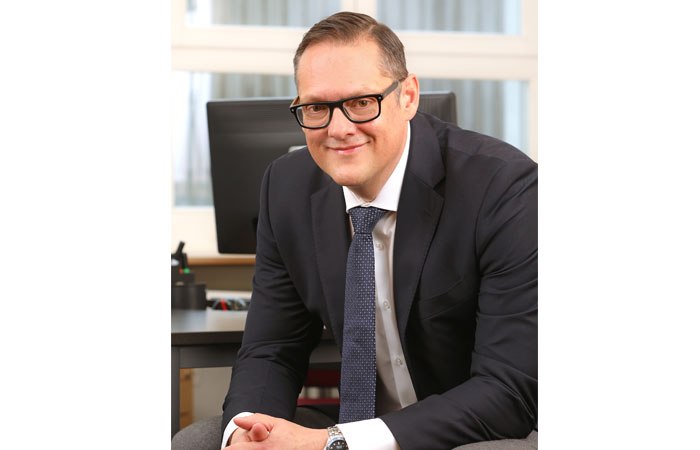
India is a strategically important market for Benninger: Rolf Erik Schoeler
In this exclusive interview with Rakesh Rao, Rolf Erik Schoeler, Global Head of Sales and Marketing, Benninger AG, highlights trends in textile finishing technologies and relevance of India for the company’s future plans.
The 160-year-old Swiss firm Benninger is a leading textile partner focused on efficiency, sustainability, and advanced processing. It views India as a high-potential market driven by value-added manufacturing and innovation, says Rolf Erik Schoeler, Global Head of Sales and Marketing, Benninger AG, in this interview with Rakesh Rao.
How is Benninger serving the global textile industry?
Benninger positions itself as a solution partner rather than a machine supplier. Our focus is on delivering complete continuous and discontinuous wet-finishing systems, as well as dipping solutions that ensure reproducibility, fabric quality, and operational reliability across woven, knitted, and technical textiles.
In traditional segments such as cotton or cotton blends applications for gabardine, workwear, bed linen and terry, our proven workhorse solutions enable customers to achieve consistent quality day in, day out.
In the knitted sector, where fabric sensitivity is significantly higher, we see strong future demand, particularly in India, driven by the rapid growth of sportswear and athleisure. Here, our discontinuous dyeing solutions like the FabricMaster, SynthMaster which, when combined with our DyeMaster systems, play a pivotal role. They enable entrepreneurs and large-scale producers alike to manufacture high-performance fabrics in an unbeatable gentle way, meaning compression-less and tensionless, ultimately supporting the ambition to produce some of the best fabrics in the world.
In technical textiles, whether for automotive or other industrial solutions, process stability and controlled fabric handling are essential. This is where our system integration capabilities and decades of process expertise create real value. A strong example is our high-performance tire-cord dipping solutions, which contribute directly to everyday road safety.
Benninger machines consistently rank number one across the KPIs that truly matter: quality, reproducibility, efficiency, and long-term operational reliability. This assessment is repeatedly confirmed by reputable, independent consulting firms across all our segments: continuous dyeing and finishing, discontinuous dyeing and dipping.
As an expert in textile finishing, how is Benninger helping customers achieve their sustainability goals?
Sustainability today is fundamentally about efficiency. Mills are under pressure to reduce water, energy, and chemical consumption while maintaining or improving quality. We address this through a combination of ideal processes, machine design and technology. Efficient washing systems, low liquor ratios, heat recovery, and chemical recovery solutions all contribute to lowering resource consumption. Equally important is achieving “right-first-time” production, because every reprocess consumes additional water, energy, and time.
How do you assess the current global textile machinery market?
The market remains cautious. Demand in many textile segments has been uneven, and customers are investing more selectively.
What opportunities do you see is India?
India is a strategically important market for us, and not just as an export destination. Our local presence for Discontinuous Dyeing reflects the long-term importance we attach to the country. The opportunity in India is compelling. The industry is moving toward higher-value products, and there is a clear push to improve quality, efficiency, and global competitiveness. At the same time, segments such as technical textiles, man-made fibres, and advanced knit processing are growing strongly.
India combines scale with ambition and that makes it one of the most dynamic textile markets globally.
India is strengthening its technical textiles and man-made fibres (MMF) value chain. How can Benninger contribute?
Technical textiles and MMF products require a fundamentally higher level of process control compared to traditional textiles. Tolerances are tighter, and performance requirements, whether mechanical, functional, or aesthetic, are significantly more demanding. Benninger contributes by enabling precisely that level of control through advanced washing, controlled dyeing, accurate impregnation, and gentle yet highly stable fabric guidance. Beyond equipment, we support our customers with deep process know-how, training, and strong local service in India.
A key pillar in this context is our advanced dyeing portfolio. With the FabricMaster and SynthMaster, we offer state-of-the-art discontinuous dyeing solutions that combine lowest resource consumption with outstanding fabric quality. The FabricMaster sets the benchmark in the industry by significantly reducing energy, water, and chemical consumption while delivering superior surface quality and fastness. The SynthMaster, in turn, enables the most gentle treatment of sensitive fabrics, compression-less and tension-less, ensuring excellent colour levelness and reproducibility even for demanding MMF and blended fabrics.
In addition, our portfolio includes high-performance singeing solutions such as the SingeRay, which provide uniform fabric preparation and are essential for achieving consistent downstream dyeing and finishing quality in both woven and knitted applications.
If India aims to move up the value chain, particularly in high-growth segments such as technical textiles and man-made fibres, then consistency, reproducibility, and conversion cost efficiency will be decisive. That is exactly where Benninger adds value: enabling Indian manufacturers to produce world-class fabrics with predictable quality, competitive cost structures, and sustainable processes.
What major trends will shape the textile and apparel industry over the next decade?
The rise of man-made fibres will continue to accelerate. Cotton will remain important, but growth will clearly come from polyester, polyamide, and advanced blends, particularly driven by sportswear, athleisure, and technical applications. This shift requires a completely different level of process control and finishing precision.
India and Southeast Asia will emerge as dominant growth engines. India in particular is at a pivotal moment: combining scale, entrepreneurial drive, and increasing technical capability. We expect a strong move from commodity production toward higher-value fabrics, especially in MMF and performance textiles.
Sustainability will shift from a marketing narrative to an economic necessity. Water, energy, and chemical consumption are becoming cost drivers, not just compliance topics. Process integration and digitalisation will redefine competitiveness. Customers are no longer buying standalone machines; they are investing in integrated systems that guarantee reproducibility, reduce dependency on operator skill, and allow data-driven optimisation. The ability to run “right-first-time” consistently will be a key differentiator.
Finally, speed and flexibility will become critical. Fashion cycles are shortening, order sizes are becoming smaller, and the ability to switch quickly between articles, without compromising quality, will define who succeeds.
What is your outlook for 2026?
2026 will remain a selective market environment. Customers will continue to invest, but only where they see clear and measurable value. For India, our growth strategy is built on three pillars: deepening our local presence, expanding in high-growth segments such as technical textiles and MMF, and supporting customers in modernising their production with efficient and reliable technology.
