Close Menu
Indian Textile Journal
  • Home
  • Textile Machinery
    • Allied Equipment and Accessories
    • Automation
    • Dyeing, Processing & Finishing
    • Knitting
    • Printing
    • Spinning
    • Weaving
  • Tech Textiles
  • Sustainability
  • Resources
    • Trade Fair
    • Events
    • Videos
  • Interview & Opinion
  • Subscribe Now
  • Advertise
  • Digital
  • Apparels & Garments
  • Fibres & Raw Materials
  • Home Textiles
  • Industry Update
Facebook X (Twitter) YouTube LinkedIn
Indian Textile Journal
Epson
  • Home
  • Textile Machinery
    • Allied Equipment and Accessories
    • Automation
    • Dyeing, Processing & Finishing
    • Knitting
    • Printing
    • Spinning
    • Weaving
  • Tech Textiles
  • Sustainability
  • Resources
    • Trade Fair
    • Events
    • Videos
  • Interview & Opinion
  • Subscribe Now
  • Advertise
  • Digital
  • Apparels & Garments
  • Fibres & Raw Materials
  • Home Textiles
  • Industry Update
Indian Textile Journal
Home » GSP benefits Cambodian exports
Industry Update

GSP benefits Cambodian exports

By January 4, 20171 Min Read
Share Facebook Twitter LinkedIn WhatsApp Copy Link
The garment industry of Combodia earns 80 per cent of Cambodia’s foreign exchange earnings and employs an estimated 350,000 people in more than 300 factories.  As companies which buy from Cambodia — like H&M, Inditex, Marks & Spencer, New Look, Adidas, Nike, Levi’s, Uniqlo — know very well, Cambodia benefits from preferential trade agreements with the European Union (EU), Japan, Canada, whereas China does not. Manufacturers in Cambodia benefit from duty-free access to the EU through the Union’s Generalized Scheme of Preferences (GSP).
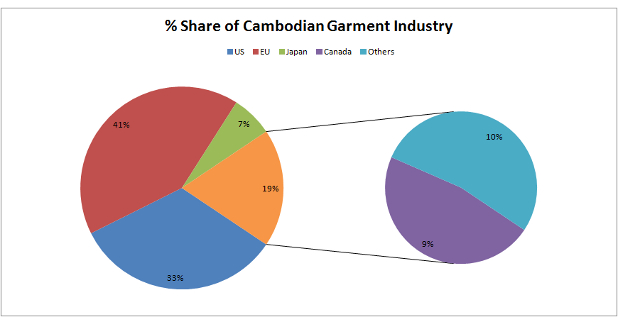
According to the Ken Loo, Secretary General of the Garment Manufacturers’ Association in Cambodia (GMAC),Cambodian garment exports are only growing in markets with beneficial access, like Canada, Japan and especially the EU – its largest export market, accounting for 45 per cent of the total, where imports have duty-free access under the GSP.
According to figures release by the local Ministry of Commerce the total value of exports from the garments from Cambodia was $5.7 billion. Among various markets the major share is being taken by EU. 
Previous ArticleCAI Office-bearers
Next Article Cotton museum in offing

Related Posts

Vipul Organics starts operations at greenfield facility in Sayakha, Gujarat

August 24, 2026

“The value of handloom lies precisely in the time, skill and human effort that goes into making it.”

August 21, 2026

Vipul Organics Q1 FY27 PAT rises 99.75% as revenue grows 38.44%

August 18, 2026
Recent Posts
  • Maspar introduces ‘Serene Haven’: Redefining soft living through sustainable, quiet luxury
  • Vipul Organics starts operations at greenfield facility in Sayakha, Gujarat
  • “The value of handloom lies precisely in the time, skill and human effort that goes into making it.”
  • India’s roadmap to becoming a global apparel hub
  • Latest Swedish textile machinery expansion at imogo
  • Maspar elevates Rakhi gifting with curated dining and hosting essentials
  • Vipul Organics Q1 FY27 PAT rises 99.75% as revenue grows 38.44%
  • Bombay Dyeing unveils festive elegance with Saughat, ethnicity and urban living collections
Facebook X (Twitter) YouTube LinkedIn
  • About us
  • Contact us
  • Privacy Policy
  • Terms and Conditions

SISTER PUBLICATIONS

Construction World Equipment India Industrial Product Finder Infrastructure Today

© 2026 Indian Textile Journal. All Rights Reserved.

Type above and press Enter to search. Press Esc to cancel.