


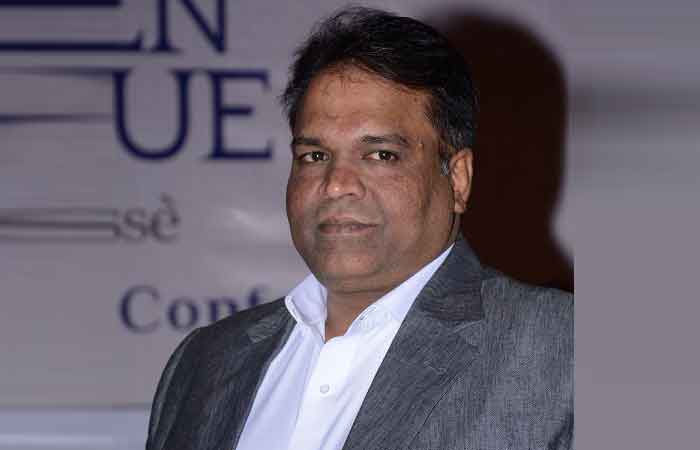
The world is warming up to the concept of sustainable fashion. In this interview with Rakesh Rao, Prashant Agarwal, Managing Director, BRFL Textiles Pvt Ltd (BTPL), explains why sustainability is imperative for the growth of the textile industry
Why is sustainability important for the Indian textile & apparels industry?
Today, greenhouse gas emission and scarcity of potable water represent a substantial sustainability challenge across the world. With climate change being a major concern worldwide, industries across the world are urged to embrace sustainability.
The textile industry has stringent engineering processes, water flow and energy emissions that can act as a major hurdle for sustainability. Due to the measure at which textile and apparel companies operate, it becomes very easy to harm the ecosystem. As a major contributor to this, the textile industry needs to set an example and adopt measures that can define sustainability norms across sectors. Textile firms need to implement operations that curbs carbon trail, and develop and invest in sustainable measures.
At BTPL, we ensure state of the art sustainability processes that set new standards for the textile industry. The world is warming up to the concept of sustainable fashion, and so are we. We are also hopeful that the Indian textile industry will adopt more practices in the near future and enable the industry to move towards a new sustainable direction. A strong focus on sustainability could also be a key differentiator for brands in the near future.
How is BRFL Textiles adopting sustainability?
BTPL is consistently working on sustainability measures and aims to set new benchmarks in the industry. We have pioneered a new sulphur dyeing process by continuous dyeing – which does not utilise water. This innovative sustainable process has been introduced in the industry for the first time.
Keep sustainability in mind, we have also utilised multiple measures to limit carbon emission and enable a stringent water recycling process across our operations.
We are also deploying measures that avoids increasing the TDS content of water by avoiding salt, which is possible as most of the reactive dyeing processed in the plant is undertaken with e-control process. We are also keeping our carbon emissions at check through our energy co-generation design at our Tarapur plant, which enables us to reuse 48 tonnes of steam per hour, and save 250 tonnes of coal per day.
We also make it a point to apply our sustainability practices across our products. A majority of our products including linen and cotton are sold sustainably in its natural form. A large portion of linen and linen blended collection is produced without the addition of dye or colour to the fabric. We are also exploring opportunities of creating fabrics using recycled cotton and linen fabrics and recycled polyester yarn.
Is the concept of circular economy gaining traction in India?
Yes, we certainly think and hope so. A circular economy is imperative and we are witnessing a growing adoption for reusing and recycling across industries in India. Circular economy is definitely gaining traction in the textile industry as the value of fabrics and apparels tend to be completely captured through this method as it is regenerative. More companies are understanding the need for a circular economy and are adopting sustainable practices. The companies are also adopting it as a long-term measure that can support their growth in the future as well. Sustainability as a concept is growing across industries, and the textile industry is no exception.
Even consumers are now more conscious about buying products that have been produced sustainably. This certainly encourages companies, especially in the organized sectors to understand and adopt the concept of circular economy. We are certainly seeing similar trends in both consumers and manufacturers today in India as well. In sectors like the textile industry which sees large volumes of wastage, both pre- and post-production, embracing circular economy practices will not only reduce the negative environmental footprint, but also help in maximising production capabilities and profits. We believe that industries will move into a complete circular economy in a few years as it opens up various economic opportunities and gives birth to enhanced operational efficiencies.