Close Menu
Indian Textile Journal
  • Home
  • Market and Economy
    • Apparels & Garments
    • Fibres & Raw Materials
    • Home Textiles
    • Industry Update
  • Textile Machinery
    • Allied Equipment and Accessories
    • Automation
    • Dyeing, Processing & Finishing
    • Knitting
    • Printing
    • Spinning
    • Weaving
  • Tech Textiles
  • Sustainability
  • Resources
    • Trade Fair
    • Events
    • Videos
  • Interview & Opinion
  • Subscribe Now
  • Advertise
  • Digital
Facebook X (Twitter) YouTube LinkedIn
Indian Textile Journal
Epson
  • Home
  • Market and Economy
    • Apparels & Garments
    • Fibres & Raw Materials
    • Home Textiles
    • Industry Update
  • Textile Machinery
    • Allied Equipment and Accessories
    • Automation
    • Dyeing, Processing & Finishing
    • Knitting
    • Printing
    • Spinning
    • Weaving
  • Tech Textiles
  • Sustainability
  • Resources
    • Trade Fair
    • Events
    • Videos
  • Interview & Opinion
  • Subscribe Now
  • Advertise
  • Digital
Indian Textile Journal
Home » Assam textile policy on anvil
Industry Update

Assam textile policy on anvil

By June 16, 20172 Mins Read
Share Facebook Twitter LinkedIn WhatsApp Copy Link
Assam will soon formulate a textile policy to boost the handloom and textile sector. The proposed policy will focus on integrating production and marketing of handloom and textile products, empowering weavers and making a niche for handicrafts of the State in the global market.
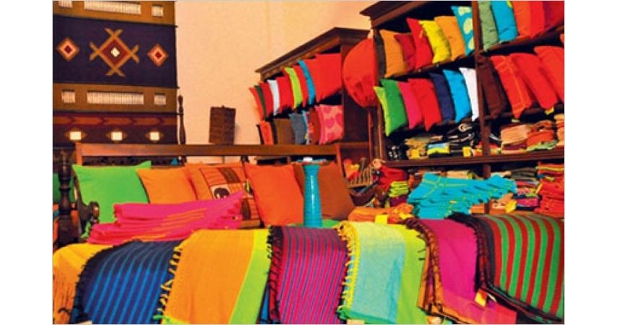
A state-of-the-art emporium will be set up showcasing the unique and attractive fabrics of all communities of the State. Strategies will be formulated to empower rural weavers, marketing of products as well as motivating young entrepreneurs to take up the trade.
A chain-linked exhibition system is being planned covering all districts of Assam for proper marketing of the handicrafts. Assam’s handloom industry is silk-oriented. Four varieties of silk worms and their host-plants, mulberry, eri, muga and oak tussar, are popular and important for economic and commercial purposes. Nearly 90 per cent of the silk produced is from the mulberry sector only.
Fabrics from Assam include the hand-woven fabrics of cotton, muga, mulberry silk and eri. Muga has a natural golden texture, mildly warm and is particularly suited for winters. Zari work on Muga silk fabrics were woven for royalty, but today zari has been replaced by multi-coloured cotton threads. Cotton textiles include bedspreads, furnishing material, mekhala, chaddars, shawls and saris.
Previous ArticleChina still leads in technical textiles
Next Article TÜV SÜD offers guidance on ISO 9001

Related Posts

RSWM retains IND A rating as outlook turns stable

June 12, 2026

Meenakshi India reports FY26 revenue at Rs 1.58 billion

June 9, 2026

Training undergraduate and school students in textiles research

June 9, 2026
Recent Posts
  • RSWM retains IND A rating as outlook turns stable
  • Mumbai welcomes back HGH India 2026
  • Vipul Organics teams up with OMYA for European pigment distribution
  • ITM Istanbul 2026: ColorJet’s visibility extends across the entire exhibition
  • CMAI kidswear fair sees record participation 
  • Clean energy shift may save Tamil Nadu textiles Rs 32.50 billion
  • Spykar plans pan-India offline expansion with 100 new stores in two years
  • Meenakshi India reports FY26 revenue at Rs 1.58 billion
Facebook X (Twitter) YouTube LinkedIn
  • About us
  • Contact us
  • Privacy Policy
  • Terms and Conditions

SISTER PUBLICATIONS

Construction World Equipment India Industrial Product Finder Infrastructure Today

© 2026 Indian Textile Journal. All Rights Reserved.

Type above and press Enter to search. Press Esc to cancel.