


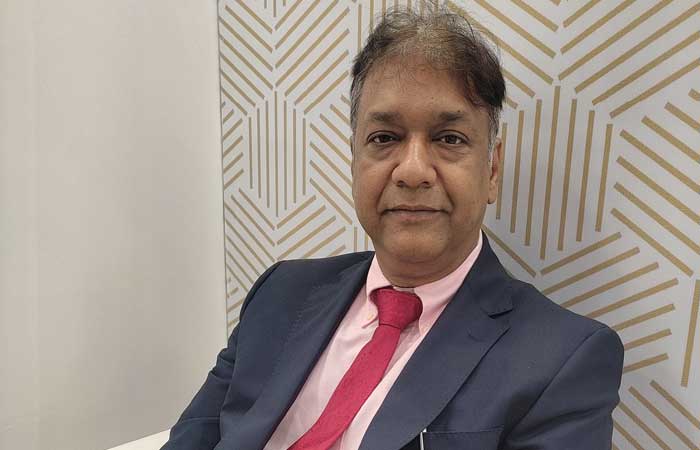
Texbond Nonwovens, an ISO Certified along with approved suppliers of IKEA was established in 2006, are the manufacturers of polypropylene spunbond nonwoven fabric in India. Texbond has been operating in the technical textiles industry for 18 years. Initially established with the objective of replacing imports, as many products were still being sourced from China at the time. Today, approximately 80 per cent of its business comes from exports. Sunil Kumar Yadav, Business Development Manager, Texbond Nonwovens, in this conversation with Divya Shetty, discusses his company’s offerings and future plans.
Which market segments does Texbond serve, and which segment is currently performing the best?
As one of the oldest companies in the technical textiles industry, we serve a wide range of segments, including agriculture, food packaging, medical, hygiene, construction, industrial applications, automotive, and filtration. The dynamics of emerging sectors vary with market conditions; while some may decline, others show significant growth. Currently, we are particularly focused on the medical, hygiene, and agriculture sectors, recognising their increasing demand and importance in today’s market.
Could you provide details on the specific machinery and equipment used in the manufacturing process of these products?
All of our machinery is imported, as we do not use any equipment manufactured in India. The machinery includes a range of models sourced from Europe, China, and, in some instances, the United States, reflecting our commitment to leveraging advanced technology for our production processes.
Where do you source your raw materials, and does India have sufficient availability to meet your requirements?
We source our raw materials globally. While India has a sufficient supply of raw materials, the current policies are not favourable for downstream consumers. To enhance our global competitiveness, it is essential to develop better strategies and provide support to effectively channel these materials within India. It is ironic that Indian producers export raw materials while we continue to import them, despite their availability domestically. Our exports primarily target markets in North America.
What are the company’s future plans?
We have recently expanded our production capacity and diversified our operations to better align with market demands. Over the next 3-4 years, our strategic focus will be on exploring these new segments, particularly in the realm of exports, where we anticipate higher demand. Notably, nonwoven materials are gaining traction in Western markets, which leverage them for a wide array of applications. In contrast, Asian markets tend to limit their use primarily to packaging and bags, creating a significant opportunity for growth in regions where more innovative applications are being developed.
In addition to expanding our market reach, we are committed to environmental sustainability. Our operations are designed to be 100 per cent recyclable, reflecting our dedication to reducing waste and promoting a circular economy. We also prioritise the use of clean energy in our production processes, with approximately 40 per cent of our energy requirements met through solar power. This commitment to sustainability is integral to our business model, and recycling remains a key practical initiative we pursue in relation to our products. By focusing on these areas, we aim to not only enhance our competitive edge but also contribute positively to environmental conservation.