

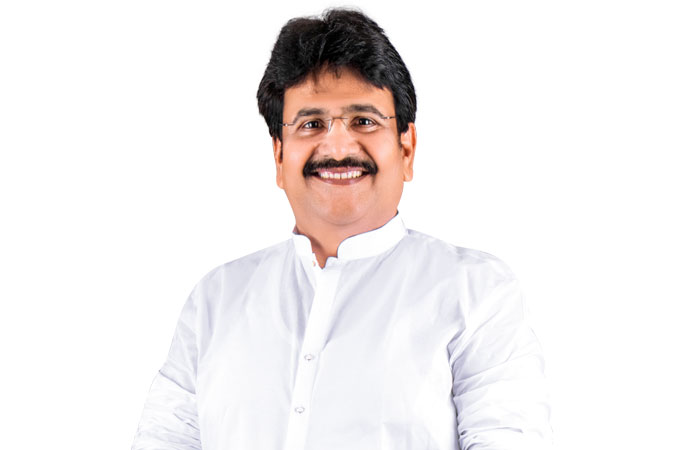
Ajay Ajmera: Brand building is key to moving beyond being just a supplier
In a rapidly evolving textile landscape, Ajay Ajmera, Founder & CEO, Ajmera Fashions, shares insights on building a resilient and scalable ethnic wear business. From ensuring quality consistency and supply chain traceability to navigating intense competition in Surat’s textile hub, he outlines the strategies driving sustainable growth. Ajmera also discusses managing cost pressures, expanding retail networks, and integrating sustainability practices—offering a comprehensive perspective on how traditional craftsmanship and modern systems can coexist to create long-term value in India’s dynamic apparel industry.
As you scale across multiple ethnic wear categories, what systems ensure consistent quality and traceability across your supply chain?
As Ajmera Fashion expanded across multiple ethnic wear categories—from sarees and dress materials to ready-to-wear collections—maintaining consistent quality became one of our core priorities. In the textile industry, scale can often lead to variability if systems are not strong enough. Therefore, our approach has always been to build a structured supply chain supported by trusted partnerships and clear quality processes.
A large part of our manufacturing ecosystem works through long-standing relationships with weaving, dyeing, and processing partners. Many of these collaborations have been developed over decades, which creates a deep understanding of our quality expectations. Rather than constantly shifting vendors based purely on pricing, we prefer working closely with partners who align with our production standards and design philosophy.
Quality control begins at the raw material stage. Fabric selection, dyeing consistency, and embellishment work are inspected at multiple stages during production. We follow a layered quality system where checks are carried out during raw material procurement, mid-production, and final packaging. This ensures that any inconsistency is detected early rather than after products reach the market.
Traceability has also become increasingly important as operations grow. We are gradually integrating digital tracking mechanisms that help monitor production batches and vendor outputs. This allows our teams to identify and address issues quickly if variations occur. At the same time, detailed product specifications are maintained for each category so that every vendor works with the same benchmarks in terms of fabric composition, finishing standards, and design execution.
While systems and technology play an important role, the textile industry also depends heavily on craftsmanship and experience. Our quality teams work closely with manufacturing partners to maintain consistency while preserving the artisanal elements that define ethnic wear. As we continue to scale, our focus remains on balancing efficiency with the craftsmanship that customers expect from our products.
In a highly competitive Surat textile market, how does Ajmera Fashion differentiate itself beyond price-led competition?
Surat is one of the most vibrant textile hubs in India, and naturally the competition is intense. In such an environment, relying only on price competition is rarely sustainable in the long run. At Ajmera Fashion, we have focused on differentiation through design, reliability, and market reach.
Design innovation plays a key role in our strategy. Ethnic fashion constantly evolves, influenced by festivals, weddings, and regional preferences across India. Our teams closely observe these trends and work on collections that combine traditional aesthetics with contemporary design elements. This helps retailers offer products that feel fresh and relevant to their customers.
Equally important is the trust we have built with our distribution partners. In the wholesale textile business, consistency matters as much as design. Retailers value brands that deliver dependable quality, timely supply, and responsive service. Over the years, we have focused on strengthening these relationships, which has helped us build long-term partnerships with distributors and retailers across multiple markets.
Another factor that differentiates us is our approach to brand building. Traditionally, many textile businesses have operated primarily as manufacturers or traders. However, we believe that organized branding, retail visibility, and structured marketing are essential for long-term growth. By investing in these areas, we aim to position Ajmera Fashion as a recognizable brand rather than just another supplier in the market.
Ultimately, differentiation in a competitive market like Surat comes from consistency. By focusing on design relevance, operational reliability, and strong distribution networks, we aim to create value that goes beyond pricing alone.
With rising raw material and logistics costs, how are you protecting margins while staying competitive in wholesale markets?
Rising raw material prices and logistics costs have created significant pressure across the textile industry in recent years. Managing margins while remaining competitive requires a balanced approach that focuses on efficiency, planning, and product strategy.
At Ajmera Fashion, improving operational efficiency has been one of the most effective ways to manage cost pressures. By optimizing production planning and working closely with our vendor network, we aim to reduce wastage and improve productivity across the supply chain. Even small improvements in fabric utilization or production timelines can contribute to meaningful cost savings over time.
Scale has also helped us manage input costs more effectively. As production volumes grow, it becomes possible to negotiate better terms with suppliers and logistics partners. This allows us to maintain competitive pricing for our wholesale customers without compromising on quality.
Another important aspect is maintaining a balanced product portfolio. While high-volume products remain important in wholesale markets, we also focus on developing collections that offer better value and design differentiation. This mix allows us to maintain healthier margins while still catering to different market segments.
Demand forecasting and inventory management also play a crucial role. By closely monitoring seasonal demand patterns and retailer feedback, we can plan production more accurately and avoid excess inventory. This improves working capital efficiency and reduces unnecessary cost pressures.
The textile industry has always operated in cycles of fluctuation. Our approach is to remain disciplined, improve operational efficiency, and continue strengthening our product offerings so that we can navigate these challenges while sustaining long-term growth.
As you expand your retail/franchise footprint, what operational bottlenecks have emerged in standardising quality and consumer experience?
Expanding a retail and franchise network brings significant opportunities, but it also introduces operational complexities. One of the primary challenges is maintaining a consistent brand and consumer experience across different locations, especially when stores operate in diverse regional markets.
Each market has its own consumer behaviour, retail dynamics, and operational realities. While this diversity creates opportunities for growth, it also means that maintaining standardisation in visual merchandising, product presentation, and service quality requires strong internal systems. To address this, we have focused on developing clear retail guidelines covering store layout, display standards, and product assortment strategies. These guidelines help ensure that every store reflects the brand identity in a consistent manner.
Another bottleneck often arises in inventory coordination. Since ethnic wear demand can vary significantly based on regional festivals and seasonal trends, it becomes important to ensure the right product mix reaches the right store at the right time. We have been strengthening our inventory planning and distribution systems to support our franchise partners more effectively.
Training is also a critical factor in delivering a consistent consumer experience. Retail teams are the direct interface with customers, so we invest time in training store staff on product knowledge, customer interaction, and brand values. By focusing on operational discipline and communication with our franchise partners, we aim to create a retail network that delivers both consistency and flexibility.
What concrete ESG or sustainability measures have you implemented, and are they translating into stronger export or buyer confidence?
Sustainability has become an increasingly important conversation in the global textile industry. While the sector has traditionally focused on scale and efficiency, there is now a stronger expectation from buyers and partners to adopt responsible manufacturing practices.
At Ajmera Fashion, we have been gradually integrating sustainability-oriented practices within our operations. This includes working with processing partners who follow regulated dyeing and water management systems, improving production efficiency to minimise material wastage, and exploring packaging options that are more environmentally responsible.
Energy efficiency and resource optimisation are also areas where many textile manufacturers are making progress, and we are aligning with these industry efforts wherever possible. Although sustainability initiatives often require long-term investment, they are becoming essential for maintaining credibility in global markets.
From an export perspective, international buyers today place increasing emphasis on transparency and responsible sourcing. Demonstrating commitment toward sustainability helps build stronger trust with these partners. While the journey toward fully sustainable manufacturing is ongoing for the entire industry, taking practical steps in this direction certainly strengthens buyer confidence and reinforces long-term business relationships.
