Three Industrial Challenges. Three Purpose-Built Solutions.
Editorial concept
How application-specific engineering is helping manufacturers address complex textile production requirements, specialized fabric development and industrial storage challenges.
The feature progresses from high-density warp preparation, specialized fabric sampling for medical-device manufacturing, to cross-industry automated storage. Customer identities are withheld throughout.
Feature at a glance
01 When Conventional Warping Meets the Demands of Technical Textiles
02 Engineering Precision for the Next Generation of Medical Textiles
03 Beyond Storage: Rethinking How Materials Move Through Manufacturing
When conventional warping meets the demands of technical textiles
As technical textiles move into increasingly demanding infrastructure applications, conventional warp preparation must adapt to heavier yarns and higher operating tensions. A customized sectional warping installation demonstrates how application-specific engineering can address these challenges.
The growing complexity of technical textile manufacturing
The textile industry’s evolution extends far beyond conventional apparel and furnishing fabrics. Technical textiles are engineered for applications where material performance is determined by demanding functional requirements. Geotextiles, geogrids and other geosynthetic products are used in infrastructure applications involving soil reinforcement, filtration, drainage and ground stabilization.
For manufacturers entering new product categories, existing machinery configurations may not be suited to the characteristics of the materials being processed. Warp preparation becomes particularly important when working with heavy industrial yarns, controlled yarn tension and uniform warp beams establish the conditions for subsequent weaving.
This challenge emerged during the expansion of a prominent Indian technical textile manufacturer developing high-density industrial fabrics for specialized construction applications. The manufacturer required a sectional warping system capable of processing 12000 denier with a beaming tension of approximately up to 90,000 N (90 kN).
Engineering beyond standard machine configurations
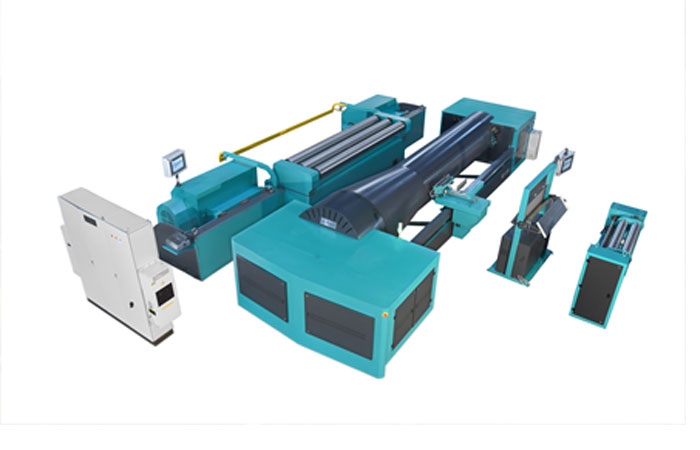
To address the application, Rabatex developed Techmatic a customized Sectional Warping Machine, supported by the Centrally controlled swivel frame type creel. The engineering approach focused on mechanical strength, drive arrangement and tension control for heavy warp sheets.
The warping drum was reinforced and machine capacity increased through design modifications. A motorized drum drive was synchronized with the beaming unit to coordinate movement of the warp sheet. Specially designed load cell based tension control, heavy-duty motors and further mechanical changes supported the specified beaming conditions.
Rather than treating the equipment as a standard product, the project required several interconnected systems to be adapted around a defined technical requirement.
Why consistent warp preparation matters
Variations in tension or inconsistencies in beam formation can complicate weaving, particularly when processing demanding materials. The customized Techmatic was designed to support uniform warp beam formation and the stability required for specialized fabric development.
The installation included manufacturing, customization, commissioning, operator training and technical support. Quantified production improvements were not provided; the documented engineering changes instead illustrate the importance of configuring warp preparation around the intended fabric.
As technical textile applications become more specialized, machinery adaptability remains important. Successful fabric production begins well before the yarn reaches the loom.
“In technical textiles, precision in fabric formation begins with control over the warp.”
Engineering precision for the next generation of medical textiles
The expanding role of textile structures in medical device development is creating specialized manufacturing requirements. A fabric sampling installation for an Indian medical device manufacturer highlights the importance of application focused machinery in technically demanding textile development.
When textile engineering enters medical manufacturing
Textiles have applications far beyond conventional fabric production. In medical technology, engineered textile structures may form part of specialized products whose material selection, construction and dimensional requirements call for careful evaluation.
Unlike established textile categories, medical device development may involve product specific fabric requirements. Sampling therefore becomes an important development stage; manufacturers must assess whether a proposed textile construction is suitable for its intended application.
A leading global medical device manufacturer from North America required a weaving solution for applications associated with heart valves and peripheral balloons. The requirement placed textile machinery within a technically demanding medical manufacturing environment.
A specialized approach to fabric development
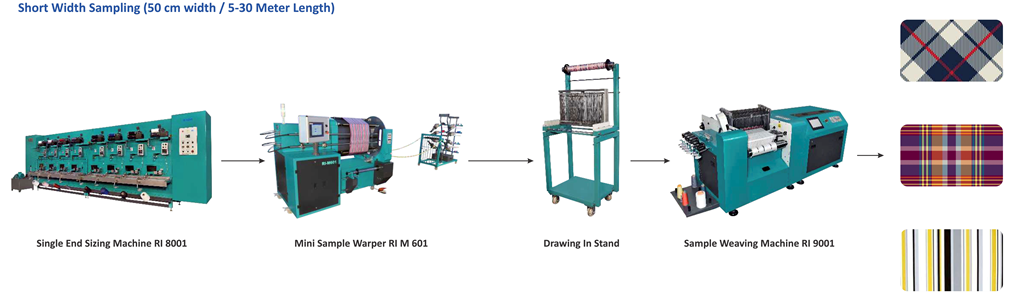
Rabatex supplied its Fabric Sampling Solution. The equipment’s were selected to support the manufacturer’s specialized fabric development requirements.
Fabric sampling machinery provides a platform for producing textile constructions for evaluation before subsequent production decisions. In specialized applications, this development stage matters because the fabric structure must be considered in relation to the product in which it will be used.
The importance of application-led machinery development
Specialized textile manufacturing requires alignment between the final product and the equipment used to develop it. The challenge extends beyond forming fabric in isolation; engineers must consider how the material will function as part of a larger engineered product.
The fabric sampling project illustrates the relevance of textile machinery in manufacturing environments outside conventional textile mills. It also reflects the growing intersection between textile engineering and sectors requiring highly specialized materials.
As applications become more demanding, equipment decisions increasingly begin with the intended fabric and its end use, rather than with a conventional machinery category.
“As textile applications become more specialized, machinery must be selected around the demands of the final product.”
Beyond storage: Rethinking how materials move through manufacturing
As manufacturers seek to use factory space more effectively, conventional storage systems are being reconsidered. An automated Vertical Lift Module installation demonstrates how vertical storage, controlled retrieval and integration with production workflows can address everyday industrial challenges.
The hidden cost of conventional industrial storage
Manufacturing efficiency depends not only on production equipment but also on how materials are stored, located and delivered to the point of use. Conventional shelving can occupy valuable floor area, require staff to search through aisles and leave inventory accuracy dependent on manual records.
A prominent Indian manufacturer of electrical power-testing equipment faced these challenges when planning a new factory. Load bank assembly requires electrical parts, connectors, sensors, fasteners, cables and tools. Experience with manual storage at the earlier facility informed the decision to adopt automation.
Turning vertical space into an operational advantage
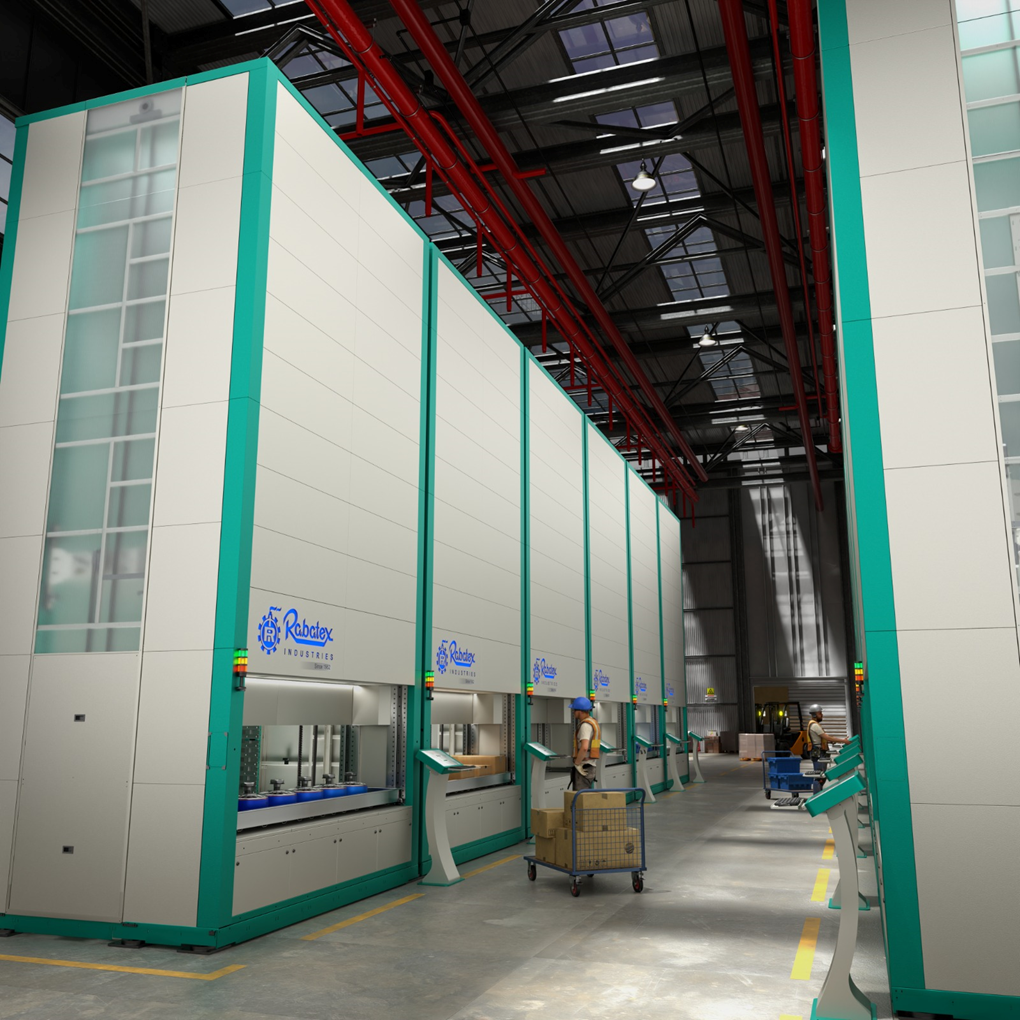
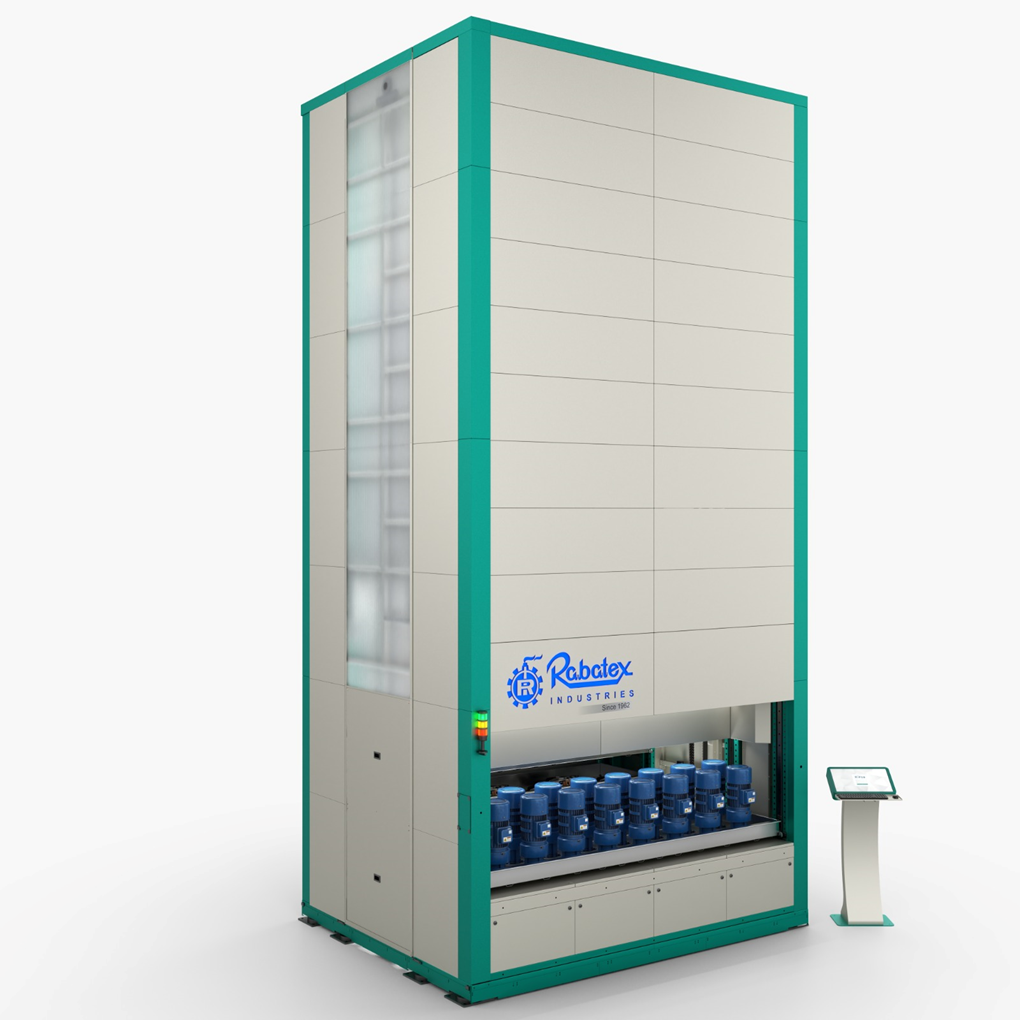
Rabatex supplied its Rapid Store – Vertical Lift Module (VLM), an automated storage and retrieval system manufactured in Ahmedabad. Materials are held on trays in a vertical enclosure; the selected tray is brought to an operator access point rather than requiring workers to walk through storage aisles.
The system includes a touchscreen HMI, barcode identified trays, height sensors, overload sensing arrangements and inventory management software. Remote access and ERP integration are available capabilities.
This goods to person approach makes vertical factory space available for organized storage while bringing the requested components to an accessible retrieval point.
Integrating storage with manufacturing workflow
This project comprised four Rapid Store VLM units configured with dual-level access, ground floor access for inward inventory movement and a second access point approximately six metres above floor level for an elevated assembly area.
The arrangement is noteworthy because it connects storage to the physical production layout. Materials can enter at one level and be retrieved at another, reducing reliance on conventional rack search workflows.
Although measured floor space, labour and retrieval time savings were not supplied, the installation illustrates how vertical storage can address manual storage limitations. The principle also has relevance for textile manufacturing, engineering, industrial spares and other component intensive operations, subject to application-specific design.
As factories become more integrated, storage must increasingly support production flow rather than merely accommodate inventory.
“The value of industrial storage lies not only in where materials are kept, but in how efficiently they reach production.”