


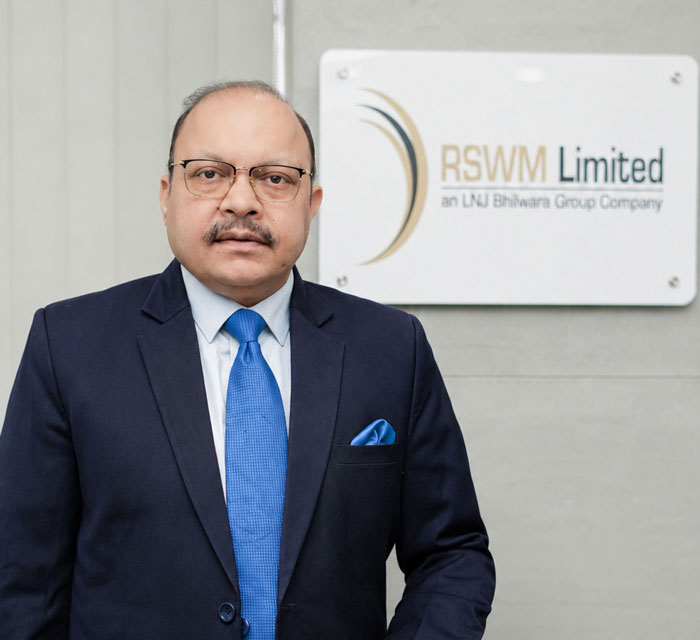
As the Indian textile industry navigates shifting global supply chains and a heightened focus on sustainability, legacy players are aggressively pivoting toward high-value growth. In this insightful conversation, Rajeev Gupta, Joint Managing Director, RSWM, speaks with Divya Shetty, about the company’s bold RSWM 2.0 transformation.
Your company has built significant scale and business momentum. What will be the key growth drivers that help you sustain this trajectory over the next three to five years?
When I look at the next three to five years, our focus will be on building a stronger, more agile and more profitable organisation rather than pursuing revenue growth at any cost. One of the most important steps in this direction has been the RSWM 2.0 transformation programme, built around the four pillars of People, Process, Planet and Profit. The objective is to improve operational efficiency, strengthen our value-added product portfolio, enhance sustainability and improve profitability. We have also introduced COCICA and RAPIDD as our Values & Competency frameworks, strengthening a culture of customer centricity, ownership, agility, collaboration and performance across RSWM.
We have taken a conscious approach towards product mix and capital allocation. Rather than focusing only on volumes, we have rationalised products that were not generating adequate returns and concentrated on profitable revenues. This discipline has helped us improve our margins significantly. The results are visible in FY26: revenue of Rs 45.54 billion, EBITDA of Rs 3.27 billion, up 40.5 per cent from Rs 2.33 billion in FY25, and a decisive turnaround in profitability, with PAT of Rs 520 million against a loss of Rs 410 million the previous year. Our presence across 70+ countries, Golden Trading House status and a portfolio of more than 2,300 yarn variants also give us a differentiated market position.
Going forward, growth will come from higher utilisation of our existing assets, particularly in knitting and mélange, along with value-added textiles, sustainable and recycled fibres, technical textiles, denim and downstream manufacturing. We have also taken structural steps including the expansion and acquisition of the spinning, knitting and processing operations of Ginni Filaments at Chhata, Mathura, setting up compact cotton yarn capacity under the Kapaas brand and acquiring BG Wind Power with 20 MW of wind energy capacity. More recently, our partnership with Spain-based NDS9 has added another important downstream growth opportunity in premium denim and activewear.
As global textile and apparel supply chains diversify, what opportunities do you see for Indian manufacturers to capture a larger share of international sourcing, and what must the industry do to capitalise on them?
The diversification of global supply chains presents a significant opportunity for India. Global buyers are actively looking to de-risk and diversify their sourcing bases, and India offers scale, a strong raw material base, a large manufacturing ecosystem and a fast-improving sustainability story. Free Trade Agreements coming into effect are opening doors for the Indian textile industry that were not accessible to us a few years ago. They are creating an opportunity to strengthen our presence in global markets, improve our competitiveness and build deeper partnerships with international brands. If we align our investments and capabilities with these emerging market opportunities, FTAs can become an important catalyst for the next phase of growth for Indian textiles.
The China Plus One strategy therefore creates a meaningful opportunity for India to increase its share of global textile and apparel sourcing.
However, the opportunity will be meaningful only if India strengthens its competitiveness across the entire textile value chain. One of the biggest gaps is the scale of garment manufacturing. Most factories in India operate with around 100–500 machines, whereas competing factories in Bangladesh can operate 2,000–5,000 machines within integrated facilities. Large global buyers increasingly prefer fewer suppliers who can deliver high volumes within tight timelines and with consistent quality. Domestic orders may typically be in the range of 200,000–300,000 pieces per month, while international buyers can seek 1 million pieces or more at a time.
Therefore, India needs to strengthen downstream manufacturing, particularly garmenting, while continuing to invest in technology, automation, skills, sustainability, speed and product innovation. Spinning and weaving are capital-intensive businesses requiring investments of around Rs 3–4 billion, whereas garment manufacturing can begin with small investments and can generate significant employment and value addition. Our recent NDS9 partnership is aligned with this broader opportunity, combining RSWM’s manufacturing capabilities with international design and market expertise in premium denim and activewear.
How are investments in automation, digitalisation, AI and advanced manufacturing technologies changing productivity, quality and cost competitiveness across your operations?
Technology is increasingly becoming an integral part of manufacturing competitiveness. At RSWM, our focus is on using digitalisation, automation and advanced manufacturing technologies to improve process visibility, productivity, quality and resource efficiency. As we move towards more value-added manufacturing, consistency and precision become increasingly important. Technology enables us to monitor processes more closely, identify deviations faster and make better operational decisions.
We see AI and digital tools playing an increasing role in analysing operational and sustainability data, supporting predictive decision-making and improving resource management. At the same time, automation needs to work alongside human capability rather than replace it. Our focus is therefore on building manufacturing systems that are more agile, data-led and efficient, while ensuring that improvements in productivity translate into better quality, lower inefficiencies and stronger cost competitiveness.
This approach is also reflected in our newer downstream initiatives. The NDS9 garment manufacturing platform is being developed around an Industry 5.0 approach, integrating automation, digital manufacturing, artificial intelligence, sustainability and human-centric operations. For us, the larger objective is to use technology to improve the overall competitiveness of the business and respond faster to evolving customer requirements.
With sustainability increasingly influencing both customer and investor decisions, what major investments are you making in areas such as renewable energy, water management, circularity, sustainable materials and decarbonisation?
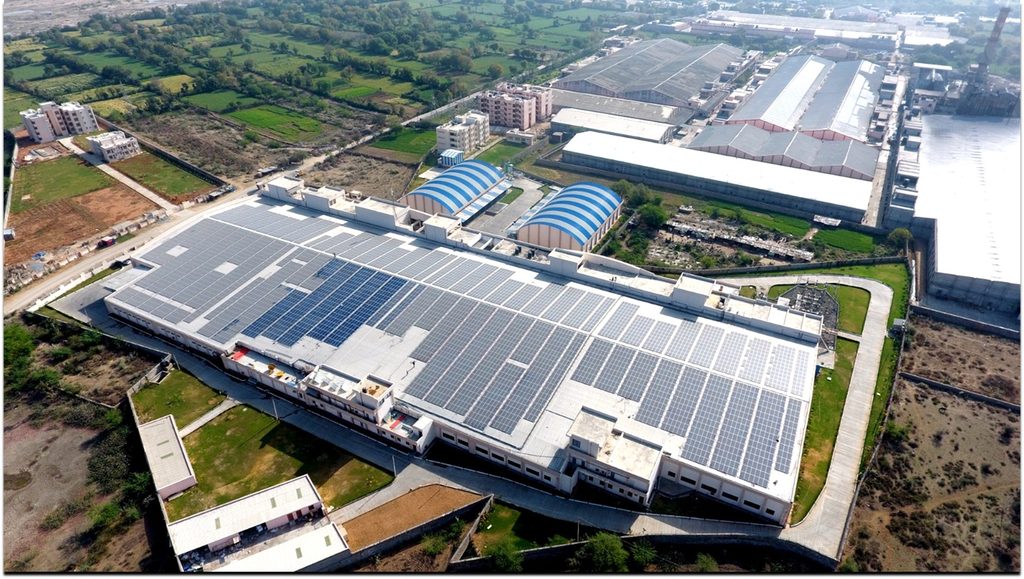
Sustainability at RSWM is integrated into our business strategy and is increasingly becoming a growth lever rather than a compliance exercise. Approximately 70 per cent of RSWM’s total energy mix is now sourced from renewable energy—way above the national clean energy average of around 31 per cent. This significant milestone has been further strengthened through our recent green energy partnership with Adani, reinforcing RSWM’s commitment to accelerating the transition towards a cleaner, more sustainable energy future. This transition is helping us reduce dependence on conventional energy and also provides greater resilience against energy cost volatility.
Circularity and resource efficiency are equally important. During FY26, we utilised 49,128 MT of recycled polyester and recycled 48,517 MT of PET bottles. Through our subsidiary LNJ GreenPET, we are developing a Bottle-to-Bottle recycled PET facility with a daily recycling capacity of approximately 9 million PET bottles. We also operate Zero Liquid Discharge across our facilities, using biofuel based boilers by reducing dependency on fossil fuel and continue to work with recycled, sustainable, responsible and next-generation materials.
Through Panchtatva, our five-elements sustainability platform launched at BharatTex 2025, we are taking an integrated approach to energy, water, materials, waste and resource management. The larger objective is to reduce resource intensity, strengthen circularity and build a more resilient manufacturing model. Sustainability is therefore not separate from our growth strategy; it is increasingly embedded in how we develop products, manage operations and engage with customers.
What are your major capacity expansion, product diversification or value-added manufacturing plans, and which markets or product segments do you expect to contribute most strongly to the next phase of growth?
Over the next five years, I see significant opportunities in value-added textiles, sustainable and recycled fibres, knitting, denim, circular manufacturing and downstream garmenting. The global market is increasingly moving towards products that combine sustainability, functionality and design value, and this aligns closely with the capabilities we are building at RSWM.
We are expanding our knitting business with an investment of Rs 920 million, taking capacity from around 750 tonnes per month to roughly 900 tonnes per month, alongside a new printed knits division. Our denim business now operates at 32 million metres of annual capacity, with a growing focus on value-added categories such as casual indigo shirting and trend-led denim collections. We are also strengthening our technical textiles range, including Meta Aramid, Para Aramid, PROTEX, PYROTEX, Flame Retardant and XLANCE, along with other protective-textile fibres. GRAFYRA, our graphene-enhanced smart yarn, is another example of our focus on innovative performance textiles. The technical textiles segment, supported by the National Technical Textiles Mission, is expected to be an important growth opportunity for India in the coming years.
We have also taken a significant step towards strengthening our downstream capabilities through our strategic partnership with Spain-based Noize Design Studio (NDS9), resulting in the formation of a new entity, LNJ NDS9 Global. The Rs 1.86 billion project, with RSWM holding 74 per cent and NDS9 26 per cent, is focused on premium denim and activewear garment manufacturing for international apparel brands. The facility is planned to begin with 5 lakh garments per month and scale to 15 lakh garments per month in the second phase. This will complement our existing strengths across yarns, fabrics, denim, knitted fabrics and technical textiles and enable us to capture greater value across the textile-to-fashion value chain.
Looking towards 2030, what do you believe will differentiate India’s leading textile companies from the rest — scale, technology, innovation, sustainability, brand building or global market presence — and where is your company placing its biggest bets?
I don’t believe the leaders of 2030 will be defined by any one factor. Scale will remain important, but scale without productivity, technology and differentiation will not be enough. Sustainability will increasingly become a baseline expectation, while technology, innovation, traceability, speed, quality and the ability to respond to changing customer requirements will become critical differentiators. India will also need to strengthen downstream manufacturing and build the scale required to serve global buyers efficiently.
At RSWM, our biggest strength is diversification with depth. We operate across five businesses — yarns, fabrics, denim, knitted fabrics and technical textiles with more than 2,300 yarn variants, 12+ manufacturing facilities and 5.84 lakh spindles. We serve customers across 70+ countries, giving us a broad geographical customer base and multiple demand pools. Sustainability is also structural to our business: around 70 per cent of our energy comes from renewable sources, we operate Zero Liquid Discharge across our facilities and continue to expand our use of recycled and responsible materials. Our certifications, including GOTS, GRS, Fairtrade and OEKO-TEX, also provide customers with verifiable assurance around our sustainability practices.
Our vision is captured in our new brand narrative, SUTRADHAAR — “the thread that connects tradition to tomorrow.” We have been in the textile industry since 1960, and RSWM 2.0 is about bringing new energy and agility to that legacy without losing our focus on customers, people, sustainability and giving back to society. Our biggest bets are therefore on circular and sustainable manufacturing, technical and value-added textiles, advanced materials, renewable energy, technology and downstream apparel capabilities. Looking ahead, in the longer term, we are committed to milestones such as doubling the current revenue, driven by strategic CAPEX, enhanced production capacity, improved asset utilisation and deeper community development initiatives. The objective is not simply to become larger, but to become a more resilient, reliable, innovative and value-added textile company.