


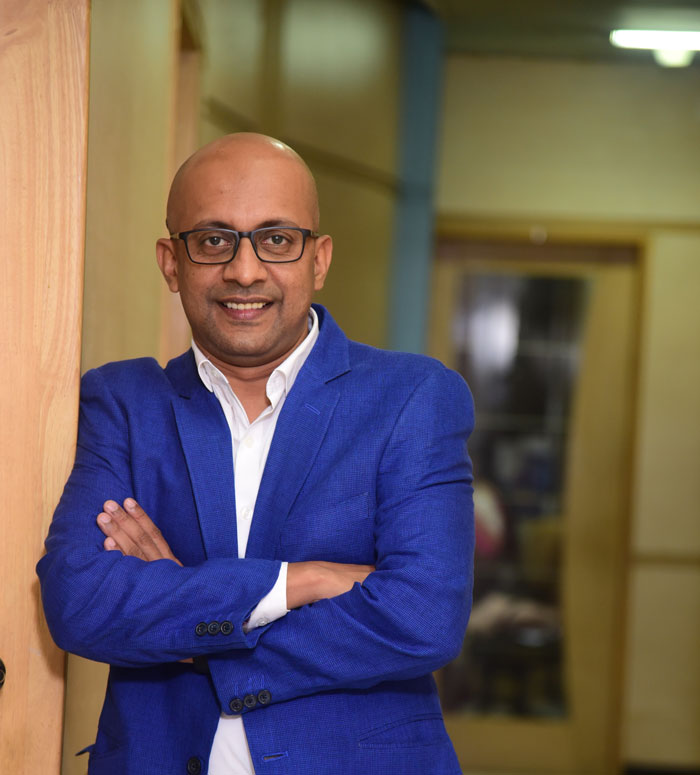
The Indian apparel industry is undergoing a significant transformation, driven by evolving consumer preferences, technology adoption, sustainability priorities and expanding global opportunities. As brands focus on premiumisation, digitalisation and operational efficiency, companies are building strategies to strengthen their market presence while adapting to changing demands. Kapil Pathare, Deputy Managing Director, VIP Clothing, in this conversation with Divya Shetty, shares insights on the company’s growth roadmap, the future of India’s textile sector, investments in technology and sustainability, and the opportunities shaping the next phase of the apparel industry.
Your company has built significant scale and business momentum. What will be the key growth drivers that help you sustain this trajectory over the next three to five years?
The next three to five years will be about strengthening the fundamentals of the business while building carefully for the future. We see opportunities across premiumisation, category expansion, distribution and international markets.
Innerwear will remain at the centre of our business. At the same time, consumer preferences are changing, and there is increasing demand for better fabrics, fit, design and product experience. This creates opportunities for us to strengthen our premium offerings and address newer consumer segments.
We also see considerable headroom in distribution. Our focus is to deepen our presence in existing markets while expanding through modern trade, e-commerce and other emerging channels. International markets will be another area of focus, where we intend to build our presence selectively and with a long-term view.
Technology and better processes will support all of these initiatives. We are working to improve demand planning, inventory management, supply-chain visibility and decision-making through better data and systems.
For us, growth has to be supported by execution and discipline. The objective is not simply to become larger, but to build a stronger and more efficient business that can sustain growth over the long term.
As global textile and apparel supply chains diversify, what opportunities do you see for Indian manufacturers to capture a larger share of international sourcing, and what must the industry do to capitalise on them?
The diversification of global supply chains creates a meaningful opportunity for India. We have a strong textile ecosystem, manufacturing capabilities and a large pool of skilled people. We also have the advantage of a large domestic market, which gives Indian companies the ability to understand consumers at scale.
However, the opportunity cannot be approached only from a cost perspective. International customers are looking for consistent quality, reliable delivery, compliance, traceability and increasingly, sustainability.
The industry therefore needs to continue investing in technology, automation, product development and supply-chain capabilities. Equally important is the ability to respond quickly. Consumer preferences are changing rapidly, and manufacturers have to become more flexible and responsive.
At VIP Clothing, we see international markets as a long-term opportunity. We have taken selective steps to build our presence outside India and will continue to evaluate markets where we believe we can create a sustainable business.
India has the capability to capture a larger share of global sourcing. The next step is to ensure that we consistently deliver the quality, reliability and standards expected by international customers.
This will require the industry to focus not only on manufacturing efficiency, but also on the complete customer experience.
How are investments in automation, digitalisation, AI and advanced manufacturing technologies changing productivity, quality and cost competitiveness across your operations?
Technology is becoming an important part of our transformation. But we do not look at technology as an objective in itself. The question we ask is how it can help us improve the way we operate and make better decisions.
We are strengthening our digital and supply-chain ecosystem, including warehouse and order-management capabilities, marketplace integration and better business visibility. Our ERP transformation is also an important step in this direction. It gives us an opportunity to look at existing processes, reduce manual intervention, improve data accuracy and strengthen controls.
AI and business intelligence will increasingly help us in areas such as demand planning, inventory management and sales-force productivity. Better information allows the organisation to identify issues earlier and respond faster.
In manufacturing, selective automation and tighter process control can improve productivity and consistency while reducing avoidable manual intervention.
At the same time, technology cannot replace experience. Our people understand the product, the manufacturing process and the market. The real opportunity is to combine that experience with better systems and better data.
Our objective is straightforward: improve productivity, improve visibility and maintain the quality associated with our brands while building a more scalable operating platform.
With sustainability increasingly influencing both customer and investor decisions, what major investments are you making in areas such as renewable energy, water management, circularity, sustainable materials and decarbonisation?
Sustainability is becoming an increasingly important part of the textile and apparel industry, and we recognise that this will only become more relevant as customer and international market expectations evolve.
We have already taken steps in renewable energy. Our windmill in Tamil Nadu supports the energy requirements of our Thingalur stitching operations and is part of our efforts to reduce dependence on conventional energy sources. Beyond renewable energy, we are also looking at sustainability more broadly — energy efficiency, responsible use of materials, waste reduction and improving the efficiency of our manufacturing and supply-chain processes.
At the same time, we believe sustainability is valuable only when the entire value chain is sustainable. It cannot be limited to one company or one stage of manufacturing. It has to involve suppliers, manufacturers, distributors, retailers and ultimately the consumer. The industry has to move together for sustainable practices to create meaningful and lasting impact.
There is also a practical consideration. Sustainability comes at a cost, and that cost has to be acceptable to the entire trade as well as the customer. For a mass-market business, we have to find the right balance between sustainability, product quality, comfort and affordability.
We therefore see sustainability as a continuous process rather than a single initiative. Our approach is to make improvements that are meaningful, scalable and commercially viable, while progressively strengthening our practices as the industry and consumer expectations evolve.
What are your major capacity expansion, product diversification or value-added manufacturing plans, and which markets or product segments do you expect to contribute most strongly to the next phase of growth?
Our approach to the next phase of growth is to be selective. We want to strengthen the areas where we already have capabilities while building new categories and markets where we see sustainable demand.
Innerwear will remain our core business. Within this, we see opportunities to grow premium products as well as newer consumer segments. Women’s innerwear is another important area where we see significant potential.
We are also investing in product development to respond to changing consumer expectations. Our premium and youth-oriented offerings are intended to address consumers who are looking for better fabrics, fit, design and overall product experience.
On the market side, there is still significant opportunity within India. We want to deepen our presence across existing markets while improving our reach through modern retail, e-commerce and newer digital channels.
Internationally, we will continue to build selectively in markets where we see the right opportunity and where we can establish a sustainable presence.
Capacity expansion, therefore, has to follow demand and business opportunity. We would rather build capabilities in a measured manner than pursue capacity simply for the sake of scale.
The objective is to create a more diversified portfolio with better value addition and a wider market presence.
Looking towards 2030, what do you believe will differentiate India’s leading textile companies from the rest — scale, technology, innovation, sustainability, brand building or global market presence — and where is your company placing its biggest bets?
I don’t think there will be one single factor that differentiates companies by 2030. Scale will continue to matter, but scale by itself will not be enough.
Companies will need to combine efficient operations with technology, product innovation, strong brands and an understanding of the consumer. Sustainability and compliance will also become increasingly important, particularly for companies looking to participate more actively in international markets.
For us, the biggest priority is to build a stronger and more capable organisation around the fundamentals of the business. That means reliable manufacturing, consistent product quality, better systems, capable people, stronger brands and disciplined execution.
We also need to remain close to the consumer. The way people discover products, shop and evaluate brands is changing rapidly. Digital channels are making this change even faster.
At VIP Clothing, we are therefore placing our efforts across product development, brand building, technology, distribution and international markets. These are not separate initiatives. They have to work together.
As we look towards 2030, our responsibility is to build on the trust and legacy of VIP while being willing to change where the market demands it.
We will continue to move with speed where it matters, but with the same discipline and prudence that are necessary to build a sustainable business for the long term.