


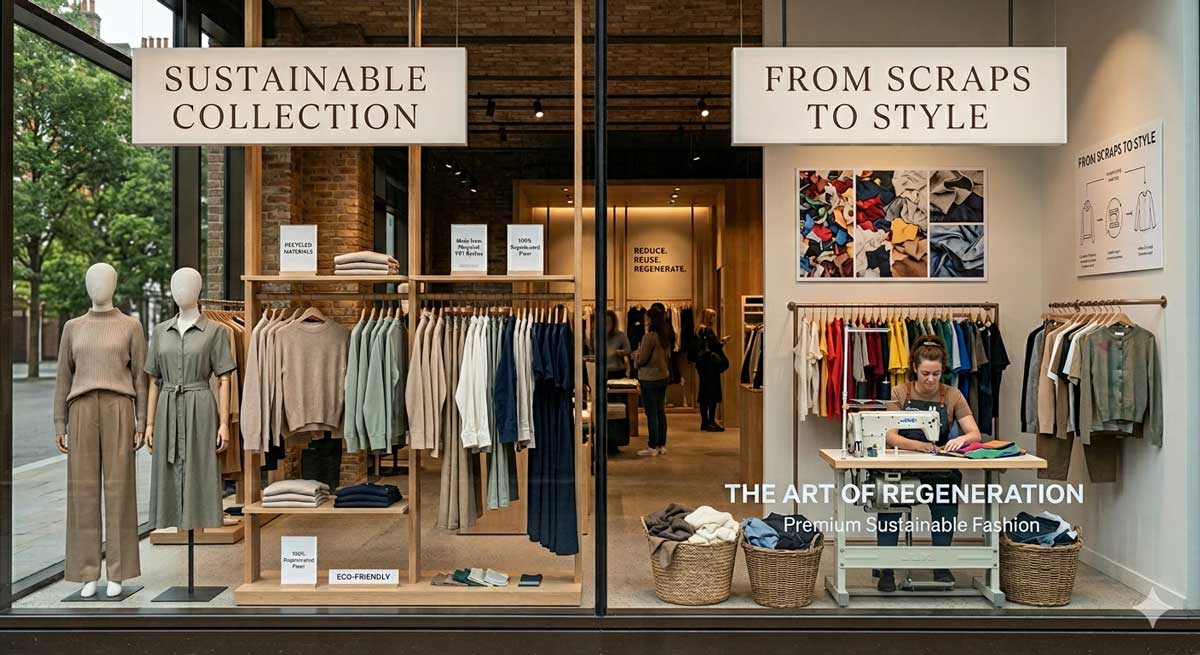
India’s textile waste crisis needs a mindshift change from a ‘make-take-waste’ mindset to a deeply integrated circular economy, suggests Jay Deivasigamani.
India’s contribution to global textile waste stands at approximately 8 per cent by generally 70.73 lakh tonnes of waste annually. Considering India’s large production capacity, the waste generated from textile production is categorised into two distinct categories: Pre-consumer and post-consumer. While not flawless, the nation has still adopted a competent mechanism to deal with pre-consumer textile waste which accounts for almost 42 per cent of the total textile waste.
While 95 per cent of the pre-consumer waste is successfully recycled, challenges surrounding operational efficiency and water mismanagement still pose a massive threat to the environment, with no concrete resolutions in sight. The other category of post-consumer stage accounts for a staggering 58 per cent of India’s total textile waste, without an effective system to handle such waste. The post-consumer waste consists of garments discarded by domestic and home textiles. With fast fashion on the rise along with online shopping, predominantly in Urban India, has led to an increase in textile waste by 30 per cent between 2019 and 2023. The lack of impactful procedures with regards to waste management, have over the years created some crucial challenges to overcome, some key hurdles in the pre-consumer process are:
- Reduced efficiency: In the production stage, during fabric cutting approximately 35 per cent of the raw materials are discarded as scrap due to inaccurate layout planning, designing and cutting errors. This leads to an imbalance in cost efficiency for brands considering the massive amounts paid for the fabric.
- Water depletion: Fabrics utilise colossal amounts of natural resources for growth. Indian textiles units utilise approximately 1.6 million litres of water per tonne of fabric, which means countless litres of water is used for fabric, of which a massive portion is discarded as scraps. Recycling the fabric cannot reclaim the water used to make it.
- Water contamination: In this stage, the waste also includes toxic chemical sludge and dye-tinted wastewater effluent. Several small processing units with limited regulations do away with zero Liquid Discharge (ZLD) protocols and instead release the highly toxic contaminated water in rivers, endangering natural habitat.
Strategically, navigating the post-consumer waste is the need of the hour. Since this waste accounts for a higher percentage coupled with the lack of the formal reprocessing system, it currently poses challenges like:
- Landfill crisis: Since, there is not a systematic procedure to deal with clothing from household thrash, the large amounts of clothes ending up in dumping grounds lack a permanent solution. Textiles have quietly become the third-largest contributor to dry municipal solid waste in India.
- Non-biodegradable blend: Since India is the second largest producer of Man Made Fibres, the modern Indian consumer utilises a large proportion of synthetic blends such as polyester, nylon, etc. When disposed of, these garments take hundreds of years to decompose, ultimately releasing methane gas into the atmosphere.
- Downcycling: When used garments arrive at sorting centres in a stained, torn and unkept state they cannot be recycled into high-quality clothing. They are instead downcycled to cheap mattresses, insulation, sofa stuffing, etc. This just delays the timeframe for them to be dumped into a landfill, rather than transforming them into a new garment – with a newly renewed life cycle. This also results in economic loss since the garment is not valued at the premium paid at the time of first purchase.
Apparel brands must shift their direction towards advocating for a greener future, with a commitment to low-impact, environmentally friendly practices, to ensure a sustainable growth. Some initiatives which brands can employ in all 3 stages (pre-consumer, post-consumer, after-sales) are:
- Pre-consumer stage: This stage sets the foundation for the entire lifecycle of the garment. To minimise the environment footprint across energy, water and raw materials, the entire operational pipeline needs to be examined right from fiber to the final production. Turning to the grassroots – brands should source the raw materials from farms that care for the earth by shifting the focus to ‘agricultural sourcing.’ Alternatives like organic and regenerative farming ensure the soil remains healthy and water usage is well regulated. Further, brands can resort to modern low-water digital dyeing technologies and make use of 3D prototyping to accurately predict the volume of raw materials required. By combining smart-farming choices with zero-waste designs, a green protocol can be established even before manufacturing begins.
- Post-consumer stage: To tackle one of the industry’s largest systemic issues – overproduction, brands can utilise data analytics to predict customer demand or an on-demand manufacturing model to completely eliminate overproduction. This ensures the production cycle is accurately synced with real-market demand, thereby ensuring optimum allocation of resources and reducing wastage. In a scenario where excess fabric or production scrap is inevitably created, brands can upcycle the waste into new good-quality garments, rather than using new resources. This ensures that every manufactured material is used to its highest potential.
- After-sales cycle: By shifting their focus to garment-longevity and low-impact care, brands can drive enormous environmental savings. By engineering fabrics which are resilient and can last for years, brands can directly reduce the opportunity for customers to look for replacements and in-turn also extend the potential life-cycle of the garment. Once the product reaches the true end of its life, brands can close the loop by offering take-back programs and turn worn-out clothing into feedstock for their future collections. Brands must also ensure that the products produced are easy to maintain, requiring minimal washing and ironing, without making the process feel like a taxing chore.
India’s textile waste crisis needs a mindshift change from a ‘make-take-waste’ mindset to a deeply integrated circular economy. The shift will only happen as a result of synchronised efforts of all entities – brands, consumers and local authorities collaborating for a common goal of protecting the environment. By transforming waste management from a burden to a high-value, closed loop opportunity, India can preserve its natural resources, support its workforce and scale a globally component sustainable manufacturing model.
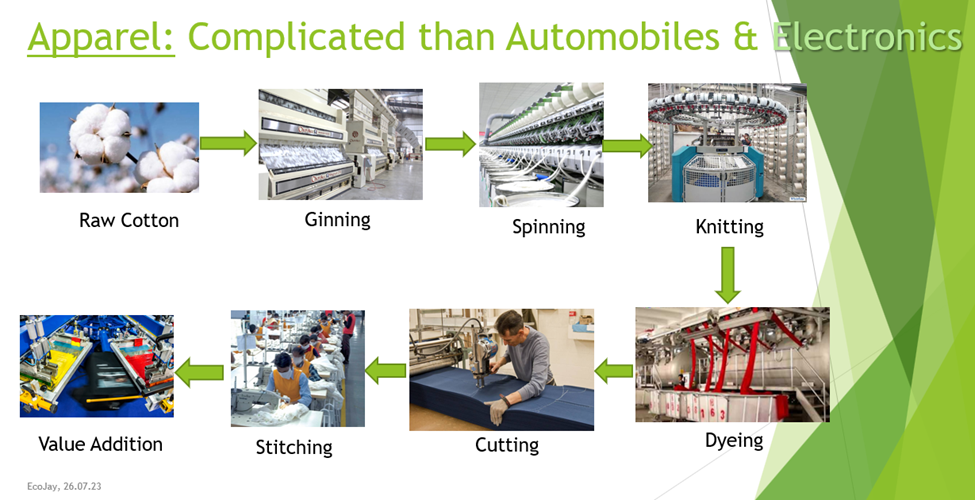
- During production: Reduce resource utilisation – energy, water, raw-material
- Post production: Reclaim pre-consumer waste and upscale them, Reduce over-production
- After sales/ consumption: Make the garments that are easy to maintain (avoiding excess use of detergents and ironing) and that lasts long to avoid frequent replacements. Recover and Recycle post-consumer waste
About the author:

Jay Deivasigamani is the Managing Director of EcoJay, a sustainable fashion brand on a mission to solve the global climate change crisis. At the helm of affairs, he leads the company’s overall vision, strategy, and execution, driving the integration of sustainable innovation across design, manufacturing, and supply chains. Jay is also the founder of Caslay, India’s most sustainable apparel brand, powered by EcoJay.