India’s apparel exports saw muted growth as US demand weakened, while EU recovery and FTAs offer support ahead.
India’s apparel exports grew by a modest 1.5 per cent year-on-year in dollar terms during the first 10 months of FY2026, as US tariffs continued to impact demand, according to a report released by ICRA on March 31. In rupee terms, exports rose by 5.8 per cent, supported by the depreciation of the Indian currency.
ICRA noted that exports to the US declined by around 6 per cent in USD terms during the period, highlighting the adverse impact of tariffs on import volumes. The slowdown in the US was partly compensated by higher shipments to markets such as the UK and the UAE.
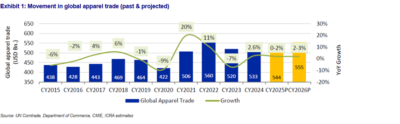
Global apparel trade is estimated at around $550 billion, with the US and Europe together accounting for nearly half of total imports. ICRA estimated that imports by the US and Europe grew by 5–6 per cent year-on-year during 11 months of CY2025, led by around 9 per cent growth in the EU due to retailer restocking. In comparison, US import volumes declined by 3–4 per cent amid tariff-related pressures.
India’s apparel exports stood at around $16 billion in FY2025, contributing nearly 3 per cent to global apparel trade. The US and Europe remain the key markets, with shares of about 32–33 per cent and 31–32 per cent, respectively.
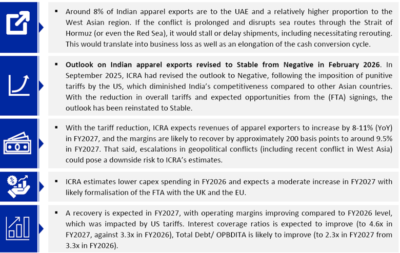
ICRA revised its outlook for India’s apparel export sector to Stable from Negative in February 2026, citing easing tariff pressures and expected opportunities from free trade agreements with the EU and the UK.
For FY2027, the agency expects apparel exporter revenues to rise by 8–11 per cent year-on-year, with operating margins improving by around 200 basis points to nearly 9.5 per cent.
However, ICRA warned that geopolitical risks in West Asia remain a key concern. With around 8 per cent of India’s apparel exports going to the UAE, any prolonged disruption in shipping routes such as the Strait of Hormuz or the Red Sea could delay shipments and elongate the cash conversion cycle.
The report also projected improved credit metrics in FY2027, supported by stronger profitability and moderation in leverage levels.