


Gopal Reddy says, with automation and IoT technologies now embedded into air compressors, textile production is moving away from traditional setups and becoming more efficient and better for the environment.
The Indian textile industry is a major contributor to our export and manufacturing sectors. According to the Union Ministry of Textiles, in the Financial Year 2023-24 alone, textiles added 13 per cent to industrial production, and 12 per cent to exports. To keep up with rising demands the industry is steadily adopting automation and Internet of Things (IoT) ushering in big changes in manufacturing, making everything faster, smarter, and more efficient. With the help of tools like robotic weaving, automated cutting and AI-driven design, businesses are not only meeting market needs but also cutting down on waste and costs. At the core of this shift is the smart use of resources. Imagine you walk into a modern textile manufacturing plant where machinery hums smoothly, downtime is rare and energy bills don’t skyrocket. Behind all this is compressed air, technically invisible yet absolutely essential.
With automation and IoT technologies now embedded into air compressors, textile production is moving away from traditional setups and becoming more efficient and better for the environment. Enlisted below are a few key benefits:
- Real-time monitoring
- Sensors track key data like pressure, temperature, flow rate and power use
- Data is sent to an IoT platform so you can check it anytime, from anywhere
- Easy-to-read dashboards show how compressors are performing
- Predictive maintenance
- Smart systems study past data to predict possible issues
- Get alerts when something is off so you can fix it before it breaks
- Plan maintenance at the right time, not too early or too late
- Better energy efficiency
- Compressors like variable-speed drive (VSD) compressors adjust motor speed based on real-time demand to save energy
- Detect and fix air leaks that waste power
- Smart controls change settings based on what is needed, cutting energy use
- Smoother operations
- Detect defects early to avoid sudden breakdowns
- Use data to manage compressor usage more effectively
- Save money with fewer repairs, lower energy bills and less downtime
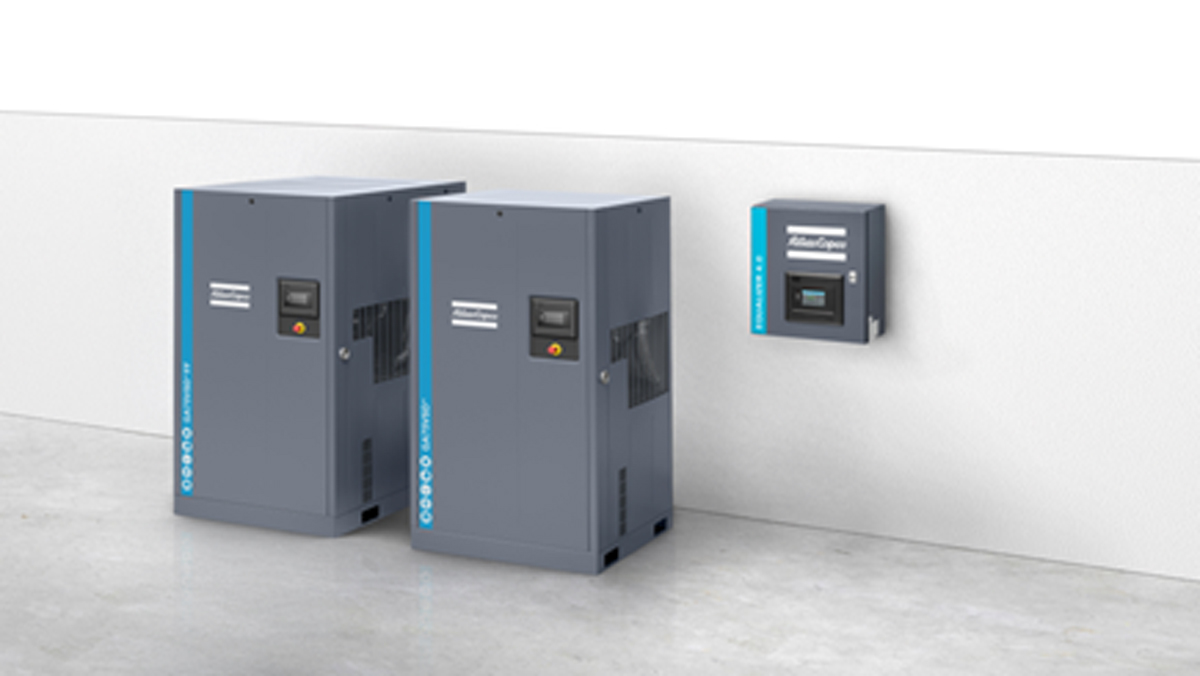
Some leading manufacturers are already offering smart air compressors tailored for textile needs. For example, Atlas Copco has launched systems like Elektronikon Nano with SMARTLINK, which provides real-time performance monitoring through an app, even allowing for over-the-air software updates. Central controllers such as Equalizer 4.0 PRO and Optimizer 4.0 manage multiple compressors, optimising workload distribution and energy consumption.
These technological shifts align seamlessly with the objectives behind Industry 4.0, where machine-to-machine communication is being facilitated and systems adapt in real time to the downstream air consumption pattern. However, bringing IoT into textiles has its own set of challenges. The foremost of which relates to keeping data safe and private while avoiding any network issues. Then there is initial investment cost of setting everything up and keeping them operational. Systems need to grow with businesses and not slow operations down. Factory workers also need the right skills and training.
India is the world’s second-largest manufacturer and exporter of textiles and apparel after China, with a 5 per cent share in global trade, according to the Ministry of Textiles. Compressed air is now one of the quiet forces that keep textile plants functioning efficiently. Whether it’s spinning, weaving, dyeing, or even just cleaning, air compressors play a big role. They directly affect the quality of the final product, which is why picking the right industrial air compressor manufacturer really matters. So, the next time you find a fabric seamless and beautiful, remember that smarter air systems may be working hard behind the scenes to give you something you can use and cherish forever.
About the author:

Gopal Reddy M is the National Marketing Manager of Industrial Air Division at Atlas Copco (India). Since 1873, the Atlas Copco Group has provided innovative technology, products, services and solutions. Atlas Copco Group aims to enable technology that transforms the future, creating value for our customers, employees, shareholders and society