


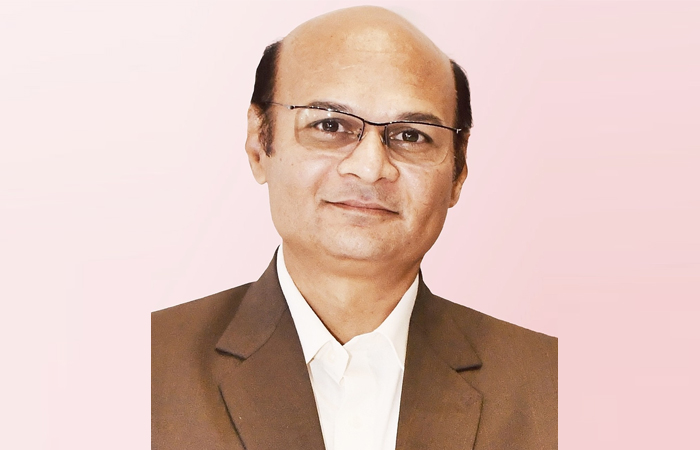
HMX, a part of the A.T.E. Group, designs and manufactures energy-efficient, environment-friendly cooling solutions for commercial and industrial applications. The low carbon technologies are suitable for several applications and for most geographical locations across the globe. These solutions based on HMX’s proprietary Indirect Evaporative Cooling technology. These solutions now cool more than 20 million square feet of space in more than 10 countries. At the heart of HMX’s cooling solutions is DAMA- a modular and scalable sensible heat exchanger which can be used in systems ranging from 500 CFM to 2,00,000 CFM. Rupesh Dave, Vice President, Sales and Marketing, HMX, in this interview with Divya Shetty, highlights some of the latest innovations in his company and the present stat of the air engineering industry.
How would you describe the current state of the air engineering industry in India, particularly with respect to its role in the textile sector?
The market for textile air engineering is directly influenced by the overall textile market conditions. Today, demand is sluggish due to uncertainties created by the reciprocal tariffs by the USA, geopolitical tensions, and supply chain disruptions, which have triggered market volatility and raised fear of an economic slowdown. With the Indian – UK free trade agreement getting concluded in May 2025 and with FTAs with Chile, New Zealand and EU in an advanced stage of negotiations, we expect the textile market will improve soon, which in turn will drive the market for the textile air engineering industry.
In the textile sector, air engineering plays a critical role. Maintaining the right temperature, humidity, and ventilation is essential—not just for the quality of yarn, fabric, garments and made-ups, but also for machinery performance and worker comfort. Given that India is one of the largest textile producers globally, the demand for reliable and efficient air management systems is steadily increasing. With outside temperatures increasing every year due to global warming, providing comfortable working conditions becomes crucial to manage quality and productivity in the industry.
The air engineering industry in India is currently undergoing a significant transformation. There is a growing emphasis on energy efficiency, indoor air quality, and process optimisation. These factors are becoming central to how air management systems are designed and implemented.
What are the major challenges textile manufacturers face today regarding air management, and how is HMX helping address these through its solutions?
The need for air management in textile manufacturing units primarily depends on factors such as the type of raw material—cotton, viscose, blends, polyester, etc.—the yarn count, and the end-use, such as denim, shirting and bottom weights fabric, bed linen, kitchen and bath robes, upholstery, sports and activewear, hosiery, to name a few. Each application has its own temperature and relative humidity requirements.
With evaporative cooling solutions like desert coolers or air washer systems which are most used in all textile & garment units, maintaining consistent department conditions is a challenge due to hourly and seasonal changes in outside weather conditions. Alternately, textile units have to install air conditioning systems to achieve constant conditions which are not economical due to high CapEx & OpEx.
Hence the textile manufacturers are looking for a viable solution which is both economical and efficient.
At HMX, we address these challenges through our advanced indirect evaporative and hybrid coolingtechnologies. These systems provide energy-efficient cooling with significantly lower power consumption. This allows textile manufacturers to maintain optimal environmental conditions for various processes, improve worker comfort and reduce operational costs—all while supporting their sustainability objectives. So far, several customers have been using our solutions in the garment sector and for spot cooling
Can you highlight some of the latest innovations HMX has introduced in air engineering technology specifically for the textile industry?
Many of our cooling solutions are suitable for the unique demands of the textile sector. HMX’s innovations are based on evaporative technologies, or combine evaporative and refrigerative technologies, depending on the specific process requirements and the prevailing climatic conditions. Some of our key offerings include:
- Indirect-direct evaporative cooling (IDEC): This is an advanced system that delivers comfortable indoor conditions, even during the peak of summer, by leveraging the benefits of both indirect and direct evaporative cooling.
- Hybrid cooling systems: These systems integrate conventional HVAC with indirect evaporative cooling, allowing precise control over both temperature and humidity—critical for several processes.
- Smart control integration: We have also introduced Industrial Internet of Things or IIoT-enabled monitoring systems that provide real-time performance tracking. These help manufacturers optimise energy usage, streamline maintenance schedules, and ensure consistent environmental conditions across the facility.
How do HMX’s cooling and ventilation solutions support energy efficiency and environmental sustainability for textile units?
Sustainability is our core approach at HMX. Our cooling and ventilation solutions are designed to significantly reduce environmental impact while maintaining high performance. Here’s how we support energy efficiency and sustainability:
- Low energy consumption: Our hybrid cooling systems consume up to 60 per cent less energy compared to conventional air-conditioning solutions. This not only reduces electricity bills but also eases the load on the power grid.
- Reduced carbon footprint: By minimising the use of refrigerants, reduced energy consumption and leveraging natural evaporation processes, our technologies promote greener operations and help textile unit’s move toward their sustainability goals. Our HMX IDEC is estimated to save 0.00085 kg/CMH/hr of CO2.
- Improved indoor air quality (IAQ): Enhanced air quality contributes to better worker health and productivity, which aligns with sustainable workforce practices and creates a more comfortable and efficient working environment.
What are HMX’s future plans in terms of R&D, expansion, and adapting to the evolving needs of the Indian and global textile industry?
Our R&D team’s goal is to make HMX’s cooling solutions even more efficient and sustainable, with improved environmental control across the various textile operations and further reductions in energy consumption.
Leveraging our decades of experience in the Indian textile sector, we are now working on next-generation solutions that integrate advanced cooling technologies with state-of-the-art controls and automation. These new solutions along with features such as Industrial Internet of Things (IIoT), will help textile plants to produce consistent product quality and increase their productivity.
Beyond operational efficiency, we are also working to reduce the carbon footprint throughout the lifecycle of our products, which will eventually support the textile industry to meet their goals for sustainability in operations.Bottom of Form