Close Menu
Indian Textile Journal
  • Home
  • Textile Machinery
    • Allied Equipment and Accessories
    • Automation
    • Dyeing, Processing & Finishing
    • Knitting
    • Printing
    • Spinning
    • Weaving
  • Tech Textiles
  • Sustainability
  • Resources
    • Trade Fair
    • Events
    • Videos
  • Interview & Opinion
  • Subscribe Now
  • Advertise
  • Digital
  • Apparels & Garments
  • Fibres & Raw Materials
  • Home Textiles
  • Industry Update
Facebook X (Twitter) YouTube LinkedIn
Indian Textile Journal
Epson
  • Home
  • Textile Machinery
    • Allied Equipment and Accessories
    • Automation
    • Dyeing, Processing & Finishing
    • Knitting
    • Printing
    • Spinning
    • Weaving
  • Tech Textiles
  • Sustainability
  • Resources
    • Trade Fair
    • Events
    • Videos
  • Interview & Opinion
  • Subscribe Now
  • Advertise
  • Digital
  • Apparels & Garments
  • Fibres & Raw Materials
  • Home Textiles
  • Industry Update
Indian Textile Journal
Home » Peacock inspires textile coloration process
Industry Update

Peacock inspires textile coloration process

By March 20, 20171 Min Read
Share Facebook Twitter LinkedIn WhatsApp Copy Link

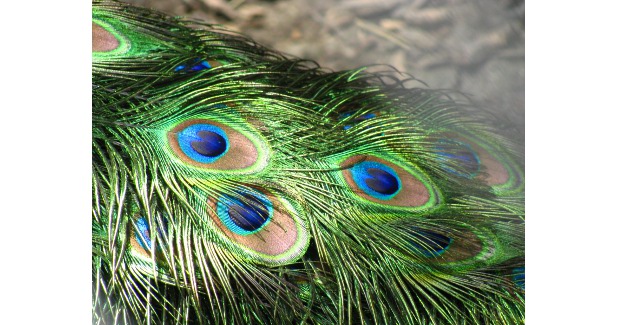
Peacock, which is the national bird of India, has inspired designers for many generations. Recently, a team of researchers from Dalian University of Technology, China has borrowed inspiration from the patterned structure of peacock feathers to derive structural colours in textiles, to make the coloration process more environmentally friendly.

Deviating from the concept of chemical colours, the scientists have developed 3-D colloidal crystals and have transfer printed on to voile fabrics to create structural colors.

The coloration formulation consists of polystyrene nanoparticles, polyacrylate, carbon black and water. The nano polystyrene is responsible for the 3-D colloidal crystal formation, which modulates the light to develop the structural colour patterns. Polyacrylate is needed for mechanical stability of the colloidal structures on the fabric.

According to the researchers, colloidal crystals are promising alternates to organic dyes and pigments. Transfer printing of colloidal particles resulted in good wash resistant multicolored patterns similar to those in peacock feathers. The work has appeared in a recent issue of ACS Applied Materials & Interfaces.
By: Seshadri Ramkumar, Texas Tech University, USA

Previous ArticleSangeeta Sachdev is MD of SPGPrints America
Next Article Cotton situation stable

Related Posts

Maharashtra Cabinet approves key amendments to state textile policy

November 19, 2026

Inside Karl Mayer’s breakthrough spacer fabric innovations at ITMA ASIA 2026

November 16, 2026

Itema to showcase textile versatility at ITMA ASIA + CITME 2026

November 16, 2026
Recent Posts
  • Rieter’s COMPACT4 helps Nahar Spinning Mills increase productivity by up to 22%
  • inno-spin: Automating every move in the mill, from Sliver to Stock
  • Nonwoven wipe for cold weather decontamination
  • India is a key market for Swiss textile machinery firms: Cornelia Buchwalder
  • Maharashtra Cabinet approves key amendments to state textile policy
  • Role of textiles in molecular medicine
  • Managing the 5x Surge: Supply Chain Resilience for India’s Textile & D2C Fashion Brands
  • LMW: Complete Technology | Seamless Possibilities
Facebook X (Twitter) YouTube LinkedIn
  • About us
  • Contact us
  • Privacy Policy
  • Terms and Conditions

SISTER PUBLICATIONS

Construction World Equipment India Industrial Product Finder Infrastructure Today

© 2026 Indian Textile Journal. All Rights Reserved.

Type above and press Enter to search. Press Esc to cancel.