Close Menu
Indian Textile Journal
  • Home
  • Market and Economy
    • Apparels & Garments
    • Fibres & Raw Materials
    • Home Textiles
    • Industry Update
  • Textile Machinery
    • Allied Equipment and Accessories
    • Automation
    • Dyeing, Processing & Finishing
    • Knitting
    • Printing
    • Spinning
    • Weaving
  • Tech Textiles
  • Sustainability
  • Resources
    • Trade Fair
    • Events
    • Videos
  • Interview & Opinion
  • Subscribe Now
  • Advertise
  • Digital
Facebook X (Twitter) YouTube LinkedIn
Indian Textile Journal
Epson
  • Home
  • Market and Economy
    • Apparels & Garments
    • Fibres & Raw Materials
    • Home Textiles
    • Industry Update
  • Textile Machinery
    • Allied Equipment and Accessories
    • Automation
    • Dyeing, Processing & Finishing
    • Knitting
    • Printing
    • Spinning
    • Weaving
  • Tech Textiles
  • Sustainability
  • Resources
    • Trade Fair
    • Events
    • Videos
  • Interview & Opinion
  • Subscribe Now
  • Advertise
  • Digital
Indian Textile Journal
Home » Loepfe to use Falcon-i for projects in China & Taiwan
Apparels & Garments

Loepfe to use Falcon-i for projects in China & Taiwan

By July 12, 20202 Mins Read
Share Facebook Twitter LinkedIn WhatsApp Copy Link

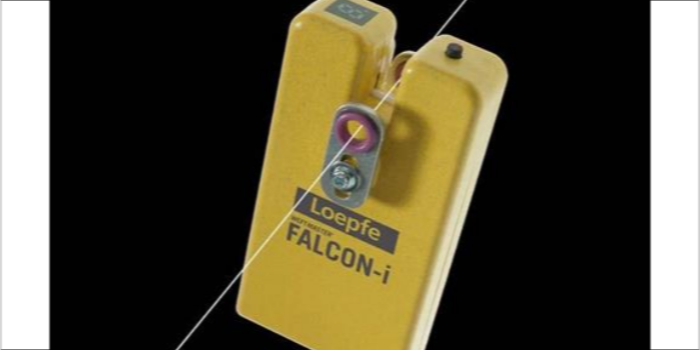
Loepfe, a manufacturer and solution partner for electronic online quality assurance systems, has announced that in order to detect even the tiniest yarn irregularities, company is using Falcon-i which offers extensive sensitivity levels, allowing customers to fine-tune the ratio of machine stoppages caused by necessary quality control stops.

Printed circuit boards (PCBs) used to mechanically support and electrically connect electronic components using conductive pathways, tracks or signal traces etched from copper sheets laminated onto a non-conductive substrate. In 2018 the Global Single Sided Printed Circuit Board Market Analysis Report estimated PCB market to reach $79 billion by 2024.

PCBs are generally made of various layers of materials, which are bonded together by heat, pressure and other methods. Its basis, the so-called substrate, is commonly made of glass epoxy, also known as fibre reinforced plastic. In order to ensure and achieve an efficient and smooth PCB manufacturing process, a top quality and flawlessly woven glass fabric is the key to minimised rejection costs and ultimate quality assurance.

A fully integrated PCB manufacturer can control the entire manufacturing process. One of the world’s largest manufacturer of such boards and other technical glass fabrics, operating several plants in China and Taiwan, occasionally experienced tiniest unevenness on the surface of its PCB boards. Particular defects originated from exactly that woven glass fabric, eventually caused by minute filamentation of the yarn and slightest fluff accumulation during the weaving process. By using Falcon-i optical sensors to monitor the weft insertion during the weaving process, such tiny yet costly defects could easily and reliably be eliminated.

Any manufacturer of demanding technical fabrics and composite textiles used in applications such as PCB manufacturing, automotive, architecture, filtration, aeronautics, medical and carbon industry can highly benefit from this type of versatile quality monitoring sensor. The implementation of Falcon-i optical yarn defect sensors in the quality control of any running yarn throughout the manufacturing process of fabrics is simple and easy.

Falcon-i’s unique flexibility to select the level of quality control enables technical fabrics manufacturers to respond quickly and flexibly to market trends, demand and developments.

Previous ArticleSPGPrints names Quantia as Spanish agent for textile
Next Article Loepfe to use Falcon-i for projects in China & Taiwan

Related Posts

Spykar plans pan-India offline expansion with 100 new stores in two years

June 9, 2026

CMAI hosts AI Masterclass to guide clothing businesses into the digital era

June 5, 2026

Atlas Copco RePower Centre boosts compressor lifecycle solutions

June 2, 2026
Recent Posts
  • Clean energy shift may save Tamil Nadu textiles Rs 32.50 billion
  • Spykar plans pan-India offline expansion with 100 new stores in two years
  • Meenakshi India reports FY26 revenue at Rs 1.58 billion
  • Grasim Industries to invest Rs 30.94 billion to boost lyocell capacity
  • Training undergraduate and school students in textiles research
  • CMAI launches used clothes upcycling drive
  • Trützschler IDF 3 unlocks short fibre processing potential
  • World Environment Day 2026 – 5 wardrobe choices combining style and sustainability
Facebook X (Twitter) YouTube LinkedIn
  • About us
  • Contact us
  • Privacy Policy
  • Terms and Conditions

SISTER PUBLICATIONS

Construction World Equipment India Industrial Product Finder Infrastructure Today

© 2026 Indian Textile Journal. All Rights Reserved.

Type above and press Enter to search. Press Esc to cancel.