Close Menu
Indian Textile Journal
  • Home
  • Textile Machinery
    • Allied Equipment and Accessories
    • Automation
    • Dyeing, Processing & Finishing
    • Knitting
    • Printing
    • Spinning
    • Weaving
  • Tech Textiles
  • Sustainability
  • Resources
    • Trade Fair
    • Events
    • Videos
  • Interview & Opinion
  • Subscribe Now
  • Advertise
  • Digital
  • Apparels & Garments
  • Fibres & Raw Materials
  • Home Textiles
  • Industry Update
Facebook X (Twitter) YouTube LinkedIn
Indian Textile Journal
Epson
  • Home
  • Textile Machinery
    • Allied Equipment and Accessories
    • Automation
    • Dyeing, Processing & Finishing
    • Knitting
    • Printing
    • Spinning
    • Weaving
  • Tech Textiles
  • Sustainability
  • Resources
    • Trade Fair
    • Events
    • Videos
  • Interview & Opinion
  • Subscribe Now
  • Advertise
  • Digital
  • Apparels & Garments
  • Fibres & Raw Materials
  • Home Textiles
  • Industry Update
Indian Textile Journal
Home » Zero raw silk import by 2020: CSB
Industry Update

Zero raw silk import by 2020: CSB

By December 23, 20161 Min Read
Share Facebook Twitter LinkedIn WhatsApp Copy Link
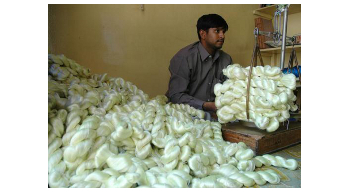
India is marching towards self-reliance in raw silk and plans to bring down imports to zero level by 2020, according to K M Hanumantharayappa, Chairman, Central Silk Board (CSB). With consistent supply of raw silk of high quality in adequate quantities and increased production of bivoltine silk, India will be able to attain self-sufficiency in silk.
CSB has been making concerted efforts and is developing new technologies for quality cocoon production and its conversion into silk yarn of global standards. Currently, the silk production is around 28,000 tons of which 10,000 tons account for crossbreed Mulberry variety.
There is a gap between silk production and demand. Besides shortage of skilled manpower is forcing imports. To bring this to an end, the Central Silk Technological Research Institute (CSTRI) under funding from the board has developed indigenous Automatic Reeling Machine (ARM) and it will be supplied to reelers from next year. The Board is launching its second Centre of Excellence (CoE) at its headquarters in Bengaluru.
Previous ArticleAEPC presents Export Awards
Next Article Chinese firm plans to invest in USA

Related Posts

Maharashtra Cabinet approves key amendments to state textile policy

November 19, 2026

Makarand Kulkarni: Demand for recycled polyester is rising across all segments

November 19, 2026

Mihir V Shah: Circularity must also consider the end-of-life stage of fabrics

November 18, 2026
Recent Posts
  • Rieter’s COMPACT4 helps Nahar Spinning Mills increase productivity by up to 22%
  • inno-spin: Automating every move in the mill, from Sliver to Stock
  • Nonwoven wipe for cold weather decontamination
  • India is a key market for Swiss textile machinery firms: Cornelia Buchwalder
  • Maharashtra Cabinet approves key amendments to state textile policy
  • Role of textiles in molecular medicine
  • Managing the 5x Surge: Supply Chain Resilience for India’s Textile & D2C Fashion Brands
  • LMW: Complete Technology | Seamless Possibilities
Facebook X (Twitter) YouTube LinkedIn
  • About us
  • Contact us
  • Privacy Policy
  • Terms and Conditions

SISTER PUBLICATIONS

Construction World Equipment India Industrial Product Finder Infrastructure Today

© 2026 Indian Textile Journal. All Rights Reserved.

Type above and press Enter to search. Press Esc to cancel.