


Lubbock (USA)
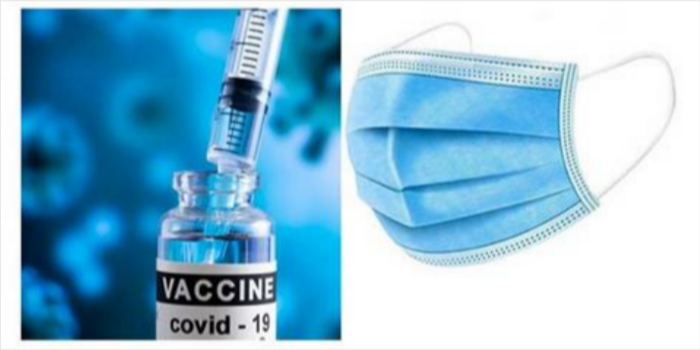
Vaccines, social
distancing, and face masks (VSF) are important tools in the toolkit to wage the
war against COVID-19.
Face masks are
indeed one of the best precursors to nation-wide vaccination programs.
In the United
States, while the vaccination program was progressing, until reaching a
manageable number of daily COVID-19 cases, mask mandates and other restrictions
were in place in different States. According to the United States’ CDC, 140.4
million people have been fully vaccinated. As 53% of population aged 18 and
above have been fully vaccinated in the United States, States have been
relaxing restrictions. However, in countries, where vaccination levels are low
and new variants are emerging, COVID-19 protocols are needed. Localized
restrictions are proving to be effective in lowering the daily increase in
cases.
As India is facing
a severe second wave of COVID-19, while vaccines are panacea, until huge
populace is vaccinated, protective measures are needed. On June 7th,
Indian Prime Minister Honorable Narendra Modi addressed the nation highlighting
the steps towards vaccination, while advising people to wear masks and follow
the protocols. Indian government will be handling the vaccination program
centrally and would distribute vaccines to States for immunizing people aged 18
years and above, free of cost. Such central procurement and distribution by
local authorities have worked well in the United States.
In regions where
population density is high, use of face masks and other protocols help until
vaccination level reaches about 60-70 percent. Reaching such a threshold will
enable the risk to be manageable, stated Dr. Craig Barker, MD., Corporate
Medical Director, UMC Physicians, Lubbock, USA.
As there are
reports of the emergence of the delta variant in India, which is known to be
more contagious, use of face masks, physical distancing and avoiding gatherings
will limit the spread. Using face masks and practicing hygiene will help with
borrowing time to gear-up vaccination.
India’s PPE sector
is well positioned to develop necessary protective equipment as this Industry
has been building its base in the past two decades.
Particularly
regarding India, as major cities like Mumbai and New Delhi are opening-up their
economy, until there is wide availability of vaccines, countermeasures such as
face masks are important. Face masks limit the number of microbes leaving the
body and help with preventing the spread, stated Dr. Barker.
Our recent research has shown that countermeasures like using face masks reduced
the number of COVID-19 cases.
Following hygiene
protocols will limit the spread of the corona virus and will play a major role
in saving lives.
About
the Author:
Dr
Seshadri Ramkumar is the Professor, Nonwovens & Advanced Materials
Laboratory, at Texas Tech University, Texas, USA. He can be reached on email:
s.ramkumar@ttu.edu