


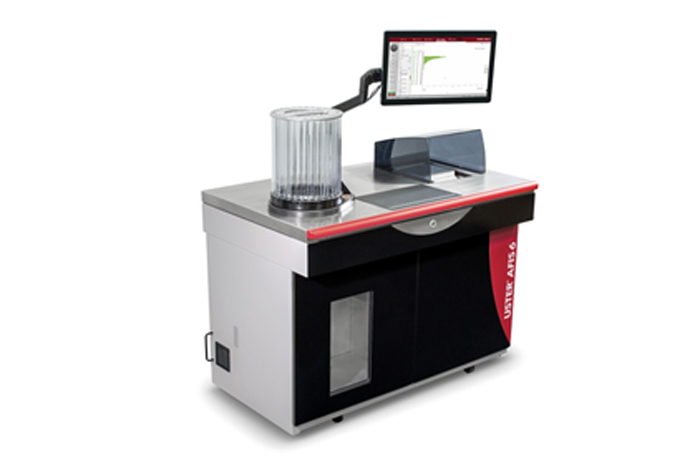
AFIS can now measure 100 per cent synthetic fibres and fibre blends commonly used in short-staple spinning, in the same unit as cotton
Fibre quality measurement in spinning preparation is crucial for optimising waste and meeting yarn quality specifications. The brand-new Uster AFIS 6 – the next-generation laboratory instrument from Uster Technologies – uniquely tests man-made fibre properties in addition to cotton. It provides critical data to optimise fibre process control for cotton, man-made fibres, and blended yarns.
Spinners always strive to preserve the quality of valuable incoming fibre throughout the manufacturing process. Uster AFIS 6 achieves this by testing the material at each stage of preparation, from bale to roving. And, in its latest version, AFIS can now measure 100 per cent synthetic fibres and fibre blends commonly used in short-staple spinning, in the same unit as cotton.
Ongoing fibre quality monitoring
This intensive monitoring can detect fibre quality issues before they get into the yarn and lead to a quality claim from the customer.
Several different fiber characteristics affect quality and performance through pre-spinning operations – opening, cleaning, carding, combing, roving – so testing needs to take account of the impact of each. AFIS (short for Advanced Fibre Information System) achieves this by measuring the various parameters for the length, fineness, maturity, neps, seed coat neps, trash, and dust in a particular test specimen of fibre.
This intensive monitoring is the only way to detect fibre quality issues before they get into the yarn and lead to a quality claim from the customer. Only industry-leading Uster AFIS 6 can deliver these advantages to give mills better overall control of costs, reduced raw material waste and less off-quality yarn.
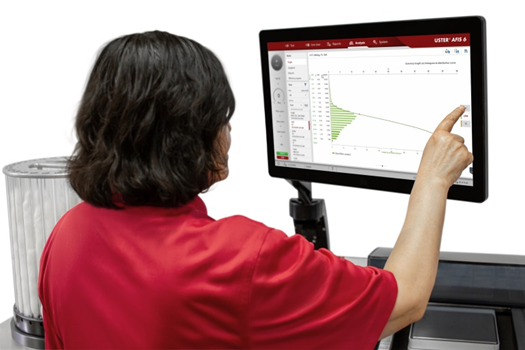
AFIS 6 also makes things easier for the spinner, applying the same intuitive new user interface as the famous Uster Tester 6 and other Uster yarn testing instruments, featuring 11 languages. The improved reporting package simplifies data analysis.
What spinners need to know
Neps in yarn can be seriously disturbing if they show up in finished fabrics and garments. Uster AFIS 6 makes the important distinction between fibre neps and seed coat neps – important because seed coat neps are more difficult to remove. In addition to the number of neps, the size of the neps is measured. With the critical neps size report, spinners get an estimate of how many neps are in the yarn.
For the spinning process, it is essential to know about fibre length and short fibre content. AFIS 6 measures the single fibre length, per number and per weight. Next to the length, the maturity and immature fibre count are measured. With its advanced opto-electronic sensors to measure single fibre quality, AFIS 6 proves it can optimise short staple spinning.
An optional sensor also measures dust and trash particles, which can cause serious problems in subsequent fabric manufacturing processes. Knowing the number of trash and dust particles helps the spinner and results in less downtime in weaving, while knitting needles last longer, and cleaning efficiency in the open-end spin box is enhanced.
Managing synthetics the same way
Synthetic fibres are growing in importance, so it’s essential to measure them. The cut length and fiber fineness are particularly relevant, as both are crucial for the spinning process. Uster AFIS 6 can measure the synthetic fibres most commonly used in short staple spinning. As well as length and fineness, fibre neps are determined. New test parameters are also introduced, such as cut length and denier. They are critical for incoming raw material inspection and selection.
Short-staple yarns today include more and more cotton/synthetic blends and 100 per cent synthetics. Cotton can be blended with fibres such as polyester, micro-polyester, viscose, modal, micro-modal, lyocell, micro-lyocell, and acrylic.
Quality and profitability in control
Carding and combing are the two fibre processes in the spinning mill which most influence yarn quality. The carding process is the heart of every spinning mill. Poor performance here cannot be recovered in subsequent processes. The combing process reduces the short fibre content and is the last removal stage for neps, trash and dust. Only with Uster AFIS 6 measurements can spinners optimise these processes and save money.
Uster AFIS 6 can be connected to Quality Expert, hosted in Uster Tester 6. Full control from fibre to yarn in a single inline system illustrates the entire mill operation, with key quality parameters in the right format at the right time. Mill analyses with meaningful quality comparisons, integrated application knowledge and focused management reports are leveraged for even more profound and informed decision-making.
Last but not least, Uster Statistics is already integrated within AFIS 6, making global benchmark comparisons quick and easy. The new AFIS provides two Uster Statistics interactions: one for the whole process and one for each process step. Comparisons to Uster Statistics throughout the process show any unexpected spinning faults.
Spinners have it in their own hands! The latest Uster fibre process control system puts them in control of spinning preparation – and the end-product’s success.