


FiberTect, the patented invention of Dr Seshadri Ramkumar was introduced in 2008.
In a groundbreaking partnership between the United States Army and First Line Technology, recent research findings are poised to usher in a revolutionary shift in decontamination processes. The research, now available to the public, highlights the potential of non-aqueous decontamination technologies, with a particular focus on FiberTect.
“FiberTect has been a powerful decontamination tool that is used globally as the ‘first’ item that a responder would grab to start the decontamination process,” notes Amit Kapoor, President of First Line Technology. “The result from continuous testing only reinforces the technical superiority of FiberTect over other common decontamination tools.”
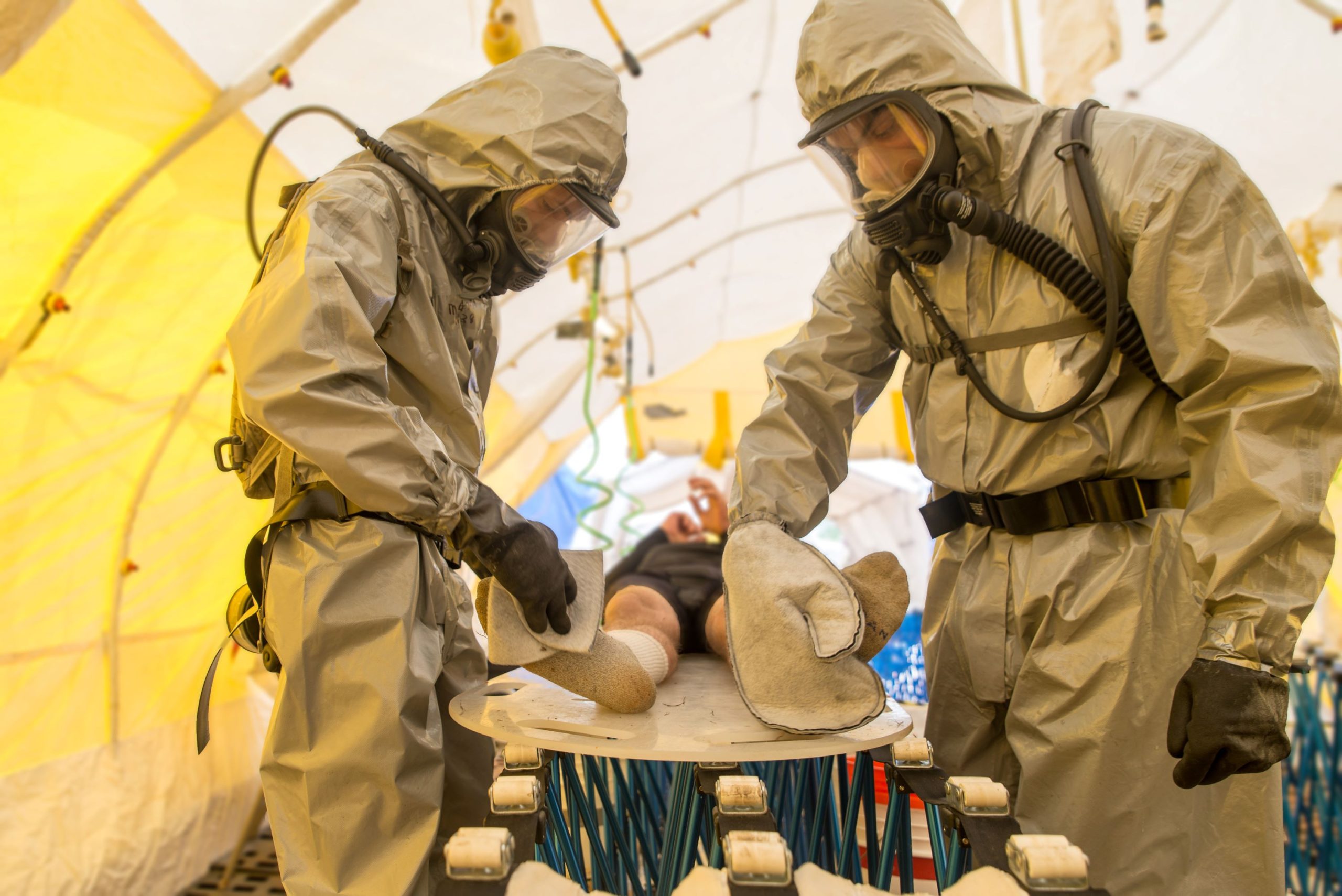
FiberTect, the patented invention of Dr Seshadri Ramkumar, a professor in the Department of Environmental Toxicology at Texas Tech University, was introduced in 2008. It is a three-layer, nonwoven wipe that boasts an activated carbon core sandwiched between absorbent top and bottom layers. These wipes are on the brink of transforming casualty decontamination, offering a safer and more efficient alternative to the prevailing water-based systems. FiberTect has been commercialised by First Line Technology in collaboration with Waco-based Hobbs Bonded Fibers.
Corey Collings, Director of R&D at First Line Technology, underlined the innovation, stating, “Decontamination of dry powders is a new use for FiberTect as it was originally designed for older Cold War-era liquid chemical warfare agents, but new research has shown that on powders its decontamination efficacy exceeds other technologies that have been traditionally used such as HEPA vacuums and adhesive tape.”
In today’s dynamic threat landscape, the continued evaluation of decontamination technologies has become imperative. While World War I primarily saw chemical warfare agents in gaseous or volatile liquid forms, they have evolved over time into persistent, adherent surface liquids. Traditional decontamination methods have proven inadequate for these modern-day challenges. Until the early 2010s, decontamination equipment was largely tailored to counter Cold War-era agents.
In contemporary scenarios, threats often manifest as dry powders, including synthetic opioids like Fentanyl, powdery toxic chemicals such as Russian Fourth-Generation Agents, and weaponised bio-toxins like ricin. These substances primarily pose inhalation hazards, but the use of improper decontamination techniques, such as isopropyl alcohol or high-pH soaps, can expedite skin permeation. Unlike liquid chemicals, these powders maintain their efficacy and persistence across various climates, from cold to hot. Water is effective for removal but poses challenges in cold weather and austere environments, and the runoff associated leads to cross-contamination and secondary hazards.
According to the US Army’s latest findings, FiberTect wipes have demonstrated remarkable efficacy, delivering equivalent performance on both equipment and skin. What truly sets FiberTect apart is its safety for skin use, as it does not increase permeation or harm the stratum corneum, the skin’s outer protective layer. Furthermore, during full-scale operational assessments, a dry decontamination system incorporating FiberTect was found to be “as good as or better than the current water-based system.” These developments have the potential to enhance the safety and effectiveness of military and emergency response operations, with broader implications for public health and various industries.
The full report, with comprehensive details of the research, is accessible here: