


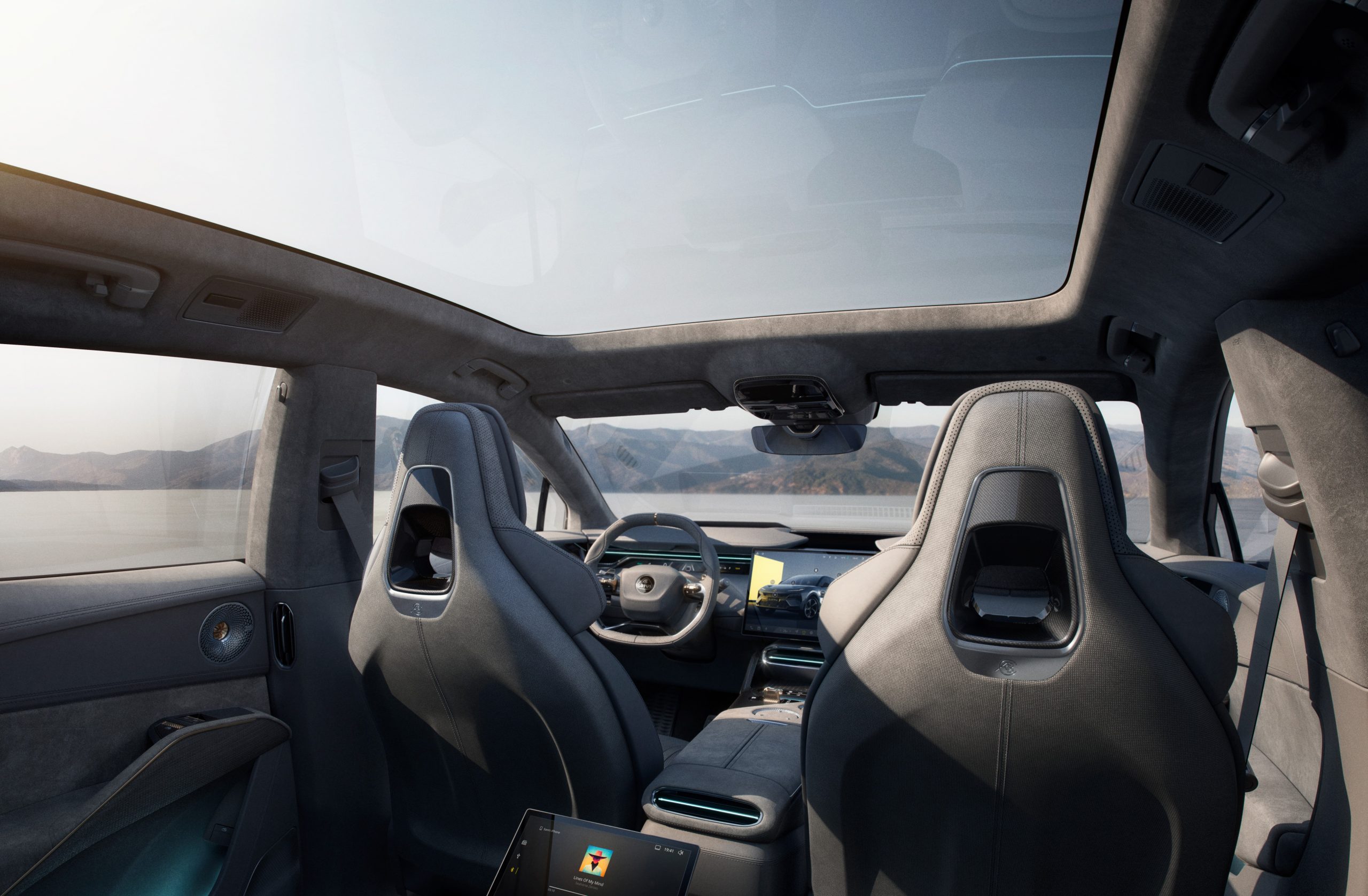
Thanks to Trützschler’s advanced TRUECYCLED process, high-quality recycling yarn has now entered Lotus electric cars. Together with the German company Brain of Materials, Trützschler played a crucial role in ensuring that the so-called WYRON truecycled yarn meets the strict requirements of the automotive sector. Featured in the Lotus Eletre and Emeya models, this innovative material proves that sustainability and top performance can go hand in hand.
Brain of Materials, located in Mönchengladbach, Germany, produces the WYRON truecycled yarn for Lotus, using state-of-the-art Trützschler technology. The open-end yarn consists of 50 per cent post-consumer textile waste and 50 per cent recycled polyester, Nm 15. It is used for the back sections of car seats, providing a sustainable solution without compromising the standards expected by Lotus, a prestigious car brand known for its high-performance sports cars and electric vehicles. According to Lotus, the yarn’s premium haptics, lightweight properties, and sustainability attributes perfectly suit the spirit of its Emeya and Eletre models. Adding to its sustainability credentials, the production process – from collecting post-consumer waste to spinning the yarn – takes place entirely in Western Europe.
“At Lotus, we take a holistic design approach, with a commitment to true innovation and sustainability, whilst maintaining a luxury look and feel. WYRON truecycled yarn demonstrates that dedication, and we’re thrilled to be the first automotive brand to bring the material to life in our cars†said Marie-Camille Lecoq, Head of CMF Sustainability at Lotus.
The heart of this success: Trützschler’s recycling expertise
Achieving such a breakthrough requires cutting-edge recycling technology and deep expertise.
“At Trützschler, we are proud to contribute our decades of know-how in textile recycling and innovative machinery solutions to this pioneering project,†says Christian Franke, Head of the Project Department at Trützschler. “By working closely with Brain of Materials for many years, we’ve ensured that the WYRON truecycled yarn meets the demanding standards of the automotive industry, while offering high quality and durability.â€
This is made possible by the comprehensive TRUECYCLED process, which provides a system solution for textile recycling. Covering every step from cutting and tearing textile waste to carding and drawing secondary fibers, TRUECYCLED enables the efficient production of sustainable, reliable yarns that serve as a premium alternative to conventional materials.
Driving sustainability forward
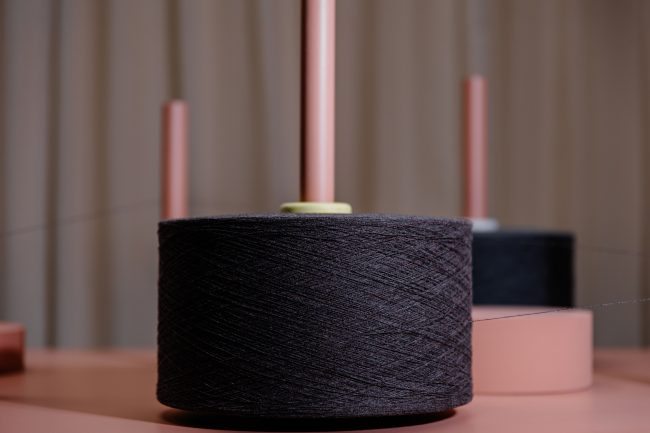
The integration of WYRON truecycled yarn into Lotus vehicles marks a milestone in both the textile and automotive sectors. It proves that (textile) recycling can produce high-quality materials suited for the most demanding applications – showcasing its potential to shape the future of mobility and beyond.