


Industry leaders at TMMA(I)’s 66th AGM call for stronger domestic manufacturing, affordable automation, R&D and digital integration as India’s textile sector enters a new phase of investment and modernisation.
The Textile Machinery Manufacturers’ Association (India) [TMMA(I)] highlighted the need for greater technological competitiveness, domestic manufacturing and innovation in India’s textile engineering industry at its 66th Annual General Meeting.
Addressing the gathering, Prashant Mangukia, Chairman, TMMA(I), said that changing global supply chains, geopolitical uncertainties and China+1 strategies are creating significant opportunities for India. However, he stressed that Indian textile machinery manufacturers would need to compete globally on technology, quality, productivity, delivery and reliability.
Mangukia pointed out that domestic textile machinery demand increased to approximately Rs 323.97 billion in FY2025-26. However, Indian manufacturers accounted for less than 25 per cent of the market by value, while imports increased sharply to around Rs 269.99 billion, predominantly in the weaving and knitting machinery segments.
“The problem is not the size of the market. The opportunity is already here. The challenge is our ability to compete,” he said.
He identified five priorities for the industry: stronger domestic manufacturing, technology and modernisation, quality and a level playing field, export expansion, and greater investment in R&D, innovation and skills. He added that the industry must move from being cost competitive to becoming technology competitive, with Indian-made machinery gaining greater acceptance in global markets.
Chief Guest Durai Palanisamy, Executive Director, Pallava Textiles, highlighted the growing importance of modernisation, automation and digitalisation for textile manufacturers. He noted that labour availability has emerged as a major challenge, making practical and affordable automation increasingly important for mills.
Palanisamy also highlighted the need to integrate machine-generated data across different stages of textile manufacturing. With mills operating machinery from multiple suppliers, he called for systems that can bring data onto common platforms and convert it into useful information for operational decision-making.
He further emphasised stronger collaboration between machinery manufacturers and textile mills for shop-floor testing and technology development. Such partnerships, he said, could help manufacturers address operational issues before commercial deployment, strengthen customer confidence and develop globally competitive machinery.
The AGM also recognised achievements in exports and indigenous technology development through TMMA(I)’s Export Excellence and R&D Awards 2025-26. Rieter India Pvt Ltd received the Apex Export Award, while companies including Kirloskar Toyota Textile Machinery, Lakshmi Card Clothing Manufacturing, Premier Evolvics, Truetzschler India, Bhagat Textile Engineers, ColorJet India, Sieger Spintech Equipments, Menzel Engineering India and Inspiron Engineering were recognised across export categories.
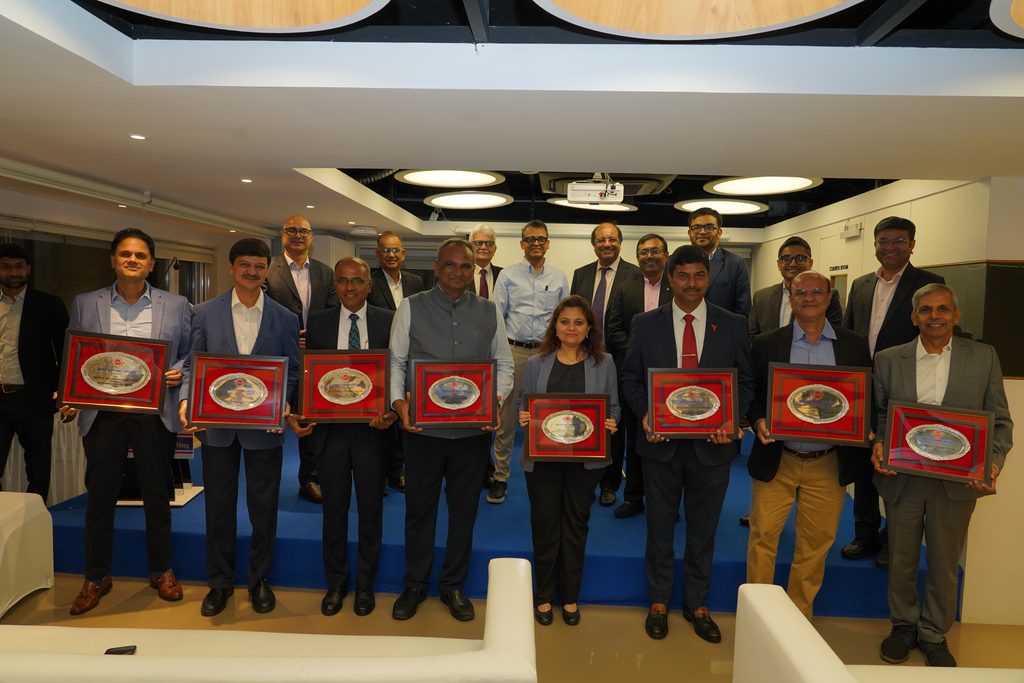
In R&D, LMW Limited and The Indian Card Clothing Co Ltd received Innovation Awards for their respective developments, while Lakshmi Card Clothing Manufacturing, Ramsons Garment Finishing Equipments and Sieger Spintech Equipments received Certificates of Appreciation for their R&D initiatives.
The AGM concluded with a call for the Indian textile engineering industry to accelerate innovation, strengthen domestic capabilities and position itself as a global technology partner for the textile sector.