


This decline is attributed to adverse economic conditions in major destinations like the European Union (EU), the US, and West Asian nations.
India’s textile exports had declined by 4.2% year-on-year (Y-o-Y) during the first 11 months of the current financial year. This decline is attributed to adverse economic conditions in major destinations like the European Union (EU), the US, and West Asian nations.
It was reported that India’s textile exports for the period between April 2023 and February 2024 amounted to $ 30.96 billion, down from $ 32.33 billion in the corresponding period of the previous fiscal year.
The possibility of a course correction in the following months seemed bleak. The downward trend would persist into March as well, citing adverse economic conditions and the Red Sea crisis as factors affecting the export of textile products, including ready-made garments.
During the 11-month period until February, there was a decrease in the export of ready-made garments to $ 13.05 billion from $ 14.73 billion compared to the previous fiscal year. Similarly, jute exports fell to $ 310 million from $ 400 million, and yarn exports decreased from $ 4.47 billion to $ 4.23 billion.
The export performance across different categories in the textile sector varied during the current fiscal year. Ready-made garment exports contracted by 11.4 %, while jute exports saw a more significant contraction of 22.5 %. Yarn exports also experienced a contraction, albeit at a lower rate of 5.3 %.
Despite these challenges, industry experts expressed optimism regarding the potential improvement in exports in the coming months, especially with signs of revival in the US market.
Crisil projected growth in India’s textile industry for the calendar year 2024, driven by improving domestic demand, gradual export recovery, and lower cotton prices.
The major buyers of Indian ready-made garments are European nations, with Germany, the Netherlands, Italy, Poland, and Denmark leading the pack.
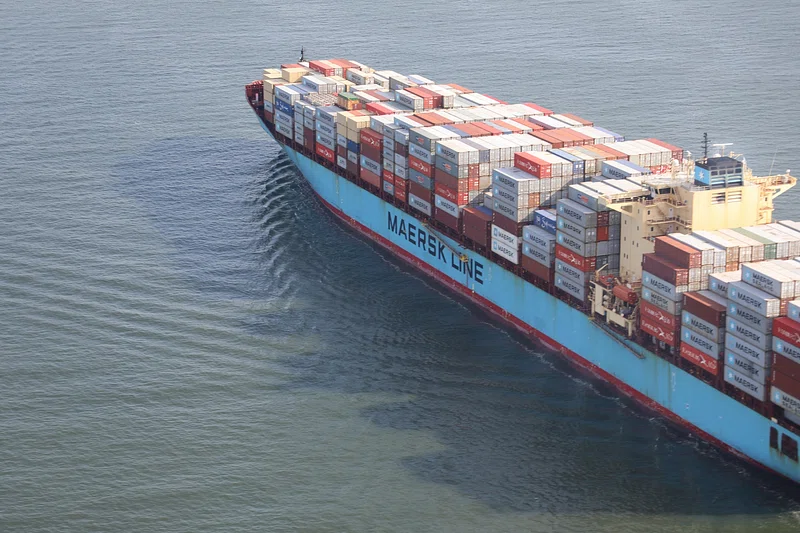
The ongoing targeting of ships in the Red Sea by Yemen’s Houthi militants has led to higher shipping costs for Indian exports due to rerouting from Africa. According to a report from the commerce ministry, which was reviewed by Mint, approximately 95% of vessels have been rerouted around the Cape of Good Hope, resulting in additional distances of 4,000-6,000 nautical miles and delays of 14-20 days.
India stands as the world’s sixth-largest exporter of textiles and apparel, with its domestic apparel and textile industry contributing about 2.3% to the country’s GDP, 13% to industrial production, and 12% to exports.
The Indian Brand Equity Foundation (IBEF), established by the ministry of commerce and industry, reported that India’s textile and apparel market size is growing at a Compound Annual Growth Rate (CAGR) of 14.59 %, projected to reach $ 387.3 billion by 2028 from $ 172.3 billion in 2022.
Furthermore, the textile industry serves as the second-largest employer after agriculture, providing direct employment to 45 million people and 100 million people in the allied sector.
News source: Mint