


Dr Seshadri Ramkumar says, policies supporting reliable farm income and stability in crop prices need to be drafted which will receive support across party lines and strengthen the government.
The world has recently witnessed the largest festival of democracy in India with about 642 million voters exercising their fundamental rights.
Economic development activities and growth should resonate with the public. Agriculture, textiles, and manufacturing can vitalise rural and semi urban areas in large and diverse nations such as India. Even in advanced nations such as the United States, rural communities such as West Texas are dependent upon agricultural economy.
India is a major player in cotton production and textile manufacturing and exports. In India, Prime Minister Narendra Modi will be forming the government for the third time with support from his allies in the National Democratic Alliance. India being the world’s largest democracy with about 980 million eligible voters, due to its economic rise and its place in the geopolitical space, it is considered as a viable counter to China.
Agriculture and employment issues have been at the forefront of this parliamentary election in India. The new government need to focus of those areas that positively impact rural and urban population with inclusive economic policies to win over the confidence of the population. Inclusive development with a year-on-year growth of over 8 per cent with jobs will set India in the path toward its goal of becoming a developed country by 2047—100th year of Indian independence.
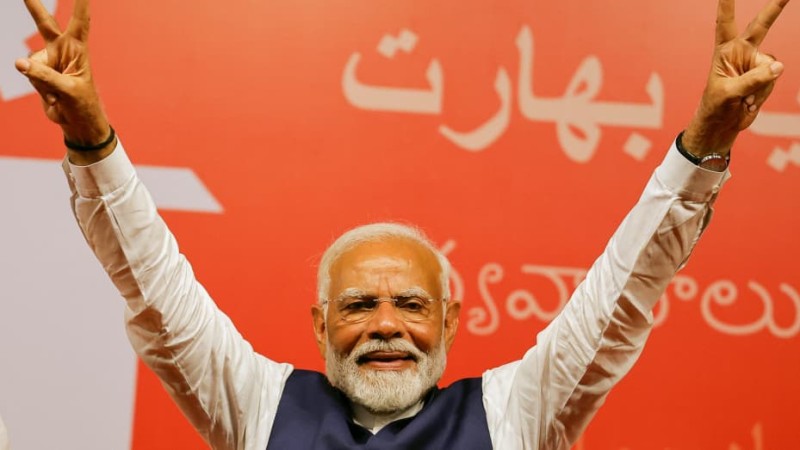
In speaking to his party supporters on June 4, PM Modi stressed the importance of self-sufficient farmers, self-dependent defence sector and the need to boost green manufacturing. Given that his third term would focus on climate change issues, food security and global supply chain stability, policies should support productive manufacturing, agriculture, and high-tech sectors such as semiconductor chips and electronics.
On June 4, I spoke with two textile industry veterans from Tamilnadu who expressed that they are optimistic that the new government would come-up with policies to boost exports of textiles with the aim of boosting employment. In my opinion, the government will aim to strengthen manufacturing and unveil supportive policies for agriculture. Such a balanced approach will enhance skill sets for labour force to have high paying jobs and strengthen agriculture.
Given the current political scenario Bharatiya Janata Party headed by PM Modi with support from Telugu Desan Party and Janata Dal (United), will focus on rural and suburban economic growth. As the two allies are from States that have large agricultural base on the plains of Ganges, Godavari and Krishna rivers, rural development and skill enhancement for high wages will receive favourable considerations among other priorities such as infrastructural investments.
Agriculture and textiles provide more employment and need the support to tackle the national unemployment issue. Policies supporting reliable farm income and stability in crop prices need to be drafted which will receive support across party lines and strengthen the government.
As the Prime Minister outlined in his latest speech to strengthen agriculture, and defence sector, textiles industry has a role to play in terms of enhancing the cotton sector, building R & D base and boost SMEs that focus on composites, defence materials, etc.
Stakeholders in the sector such as crop production, textiles and garment manufacturing should proactively engage with the government to help craft policies for a win-win growth. In addition to boosting domestic consumption, the focus should be to enhance exports. Indian government should engage with international partners particularly in the Western hemisphere to strengthen trade agreements as countries like United States are trying to move away in trade from China due to geopolitical scenario and staying competitive against China.
Indian textile industry should utilise the opportunity to present itself as a reliable alternative to China.
Balanced economic growth needs to involve agriculture, textiles, and manufacturing to have development with job creation.
About the author:
Dr Seshadri Ramkumar is a Professor, Nonwovens & Advanced Materials Laboratory in Texas Tech University, Lubbock, TX, USA.