


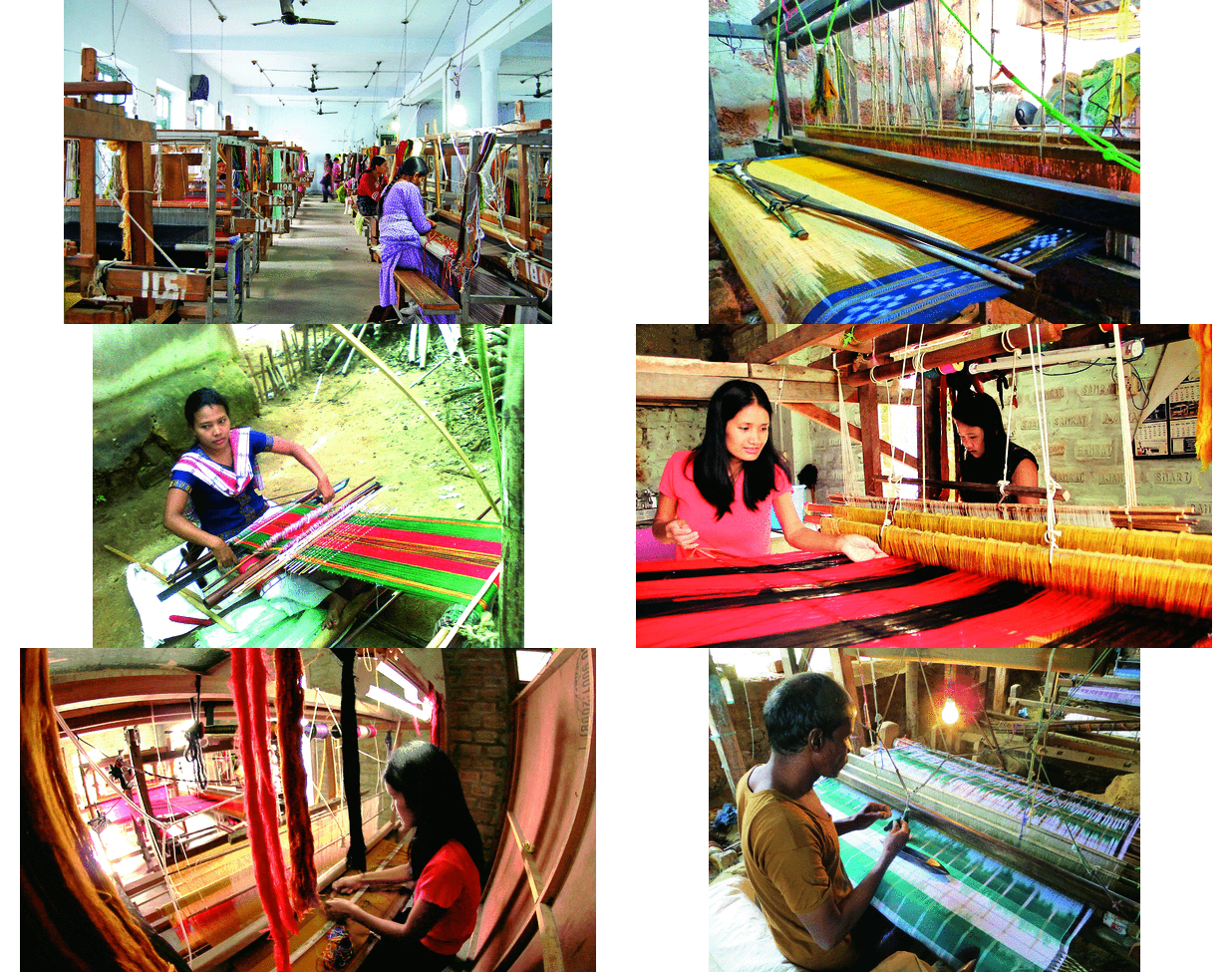
Jyoti Bhasin Chaudhry reviews various handloom clusters of Bihar.
Bhagalpur in Bihar is acknowledged as silk city as it is renowned worldwide for its silk production. The silk industry in this city is 200-years-old and an entire race exists that has been producing silk for generations. Bhagalpur is well known for its sericulture, manufacture of silk yarn and weaving them into exquisite products. This silk is known as tussah or tusser silk. Silk weaving is a longstanding customary household industry of Bhagalpur. In order to develop handloom silk industry in Bihar in Bhagalpur the weavers service centre was established in 1974. The silk sarees produced in Bhagalpur are more popular in the domestic market. The Bhagalpur cluster is the second highest in silk fabric production and exports after Karnataka. Bhagalpur silk home furnishing made ups are gradually becoming admired in the overseas markets.
Sigori cotton cluster, Patna: Sigori is a small village in Patna district, which used to be an epicenter of small weaver concentrations in its vicinity. Presently about 3,000 looms chug along producing a variety of cotton dress materials, mainly shirting, dhoti, gamcha, etc. The use of vat colours, plain weaves and various checks/stripe patterns using 32s to 60s cotton yarns, characterise Sigori’s handloom offerings.
Biharsharif cluster, Nalanda: Biharsharif town and its nearby villagers such as Nepura, Malah Bigha, etc. houses many looms producing some fine silks as well as cotton dress materials. The weavers procure silk yarns from Gaya, Bhagalpur, etc. and produce some fine tussar silk, mulberry silk and matka silk fabrics. Cotton dress materials and bed sheets are also made by some weavers using broad width looms of 60-inch width.
Bhauara cotton cluster, Madhubani: Bhauara is a small village near Madhubani township. Fine muslins, cotton dress materials, fine dhotis are some of the offerings from Madhubani region to the rest of the world. However the cluster presently has about 300 odd looms producing mainly material sand gamchas using 4s to 60s count cotton yarns. The cluster is presently being supported with a holistic package of interventions under the Integrated Handloom Development Scheme (IHDS) of Development Commissioner (Handlooms), the Government of India.
Manpur cluster, Gaya: Manpur, Tekari, Chakand and other villages of the region houses a number of weaver families. Manpur produces not only fine tussar silk, but also a large number of gamchas typically used at most pilgrimages. The weaver families produce what they can sell to traders of Bhagalpur or to the local traders based in Gaya. Some weavers have attempted natural dyed tussar silk fabrics such as stoles, dress materials, etc.
Hussainabad cluster, Bhagalpur: Hussainabad is a part and parcel of Bhagalpur. The looms being presently used in the cluster are pit looms with single box fly shuttle technique. The use of 4, 6 or 8 pedals to create textural patterns in the fabric and some makeshift dobby of 6-8 plates are in use in the cluster.
The effective width of the fabrics is ranging from 45 to 55 inches. The weavers of the cluster have been doing a lot of design based production as per the demand using up to eight pedals for textural patterns. They are adept at handling varieties of silk and the cluster has a reputation for being the key source for matka silk, which has earned brand name for Bhagalpur.
Katoria Cluster, Banka: Katoria, Chorbe and Dumwara are some of the important handloom destinations in Banka district of Bihar, which is sharing its boundary with the state of Jharkhand. However, the area enjoys a unified geo-climatic condition suitable for tussar cocoon rearing and the forests of the region provide ample scopefor the same. Building upon this, the region possesses a large population of women who carry out traditional thigh reeling of tussar silk.
Thus, Ghhichha, Katia and other types of tussar silk yarns are produced and further woven into Tussar-Ghhichha (TG), Mulberry-Ghhichha (MG) fabrics are produced. The rustic looks and the coarse texture of the fabric is appreciated by fabric experts across the globe. This cluster, which possesses about 400-500 looms, is presently being supported with a holistic package of interventions under the Integrated Handloom Development Scheme (IHDS) of Development Commissioner (Handlooms), Government of India.
Nathnagar cluster, Bhagalpur: Nathnagar is a part of the extended township of Bhagalpur and is well connected with Patna and Kolkata and thereby with the rest part of the country. A large number of households are engaged in weaving activity in the region, some in power looms and some in handlooms. The cluster has a very large number of looms though they remain functional based on the orders received. In any case 300- 400 looms are said to be operative at any given time.
The looms being presently used in the cluster are pit looms with single box fly shuttle technique. The use of jacquards is not being done by the weavers but the use of four to six pedals to create textural patterns in the fabric are in use in the cluster. The weavers of the cluster have been making a variety of silk and cotton fabrics ranging from the famous silk chaddar of Bhagalpur to tussar silk fabrics, dhoti, lungi, gamcha, etc. However, the number of cotton looms is more than the silk looms in the cluster.
The various types of yarns being used in not only Nathnagar but most handloom clusters of Bhagalpur region are as under:
Champa Nagar cluster, Bhagalpur: It is a part of the Bhagalpur township, houses about 500 odd looms and these produce a range of silk fabrics. The present product range can be divided into 65 per cent silk dress material, 20-25 per cent silk home furnishings, 15-20 per cent silk saris and cotton fabrics.
The width of the looms is up to 50 inches. Both frame as well as pit looms are being used in the cluster. Use of four to six pedals to create textural patterns in the fabric is common in the cluster. The weavers are skilled and have a clear understanding of possible variations in weave structures and possible combinations utilising the resources to the maximum usage. They are ready to accept new design ideas and are open to suggestions and not adamant to just stick to the conventional weaving technique. They do tie and dye, they try out motifs, patterning, as per yarn innovation, they also try out fancy yarns and always work according to the demand.
Kharik Bazaar, Bhagalpur: Kharik is closely linked to Bhagalpur geographically as well as economically. It is located about 30 km away from Bhagalpur off NH 31. A large number of households are engaged in weaving activity in the region, some in powerlooms and some in handlooms. The cluster has a very large number of looms though they remain functional based on the orders received. In any case 300- 400 looms are said to be operative at any given time. The width of the looms is up to 50 inches. Both frame as well as pit looms are being used in the cluster, which produces from coarse cotton lungis to fine silk dupattas. Some of the weavers also produce tussar silk fabrics such as Tussar-Ghichha or Mulberry-Ghichha.
References
•www.HandloomOfBihar.com
•http://www.India-Crafts.com/textile/Indian_handlooms/
•http://www.IndianHandloomsCluster-dchl.net/
Jyoti Bhasin Chaudhry is a research scholar at Banasthali Vidyapeeth, Rajasthan and Junior Consultant at the Footwear Design & Development Institute (FDDI).