Close Menu
Indian Textile Journal
  • Home
  • Market and Economy
    • Apparels & Garments
    • Fibres & Raw Materials
    • Home Textiles
    • Industry Update
  • Textile Machinery
    • Allied Equipment and Accessories
    • Automation
    • Dyeing, Processing & Finishing
    • Knitting
    • Printing
    • Spinning
    • Weaving
  • Tech Textiles
  • Sustainability
  • Resources
    • Trade Fair
    • Events
    • Videos
  • Interview & Opinion
  • Subscribe Now
  • Advertise
  • Digital
Facebook X (Twitter) YouTube LinkedIn
Indian Textile Journal
Epson
  • Home
  • Market and Economy
    • Apparels & Garments
    • Fibres & Raw Materials
    • Home Textiles
    • Industry Update
  • Textile Machinery
    • Allied Equipment and Accessories
    • Automation
    • Dyeing, Processing & Finishing
    • Knitting
    • Printing
    • Spinning
    • Weaving
  • Tech Textiles
  • Sustainability
  • Resources
    • Trade Fair
    • Events
    • Videos
  • Interview & Opinion
  • Subscribe Now
  • Advertise
  • Digital
Indian Textile Journal
Home » Sytec One for economical BCF yarn process
Industry Update

Sytec One for economical BCF yarn process

By January 19, 20182 Mins Read
Share Facebook Twitter LinkedIn WhatsApp Copy Link

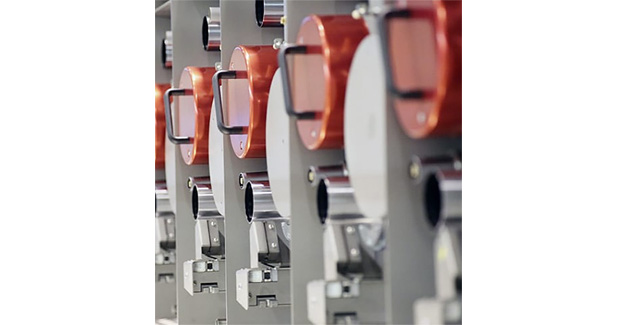
Cost-efficient production of carpet yarns beyond commodity products can constitute a challenge. Highly standardised production systems must strike compromises with regard to throughput, quality or cost-efficiency. At the Domotex 2018, the world’s largest trade fair for floor coverings, Oerlikon Neumag will present the Sytec One solution for demanding BCF processes.

The Sytec One is a BCF plant with only one end per position. Due to this single-end characteristic, it is particularly well suited for demanding production processes, such as recycled polyester or fine filaments. The reason: In the event of a yarn break, only one end breaks. All the other positions are not affected and continue to run. As a result, this plant has a higher efficiency compared with a multi-end technology plant. For example, with ten breaks a day, the efficiency of the Sytec One is still over 98 per cent, while a three-end technology achieves only 92 per cent efficiency.

The machine concept of the Sytec One with its absolutely straight yarn path in spinning and texturing also enables significantly higher process speeds compared to multi-end technologies. This results in a speed increase of up to 15 per cent.

In addition to standard processes, more demanding processes with higher break rates play an increasingly important role. "The product mix is critical to the choice of technology," said Martin Rademacher, vice president of sales Oerlikon Neumag. "We are in the comfortable position of being able to offer our customers both a single-end and a three-end technology."

Previous ArticleGood response to Karl Mayer-TITV seminar
Next Article Dow India supports women entrepreneurs

Related Posts

India’s textile sector posts 2.1% growth in FY25-26

June 15, 2026

RSWM retains IND A rating as outlook turns stable

June 12, 2026

Meenakshi India reports FY26 revenue at Rs 1.58 billion

June 9, 2026
Recent Posts
  • From Waste Fabric to New Yarn: Why Material Origin Matters in Textile Recycling   
  • Recycled fibres: the vital data for quality and profitability
  • Turning tariff relief into quality advantage in New Zealand 
  • Why texture has become the new currency of luxury interiors
  • How wall textiles are redefining interior design
  • Turning tariff relief into quality advantage in New Zealand 
  • Sustainable home textiles: Balancing design, durability and responsibility
  • Zagis Strengthens Competitiveness with Rieter Spinning System
Facebook X (Twitter) YouTube LinkedIn
  • About us
  • Contact us
  • Privacy Policy
  • Terms and Conditions

SISTER PUBLICATIONS

Construction World Equipment India Industrial Product Finder Infrastructure Today

© 2026 Indian Textile Journal. All Rights Reserved.

Type above and press Enter to search. Press Esc to cancel.