


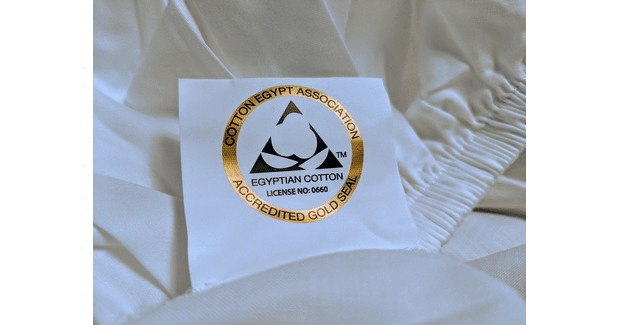
Egyptian Cotton production and exports are at their highest for five years – following a renewed period of emphasis on improving sustainability: season 2018/2019 saw an increase of 45 per cent in exports.
The Cotton Egypt Association (CEA), the independent body responsible for the global brand, has been supporting the implementation of “The Egyptian Cotton Project†activities that include an innovative training, education and awareness approach across the cotton supply chain.
This falls under the CEA’s collaboration with the United Nations Industrial Development Organisation, implementing “The Egyptian Cotton Projectâ€Â, CottonforLife and Better Cotton initiatives, to enhance and advance sustainability of Egyptian Cotton while reducing contamination.
The cooperation with the Better Cotton Initiative has allowed the deployment of pilot cotton plantations, supported by cotton traders, manufacturers and brands to pave the way for a BCI start up program in Egypt envisaged to start for the 2020/2021 cotton season.
CEA Executive Director Khaled Schuman said “Egyptian Cotton is already the finest in the world. Our goal and ambition is to make Egyptian Cotton not only the most sustainable cotton, but one which has a traceable and transparent supply chain with positive impacts at every step along it – from the farmer to the brand, the retailer and the consumer.â€Â
As well as adopting organic production methods, reducing water consumption and pesticides, the Egyptian Cotton Project is implementing education programmes which promote farmers and workers health and welfare, gender equality and entrepreneurial opportunities for youth; through awareness training sessions addressing topics such as child labour, the importance of education and qualified employment to serve as a positive alternative for youth in rural areas.
The Egyptian Cotton Project delivered technical workshops to 392 farmers on field management, irrigation, IPM and harvesting; as well as conducted approximately 50 field days in both Damietta and Kafr El Sheikh governorates, coupling them with technical consultation sessions and on-field support.
Cotton cultivation calendars with timeline guidance and best practices were distributed to cotton farmers and workers, and four observational study tours have been organised at a seed production unit in Sakha Research Station of the Cotton Research Institute, and at a nursery producing cotton seedlings in Kafr El Sheikh governorate.
A reworked curriculum on organic cultivation has been extended nationwide by the Ministry of Education reaching around 150,000 students. The project introduced an entrepreneurship curriculum; and additional trainings of teachers in Agricultural schools have been rolled-out, focussing on sustainable practices and cotton contamination management.
Schuman, added: “Trial areas adopting sustainable practices have seen a 30 per cent increase in cotton yields and a 25-30 per cent decrease in water consumption according to the project’s data.†The project’s stakeholders will continue to work towards enhancing the sustainability, inclusiveness and value addition of the long and extra-long staple Egyptian Cotton by developing the economic, social and environmental performance of cotton manufacturers, and strengthening support institutions.