Close Menu
Indian Textile Journal
  • Home
  • Market and Economy
    • Apparels & Garments
    • Fibres & Raw Materials
    • Home Textiles
    • Industry Update
  • Textile Machinery
    • Allied Equipment and Accessories
    • Automation
    • Dyeing, Processing & Finishing
    • Knitting
    • Printing
    • Spinning
    • Weaving
  • Tech Textiles
  • Sustainability
  • Resources
    • Trade Fair
    • Events
    • Videos
  • Interview & Opinion
  • Subscribe Now
  • Advertise
  • Digital
Facebook X (Twitter) YouTube LinkedIn
Indian Textile Journal
Epson
  • Home
  • Market and Economy
    • Apparels & Garments
    • Fibres & Raw Materials
    • Home Textiles
    • Industry Update
  • Textile Machinery
    • Allied Equipment and Accessories
    • Automation
    • Dyeing, Processing & Finishing
    • Knitting
    • Printing
    • Spinning
    • Weaving
  • Tech Textiles
  • Sustainability
  • Resources
    • Trade Fair
    • Events
    • Videos
  • Interview & Opinion
  • Subscribe Now
  • Advertise
  • Digital
Indian Textile Journal
Home » Stanford scientists develop skin line fabric
Industry Update

Stanford scientists develop skin line fabric

By September 13, 20162 Mins Read
Share Facebook Twitter LinkedIn WhatsApp Copy Link
A team of multidisciplinary researchers at Stanford University has developed skin-like fabric material that cools the body more efficiently.
In the Science Journal, the researchers from Stanford report that they used nanoporous polyethylene to develop a textile material which aides radioactive cooling while maintaining breathability, wicking and necessary mechanical strength.
According to the report in Science, the researchers have also devised an instrument to simulate skin temperature. The use of nanoporous polyethylene fabric resulted in the lowering of skin temperature by about 2.7 degree centigrade when compared with another commonly used next-to-skin fabric.
According to Yi Cui, an associate professor of materials science at Stanford and the lead author of the study, the fabric effectively cools the person, which makes cooling the building unnecessary thereby saving energy.
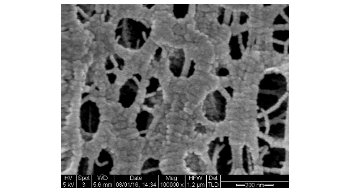
Nanoporous plastic textile transports the body heat as infrared rays due to the nanostructured polyethylene. Researchers modified the polyethylene material that is commonly used in battery development which enables it to be opaque to visible light but transparent to infrared rays so that the heat can be dissipated.
According to Professor Shanhui Fan, professor of electrical engineering at Stanford, who co-authored the study, this research can lead to the development of new materials that can trap or let go infrared radiations.

By: Seshadri Ramkumar, Texas Tech University, USA

Previous ArticleSales dip for ICIS top chemical firms
Next Article Exim Mitra for services to SMEs

Related Posts

India’s textile sector posts 2.1% growth in FY25-26

June 15, 2026

RSWM retains IND A rating as outlook turns stable

June 12, 2026

Meenakshi India reports FY26 revenue at Rs 1.58 billion

June 9, 2026
Recent Posts
  • From Waste Fabric to New Yarn: Why Material Origin Matters in Textile Recycling   
  • Recycled fibres: the vital data for quality and profitability
  • Turning tariff relief into quality advantage in New Zealand 
  • Why texture has become the new currency of luxury interiors
  • How wall textiles are redefining interior design
  • Turning tariff relief into quality advantage in New Zealand 
  • Sustainable home textiles: Balancing design, durability and responsibility
  • Zagis Strengthens Competitiveness with Rieter Spinning System
Facebook X (Twitter) YouTube LinkedIn
  • About us
  • Contact us
  • Privacy Policy
  • Terms and Conditions

SISTER PUBLICATIONS

Construction World Equipment India Industrial Product Finder Infrastructure Today

© 2026 Indian Textile Journal. All Rights Reserved.

Type above and press Enter to search. Press Esc to cancel.