

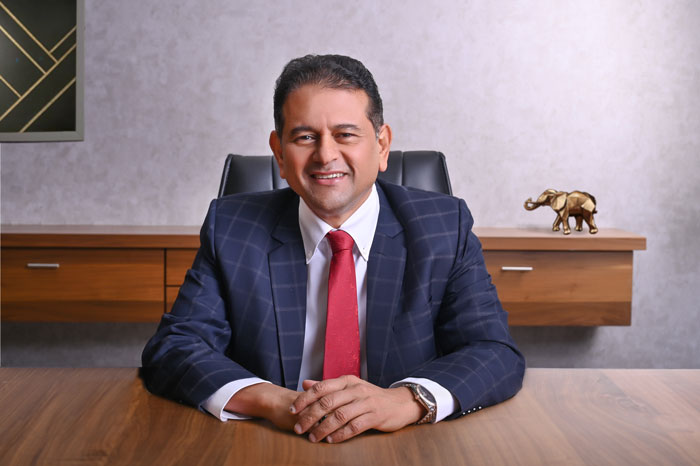
Raghunath Mannil Balakrishnan: Automation is contributing to better resource efficiency
With more than a century of legacy behind it, Mafatlal Industries is preparing for a new phase of growth shaped by changing global markets, digital transformation, and sustainability priorities. The company is also expanding into new consumer-facing platforms while strengthening its global partnerships. In this interview, Raghunath Mannil Balakrishnan, CEO, Mafatlal Industries, shares insights on the company’s growth strategy, smart manufacturing adoption, sustainability initiatives, and the evolving opportunities and challenges within the textile industry.
What are the company’s plans for the next phase of growth?
As we look ahead, our growth strategy is guided by relevance, not scale for its own sake. Over the past 120 years, we have repeatedly reinvented ourselves with India’s economic evolution. The next phase of growth for Mafatlal Industries will focus on strengthening our presence in sectors that align closely with India’s social and economic priorities, particularly education, health, hygiene, and consumer durables.
We operate through a product-agnostic, asset-light model, which gives us the flexibility to enter new categories and geographies while maintaining strong execution discipline. We are also using technology more meaningfully to strengthen last-mile delivery and institutional fulfilment. Our recent investments in digital infrastructure and enterprise technology platforms reflect this direction.
Building on our established relationships across the US, Europe, and the Middle East, grounded in consistent quality, reliability, and execution excellence, the company is well-positioned for its next phase of growth. Recent developments in India – US and India – EU trade relations present meaningful opportunities to expand into new markets and deepen global engagement.
Our focus remains on strengthening long-term partnerships in markets that value trust, dependability, and sustained commitment. Mafatlal continues to advance its “Make in Bharat for the World” approach by combining heritage craftsmanship with innovation, value creation, and responsible practices, enabling it to serve both domestic and international customers effectively.
We have additionally launched our entry into the e-commerce space, Mafatlal’s dedicated Medical Apparel platform – MedFits. The new e-commerce platform will offer a comprehensive range of high-quality medical wear, including scrubs, lab coats, under scrubs, medical caps, and allied products designed to meet the evolving needs of healthcare professionals. Through this project, we can expand our long-standing expertise into a digitally led, consumer-facing approach while directly interacting with the customer sector. It enhances our visibility and supports our overarching plan to create significant, long-lasting impact.
What sustainability initiatives has the company implemented?
Mafatlal Industries integrates sustainability into its core operations, focusing on responsible manufacturing, efficient resource use, and long-term environmental and social impact. A key priority for the company is the transition to clean energy, highlighted by initiatives such as the commissioning of a 4 MW solar power project at its Nadiad facility, aimed at reducing dependence on conventional power sources and lowering carbon emissions. These efforts are complemented by investments in energy-efficient systems, including cogeneration and steam recovery, supported by the gradual modernisation of our manufacturing plant to improve efficiency and reduce environmental impact.
Water stewardship and waste management form another important pillar of Mafatlal’s sustainability approach. The company has implemented measures to reduce water consumption, enhance effluent treatment capacity, and improve recycling and reuse processes, ensuring compliance with environmental standards while minimising operational impact.
Mafatlal also emphasises responsible sourcing and sustainable manufacturing practices through modernised machinery and the use of initiatives such as Better Cotton Initiative (BCI) cotton in select products. Alongside environmental initiatives, the company undertakes Philanthropic programmes focused on education, healthcare, rural development, and livelihood creation, supporting communities around its manufacturing locations.
Overall, Mafatlal’s sustainability strategy reflects a balanced approach—aligning operational efficiency and environmental responsibility with meaningful social contribution and long-term value creation.
What challenges is the industry currently facing?
The textile sector is experiencing renewed momentum, supported by demand recovery, a stronger export outlook, and continued policy support. The Union Budget 2026 has reaffirmed textiles as a focus area, emphasising scale, technology advancement, and productivity-driven manufacturing. At the same time, shifting global trade conditions are creating fresh export opportunities. With the US and EU together accounting for nearly 35–40 per cent of global textile and apparel imports, Indian manufacturers are increasingly well-positioned to deepen their integration into global supply chains.
However, the operating environment remains challenging, and manufacturers are under growing pressure to meet higher benchmarks around sustainability, compliance, traceability, and faster turnaround times. Bridging skill gaps and building readiness for advanced and digital manufacturing systems will be critical as the industry accelerates its transition towards smart manufacturing.
How have smart manufacturing practices been integrated into production processes?
Smart manufacturing is steadily becoming integral to core textile operations. The adoption of digital tools such as ERP platforms, real-time production tracking, and data-driven planning is enhancing operational visibility, coordination, and decision-making across the shop floor. Rather than pursuing fragmented automation, manufacturers are making targeted investments in digital infrastructure and operating systems that strengthen execution, improve scalability, and support consistent output.
This shift is being reinforced by policy support through recent Union Budgets and initiatives such as the PLI Scheme for Textiles, which have provided added momentum for the sector’s transition towards modern, technology-enabled manufacturing frameworks focused on long-term competitiveness.
What measurable outcomes have resulted from the adoption of automation?
Automation is delivering visible benefits across textile manufacturing operations. The sector is witnessing improvements in productivity, lower machine downtime, and more consistent quality levels as processes become more automated. Access to real-time production data and improved planning systems are also helping manufacturers manage operations more efficiently and reduce overall lead times.
In addition to operational gains, automation is contributing to better resource efficiency. We have been able to reduce material wastage and optimise energy consumption, aligning cost efficiencies with sustainability objectives. As adoption increases across the value chain, smart manufacturing is emerging as a key enabler of stronger operational performance and improved global competitiveness for textile manufacturers.
