

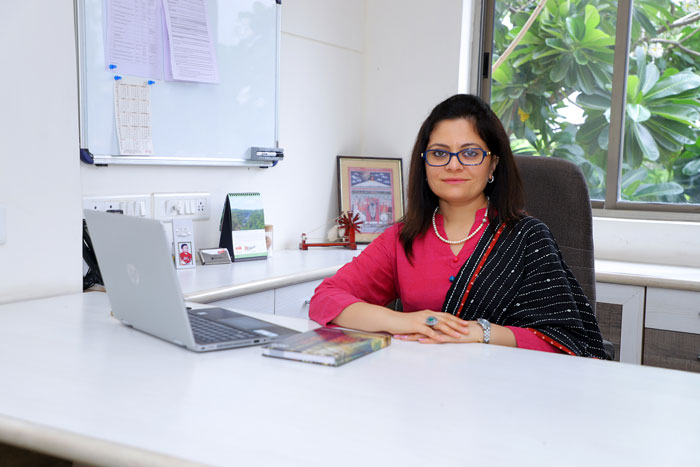
Radhika Bhagwati: We are focused on reducing carbon foot prints and sustainability aspect
Inspiron Engineering (IEPL), set up in Ahmedabad, has more than five decades of innovation, serving industries across continents. The company has four lines of Business; textile flyers-spinning excellence, hot air stenters- finishing with precision, aluminium die casting- precision in every component and engineering services –knowledge process outsourcing. For textile, the company supplies products for spinning and processing industries. Radhika Bhagwati, Executive Director, InspirOn Engineering,
What smart automation initiatives has your company implemented to enhance production efficiency?
To increase our production efficiency we have installed CNC machines at our factory like Nibbling machine, VMC, HMC etc. Along with same we are using robotics in our foundry. We are using latest software like IoT & SCADA also.
How do you assess the current state of the Indian textile machinery industry?
The spinning industry is undergoing a recession since past 3 to 3.5 years with sluggish demand while the processing industry is upbeat with good sustainable demand. Fabric Export market is affected due to current geopolitical condition and USA tariff. This has affected textile machinery business also up to some extent.
What key innovations is your company currently focusing on or developing?
We are focused on reducing carbon foot prints and sustainability aspect. Hence we are trying to improve productivity of our products with lesser / same utility consumption. At our manufacturing unit also we have installed Solar Panels to reduce carbon foot print.
What major challenges and opportunities do you foresee for the Indian textile machinery industry in the coming years?
The major challenges we see are geopolitical situation, absence of skilled labour and import of fabric especially from China, Vietnam etc.
The opportunity we see is in technical textile segment for India.
What support or policy measures do you expect from the government to help the textile machinery industry become globally competitive?
Economically driven rate of interest conducive to investment is the key enabling measure of promoting the textile industry as the biggest employment giver next to agriculture. Measures for attracting foreign investment for local manufacturing and reducing reliance on imports. Incentives for small and medium sized machinery manufacturers to upgrade their technology and adopt robotics or AI.
