


Showcasing moisture buffering capability superior to major fibre types and 96 per cent better than polyester, Merino’s unique ability to maintain a more stable next-to-skin microclimate is clear.
A major four-year research program led by North Carolina State University has revealed 100 per cent Merino wool base-layer garments deliver superior thermal comfort and performance benefits during dynamic stop-go sports like cycling, rock climbing, hiking and golf. The concept, known as dynamic breathability, reflects how well a merino wool garment adapts to changing conditions: managing heat and moisture when the body is working hard, and preserving warmth when activity slows or stops.
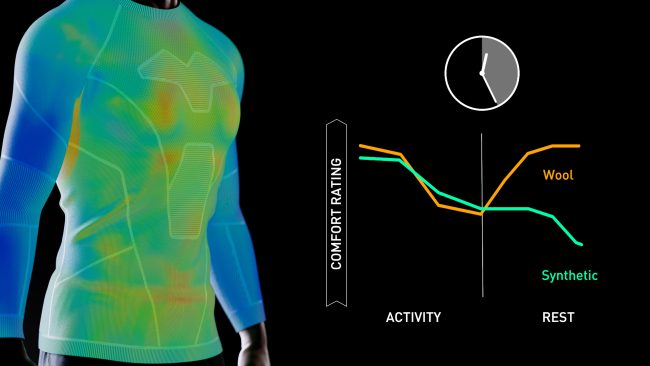
Unlike traditional synthetic performance wear, Merino wool maintains thermal equilibrium during both exertion and rest. This means wearers can avoid the negative skin sensation known as after-chill so commonly experienced in outdoor sports, and instead can be assisted in conserving energy and maintaining comfort when it matters most. With the human body continuously working to maintain 35OC skin temperature throughout stop-go sports, less work is needed in wool.
This breakthrough positions Merino wool as the natural performance fibre – no longer anchored by anecdotes, but by thorough science.
“This is about the ongoing transition from activity to recovery,†says John Roberts, Managing Director, Woolmark. “With wool’s structure designed by nature to enhance wearer performance, it responds in real time to changing physiological needs. It automatically keeps athletes close to their comfort zone, allowing 100% focus on the challenge – especially in unpredictable and high-output activities, such as cycling or rock climbing, where a base layer is often all they wear.â€
Game-changing findings:
- Better regulation inreal-world conditions: Human trials in a climate-controlled chamber found all fibres performed similarly during the activity phase, but only wool performed well across both activity and rest phases – a critical benefit in dynamic sports.
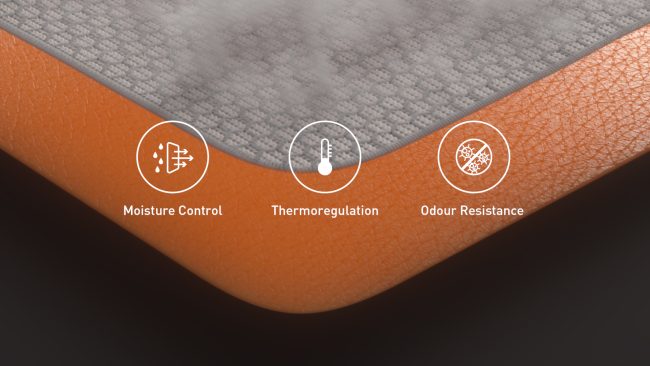
- Superior moisture management: Merino wool’s unique dual-layer – hydrophobic outside and hydrophilic inside – absorbs up to one third of its weight in moisture vapour without feeling wet, enabling efficient moisture transport and stabilising next to skin microclimate.
- Thermal advantage: Testing shows Merino wool keeps the microclimate – a critical layer between garment and skin – steadier during repeated stop-go activity, reducing the body’s effort to stay comfortable.
The researchers point out that, while wool’s thermostatic properties and capacity to regulate temperature based on ambient moisture have been well known, existing steady-state test methods overlook “the intrinsic ability of naturally hygroscopic fibres to absorb moisture from the environment … despite its profound implications3.â€
The research has already sparked interest from leading sportswear brands, seeking apparel designs that enhance wearer performance.
Backed by science, validated by athletes
The research showed that wool garments maintained greater thermal comfort and minimised after-chill – the drop in body temperature athletes often experience during resting phases. Compared to other fibre types, wool demonstrated:
- 96 per cent better moisture buffering than polyester
- 45 per cent better than cotton
- 26 per cent better than viscose
Wool’s ability to regulate the microclimate next to the skin, especially during fluctuating humidity and temperature, also contributes to improved comfort: test participants and the new test method confirmed that only wool maintained comfort throughout the sport.
“What this study shows is what athletes have been telling us anecdotally for years: that wool breathes buffers and performs better across a range of real-world conditions,†says Roberts.
A call to innovators: Design for the dynamic
The next generation of sports apparel demands performance that maximises comfort and performance by adapting to real-life conditions. Merino wool’s dynamic breathability – a fibre’s ability to adapt to environmental change – offers a clear advantage in thermal performance.
This science marks a turning point. It’s no longer about quick-dry or lightweight – it’s about sustained performance married with apparel that works with, not against, the body. For product designers, this offers new insights into how Merino wool can enhance next-to-skin comfort, reduce the need for synthetic blends, and elevate garment functionality without compromising sustainability. Smart design starts with smart fibres, and Merino wool got there first.