Close Menu
Indian Textile Journal
  • Home
  • Textile Machinery
    • Allied Equipment and Accessories
    • Automation
    • Dyeing, Processing & Finishing
    • Knitting
    • Printing
    • Spinning
    • Weaving
  • Tech Textiles
  • Sustainability
  • Resources
    • Trade Fair
    • Events
    • Videos
  • Interview & Opinion
  • Subscribe Now
  • Advertise
  • Digital
  • Apparels & Garments
  • Fibres & Raw Materials
  • Home Textiles
  • Industry Update
Facebook X (Twitter) YouTube LinkedIn
Indian Textile Journal
Epson
  • Home
  • Textile Machinery
    • Allied Equipment and Accessories
    • Automation
    • Dyeing, Processing & Finishing
    • Knitting
    • Printing
    • Spinning
    • Weaving
  • Tech Textiles
  • Sustainability
  • Resources
    • Trade Fair
    • Events
    • Videos
  • Interview & Opinion
  • Subscribe Now
  • Advertise
  • Digital
  • Apparels & Garments
  • Fibres & Raw Materials
  • Home Textiles
  • Industry Update
Indian Textile Journal
Home » Nonwoven products at forefront of Coronavirus Infection Containment
Industry Update

Nonwoven products at forefront of Coronavirus Infection Containment

By February 4, 20202 Mins Read
Share Facebook Twitter LinkedIn WhatsApp Copy Link

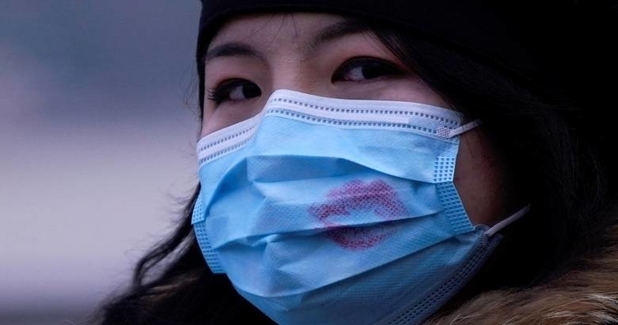
It has been a month since the information about the new strain of coronavirus became public. Front pages of broadsheet newspapers and television screens have glaring images of facemasks worn by people in China. These single-use facemasks have spunmelt and carded filter substrates and have been in demand in China since the outbreak.

With the WHO’s recent announcement that this outbreak is a global emergency, containment measures will get attention including vaccine development. So far, there have been 170 deaths in China due to this outbreak and the infection has spread to 18 countries.

According to medical experts, a primary mode of spread of this new coronavirus is by transmission through air and is airborne. Good hygiene such as hand wash and protection are recommended. Facemasks can help with the containment of airborne infection depending on their level of protection. Nonwoven wipes can be a good aide for personnel hygiene.

“Filters will play a part in slowing or stopping the spread of the coronavirus in hospitals and other building that utilize high MERV 13 and above rated filters to remove the virus which is air borne from the air.  Other filters include face masks which can stop the transmission of the virus through coughing and sneezing when other people are within a 3-6 foot radius,” stated Chris Plotz, Director of Education & Technical Affairs, a 19-year nonwoven industry veteran.

According to Cary-based Association of Nonwoven Fabrics Industry (INDA), filter and wipes substrates have 25 per cent share based on weight, collectively at the end-user level. Overall, at the producer (roll goods) level, the industry is valued at $15.5 billion. 

Nonwoven substrates play an important role in human health and environmental protection. In recent times, when toxic chemical attacks happened, FiberTect decontamination wipes marketed by Chantilly-based First Line Technology proved its usefulness. After the 2010 BP oil spill in the United States, several nonwoven wipe technologies emerged. Towelie TM an environmentally friendly nonwoven-based oil absorbent technology evolved. In hospitals, while treating infected personnel, caregivers use different types of PPEs. Nonwoven and textile products rise up to the occasion and aide with the containment of infectious disease outbreaks and environmental problems such as crude oil spills.

By: Seshadri Ramkumar, Professor, Texas Tech University, USA

Previous ArticleDonear NXG showcases its collection at National Garment Fair
Next Article Abolition of ADD on PTA, a step in the right direction: SIMA

Related Posts

Mihir V Shah: Sustainability is no longer optional it is a business imperative

July 25, 2026

Velislava Niederkofler: Manufacturers are increasingly looking for solutions that provide greater flexibility

July 25, 2026

Sanjay Chawla: We support virtually every machine model used in textile production

July 25, 2026
Recent Posts
  • The missing pavilion at Bharat Tex 2026
  • Cotton Brazil strengthens ties with Indian textile industry
  • Govt approves Rs 130.65 mn grant for 31 technical textile startups under GREAT scheme
  • Mihir V Shah: Sustainability is no longer optional it is a business imperative
  • Velislava Niederkofler: Manufacturers are increasingly looking for solutions that provide greater flexibility
  • Hans Wroblowski: Monforts helps customers produce better fabrics more efficiently
  • Sanjay Chawla: We support virtually every machine model used in textile production
  • Dr Bettina Temath: Trützschler Group combine the proven quality and technology standards of German engineering
Facebook X (Twitter) YouTube LinkedIn
  • About us
  • Contact us
  • Privacy Policy
  • Terms and Conditions

SISTER PUBLICATIONS

Construction World Equipment India Industrial Product Finder Infrastructure Today

© 2026 Indian Textile Journal. All Rights Reserved.

Type above and press Enter to search. Press Esc to cancel.