


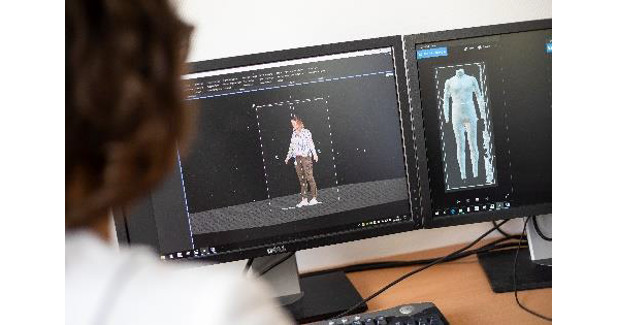
Hohenstein’s new 4D body scanner will be used in a series of research projects. Each project aims to advance knowledge and processes throughout the apparel industry. One such project, “Mobility Restrictions,†is funded by the German Federation of Industrial Research Associations (AiF). Scheduled to complete in October 2020, it will focus on body measurement changes during movement. The aim of the Hohenstein scientists is to develop a standard method of analysing how a clothing item restricts movement.
Scanning in 4D shows body shape and size for the intended customer, and thus reveals the changes in body shape during relevant motions. It shows both the impact of movement on the garment and the garment’s impact on movement. Range of motion, particularly in sportswear and workwear, can be analysed for improved function.
The 4D data with 3D visualisation shortens or eliminates prototyping time and cost. It creates better data for size chart creation and pattern making. Better patterns lead to less material and product waste. Realistic size data leads to better fitting garments. Improving fit, function and ergonomic comfort affects return rates, brand loyalty and profits.
Scanning in 4D shows body shape and size for the intended customer, and thus reveals the changes in body shape during relevant motions. It shows both the impact of movement on the garment and the garment’s impact on movement. Range of motion, particularly in sportswear and workwear, can be analysed for improved function.
The 4D data with 3D visualisation shortens or eliminates prototyping time and cost. It creates better data for size chart creation and pattern making. Better patterns lead to less material and product waste. Realistic size data leads to better fitting garments. Improving fit, function and ergonomic comfort affects return rates, brand loyalty and profits.