


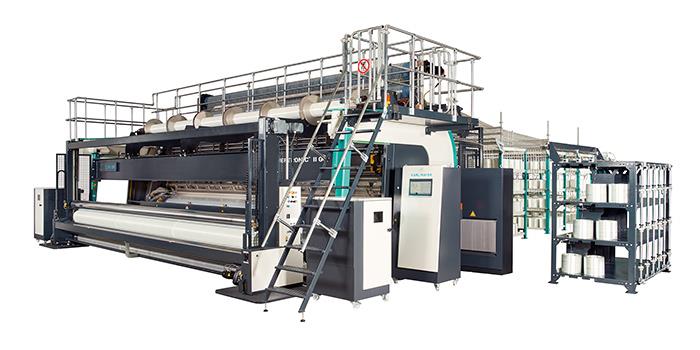
The Wefttronic II G for glass processing, the new warp knitting machine with weft-insertion, is a hit in the Chinese market. The new model is specifically designed to produce light to medium-heavy grid structures. Karl Mayer is a German textile machinery firm, which makes solutions for warp knitting and warp preparation for weaving and technical textiles.
The stable grid textiles are used as plaster grids and geogrids, as well as carriers for grinding discs – and are produced extremely efficiently on the Wefttronic II G. Geogrid fabrication is now 60 per cent more productive compared to the previous version. In addition, less expensive yarns can be processed into high-quality textiles: the textile glass fibre material can cost up to 30 per cent less than leno fabric production. The machine handles technical yarns extremely gently. Its performance is also impressive, according to a press release by Karl Mayer.
Shandong Qiyad is a company privately owned by the Ma family. They use around 750 rapier looms in total for their production and thus offer efficiency potential: Depending on product quality, between 13 and 22 rapier looms can be replaced by just one Wefttronic II G. Karl Mayer offers intensive service support to ensure a seamless changeover to new technology and to a state-of- the-art machine. The native region of Shandong Qiyad, Shanxian (Shandong Province), is well known for its plaster grid production. Around 5000 rapier looms are in operation here. The companies are all part of an association. Jan Stahr, sales manager of Karl Mayer, is already in the process of scheduling a pilot system with some of these companies.
The state-run Zibo Glasstex is better known as Shandong Fiberglass. The company has made a name for itself internationally as a manufacturer of glass fibres, rovings, and textiles. The company’s customers in this sector include manufacturers in Eastern Europe who are already operating machines by Karl Mayer. Following the successful introduction of the technology with the first Wefttronic II G, Zibo Glasstex plans to invest in further machines. The company intends to work a market with an annual volume of two billion square metres of textile glass fibre material and to achieve a significant market share. Zibo Glasstex, therefore, intends to invest in further machines in the mid-term.
In order to gain a better understanding of the possibilities relating to glass grid structure production, the new Wefttronic II G machine will be available for customer trials at Karl Mayer (China) in Changzhou from June 2020. A wide range of equipment options and patterning possibilities will be available to suit a diverse manufacturing process. The different offers can be tested as part of these processing trials. While working on the machine, customers can get a feel for how the design of the fabric influences its properties and product output, and how this correlation can be used to achieve greater efficiency. Glass grid manufacturers looking for greater efficiency can use the Wefttronic II G at Karl Mayer (China) to produce warp knitted fabrics with the same properties as their existing products and thus investigate whether there are any advantages. The performance profiles of the textile products are verified by corresponding laboratory values. The trials are competently supervised by Karl Mayer’s trained technical staff.