


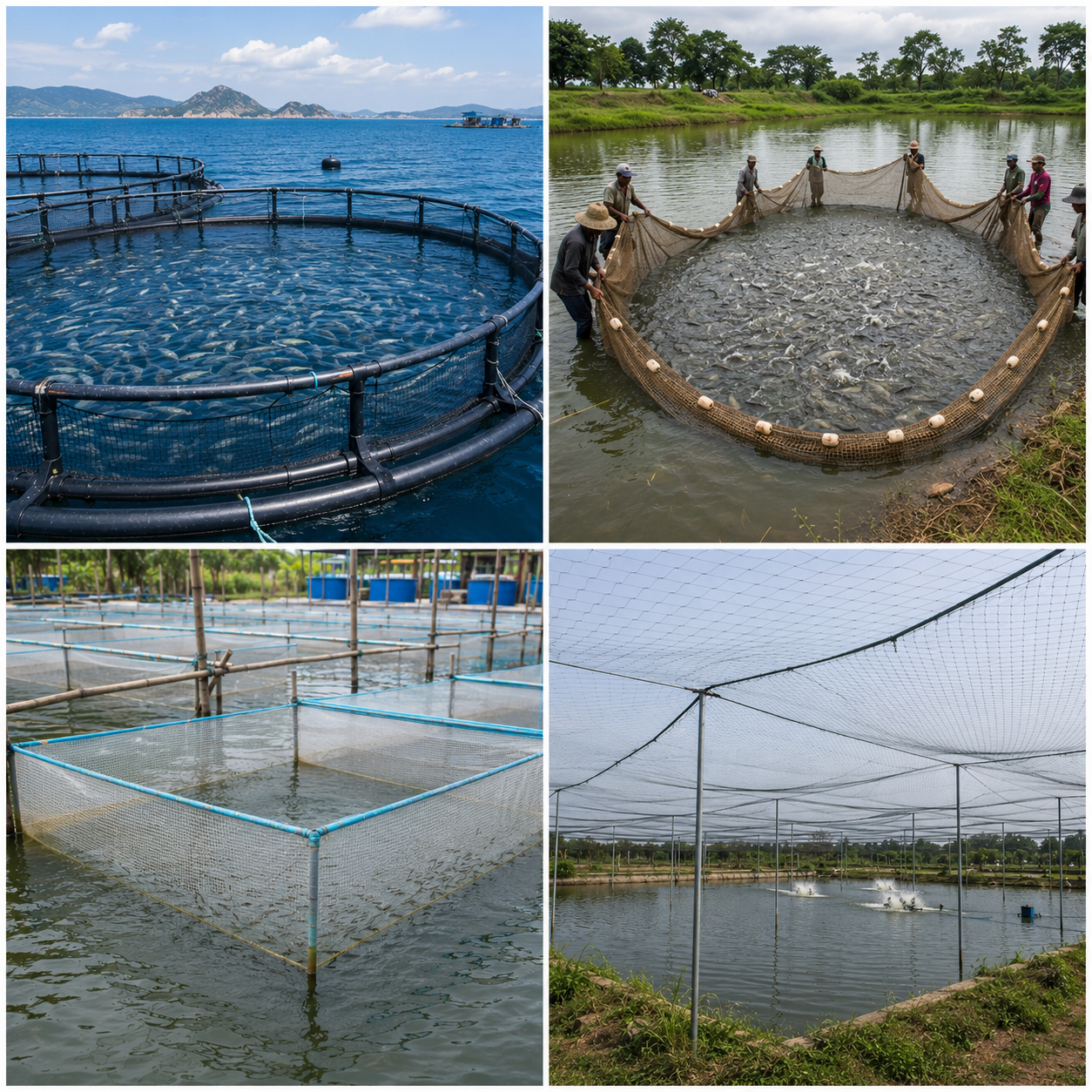
The article highlights where advanced HDPE netting and antifouling technology reduce these losses in practice.
Global aquaculture is under pressure to produce more with fewer resources, while meeting rising environmental and operational standards. Many of the industry’s largest losses fish escapes, predator attacks, biofouling, infrastructure damage trace back to one component: the netting system.
At Garware, they design netting as engineered infrastructure, not a passive containment barrier. The sections below outline where advanced HDPE netting and antifouling technology reduce these losses in practice.
Preventing fish escapes with stronger engineered netting
Fish escapes are one of the most consequential risks in aquaculture, carrying both direct financial cost and regulatory/ecological exposure. High-Density Polyethylene (HDPE) netting offers tensile strength, abrasion resistance and dimensional stability under sustained marine load
Unlike conventional materials that degrade under UV and mechanical stress over time, engineered HDPE nets hold structural integrity across the production cycle, reducing tear risk and cage failure.
Protecting fish stocks from predator attacks
Predators like seals, sea lions, birds and other marine species damage nets and cause direct production losses. Predator netting is built with reinforced mesh stiffness and cut resistance to hold as a physical barrier without adding drag or restricting cage operation
Reducing predator intrusion protects stock, limits infrastructure damage, and reduces the operational disruption of mid-cycle repairs.
Improving net performance through antifouling technology
Biofouling especially algae, barnacles and other marine growth restricts water flow, adds net weight, increases cleaning frequency and shortens service life. HDPE netting engineered to support antifouling treatment extends cleaning intervals while holding performance over longer production cycles
Fewer cleaning cycles also mean less operational downtime and lower environmental impact from repeated in-water maintenance.
Extending infrastructure life and reducing operating costs
Aquaculture infrastructure sits in continuous exposure to wave action, current, UV radiation and abrasion. Netting engineered for these conditions requires fewer replacements over its service life , lowering lifecycle cost and improving uptime.
Supporting more sustainable aquaculture operations
Independent testing tells the clearer story than marketing claims do. A 2025 SINTEF Ocean study the SMARTER project, funded by Norway’s FHF found nylon nets can release up to five times more microplastic particles than HDPE and UHMWPE nets in laboratory abrasion testing. The reason is structural, not incidental: nylon’s multifilament construction is more susceptible to abrasion than the thicker monofilaments used in HDPE
Conclusion
Losses from fish escapes, predator damage, biofouling and marine wear are, in large part, infrastructure problems and addressable through netting design. As materials and coating technology continue to develop, Garware’s HDPE netting systems are engineered to meet these operational demands directly.