Close Menu
Indian Textile Journal
  • Home
  • Market and Economy
    • Apparels & Garments
    • Fibres & Raw Materials
    • Home Textiles
    • Industry Update
  • Textile Machinery
    • Allied Equipment and Accessories
    • Automation
    • Dyeing, Processing & Finishing
    • Knitting
    • Printing
    • Spinning
    • Weaving
  • Tech Textiles
  • Sustainability
  • Resources
    • Trade Fair
    • Events
    • Videos
  • Interview & Opinion
  • Subscribe Now
  • Advertise
  • Digital
Facebook X (Twitter) YouTube LinkedIn
Indian Textile Journal
Epson
  • Home
  • Market and Economy
    • Apparels & Garments
    • Fibres & Raw Materials
    • Home Textiles
    • Industry Update
  • Textile Machinery
    • Allied Equipment and Accessories
    • Automation
    • Dyeing, Processing & Finishing
    • Knitting
    • Printing
    • Spinning
    • Weaving
  • Tech Textiles
  • Sustainability
  • Resources
    • Trade Fair
    • Events
    • Videos
  • Interview & Opinion
  • Subscribe Now
  • Advertise
  • Digital
Indian Textile Journal
Home » Do sweat-drenched textiles remain skin-friendly?
Industry Update

Do sweat-drenched textiles remain skin-friendly?

By August 16, 20172 Mins Read
Share Facebook Twitter LinkedIn WhatsApp Copy Link
As the temperature rises, human beings produce more sweat. Heat puts the body under great strain, which can reach dangerous levels — especially for the elderly. That is why the Hohenstein Institute has put together consumer guidelines with behaviour and protection measures, as well as recommendations for clothing that also take physiological findings from “body mapping” into account.
There is also the question of whether textiles convince consumers in terms of safety (skin compatibility) and performance (odour management). Hohenstein has been investigating questions regarding clothing that is worn close to the body: How skin-friendly are the textiles? And: To what extent do the textiles reduce sweat odour?
Certified test series offer textile manufacturers the opportunity to test the skin compatibility and odour management of textiles from the development phase onwards.
The skin compatibility test uses laboratory conditions to test live cells and record adverse effects of toxins that could be released from the sample material by sweat. The method allows evaluation of the danger that could be posed by damage to the skin cells.
The test is particularly suitable for:
  • Body-contact clothing, eg, sports clothing, underwear, fitness and functional textiles.
  • Textiles for sensitive persons such as those with allergies, small children, invalids and elderly persons
  • Reclaimed textiles
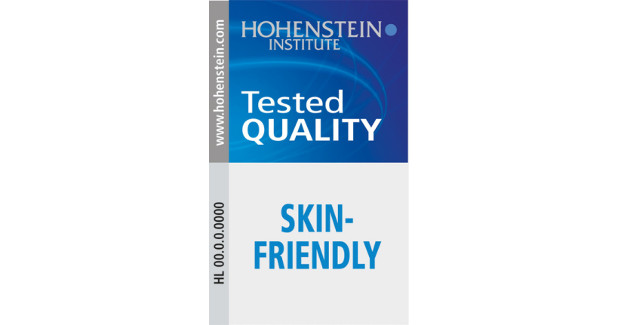
If this test is passed in conjunction with the STANDARD 100 by OEKO-TEX product test, the textile is awarded the Hohenstein Quality Label “Skin Friendly”. Textile manufacturers receive an established label that can be used effectively for supporting advertising and attests to independent checks and trade safety for the consumer.
When a person starts to perspire, this leads to the production of sweat to eliminate excess heat and regulate the body’s temperature. Textile manufacturers are working on optimising the performance of their products. As sweat is diffused through the textile, the interaction of bacteria, fluid transport and the adherence and release of odour molecules all affect the level of sweat odour in the textile. All of these areas must be taken into account to achieve optimum results in odour management.
Previous ArticleData integration for IoT & Industry 4.0
Next Article FDI in textiles doubles

Related Posts

India’s textile sector posts 2.1% growth in FY25-26

June 15, 2026

RSWM retains IND A rating as outlook turns stable

June 12, 2026

Meenakshi India reports FY26 revenue at Rs 1.58 billion

June 9, 2026
Recent Posts
  • India’s textile sector posts 2.1% growth in FY25-26
  • RSWM retains IND A rating as outlook turns stable
  • Mumbai welcomes back HGH India 2026
  • Vipul Organics teams up with OMYA for European pigment distribution
  • ITM Istanbul 2026: ColorJet’s visibility extends across the entire exhibition
  • CMAI kidswear fair sees record participation 
  • Clean energy shift may save Tamil Nadu textiles Rs 32.50 billion
  • Spykar plans pan-India offline expansion with 100 new stores in two years
Facebook X (Twitter) YouTube LinkedIn
  • About us
  • Contact us
  • Privacy Policy
  • Terms and Conditions

SISTER PUBLICATIONS

Construction World Equipment India Industrial Product Finder Infrastructure Today

© 2026 Indian Textile Journal. All Rights Reserved.

Type above and press Enter to search. Press Esc to cancel.