Close Menu
Indian Textile Journal
  • Home
  • Textile Machinery
    • Allied Equipment and Accessories
    • Automation
    • Dyeing, Processing & Finishing
    • Knitting
    • Printing
    • Spinning
    • Weaving
  • Tech Textiles
  • Sustainability
  • Resources
    • Trade Fair
    • Events
    • Videos
  • Interview & Opinion
  • Subscribe Now
  • Advertise
  • Digital
  • Apparels & Garments
  • Fibres & Raw Materials
  • Home Textiles
  • Industry Update
Facebook X (Twitter) YouTube LinkedIn
Indian Textile Journal
Epson
  • Home
  • Textile Machinery
    • Allied Equipment and Accessories
    • Automation
    • Dyeing, Processing & Finishing
    • Knitting
    • Printing
    • Spinning
    • Weaving
  • Tech Textiles
  • Sustainability
  • Resources
    • Trade Fair
    • Events
    • Videos
  • Interview & Opinion
  • Subscribe Now
  • Advertise
  • Digital
  • Apparels & Garments
  • Fibres & Raw Materials
  • Home Textiles
  • Industry Update
Indian Textile Journal
Home » Bangladesh Textile Industry May Shift to Tiruppur Due to Crisis in Dhaka
Industry Update

Bangladesh Textile Industry May Shift to Tiruppur Due to Crisis in Dhaka

By August 6, 20242 Mins Read
Share Facebook Twitter LinkedIn WhatsApp Copy Link

Indian-owned manufacturing units in Bangladesh are also expected to relocate to India.

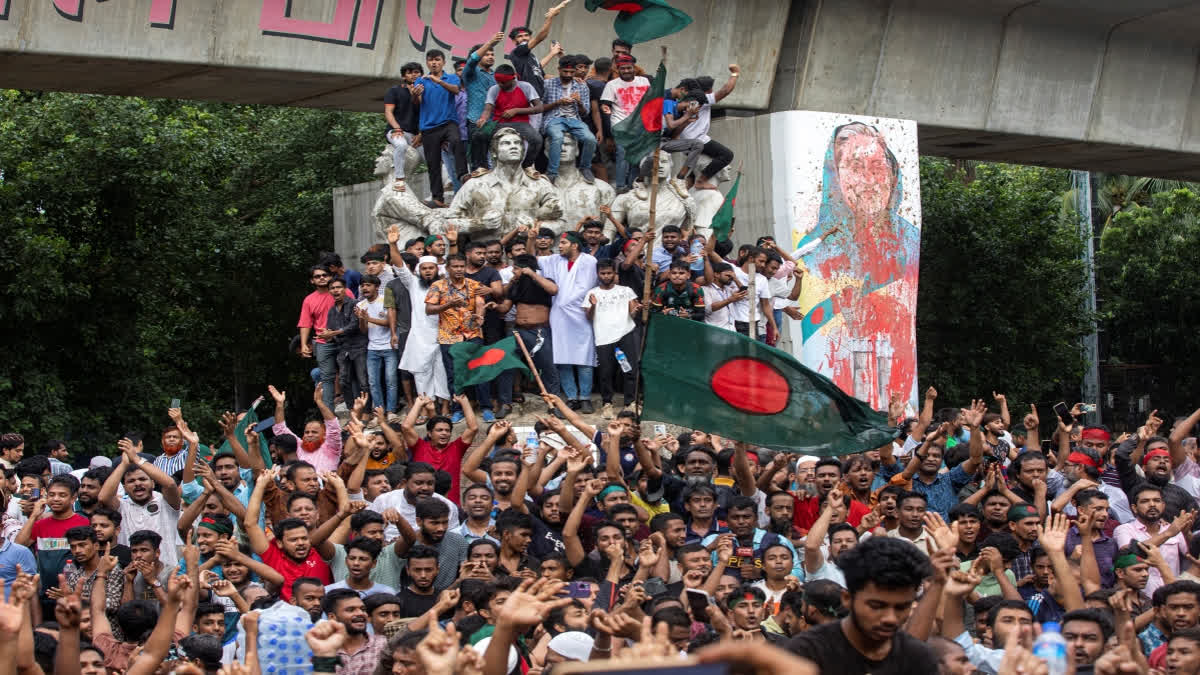
As the crisis in Bangladesh deepens, the textile sector, which accounts for a significant portion of its exports, is expected to be adversely affected, with international buyers likely shifting their focus to alternative markets such as India. Industry experts predict that if 10-11 per cent of Bangladesh’s exports are redirected to Indian hubs like Tiruppur, India could see an additional $300 to $400 million in business per month.

KM Subramanian, President of the Tiruppur Exporters’ Association, indicated that orders might start coming to Tiruppur and that this financial year’s orders are anticipated to be at least 10 per cent higher than those of the previous year. Bangladesh’s monthly apparel exports amount to $3.5 to $3.8 billion, with a substantial double-digit share in the European Union and the United Kingdom, and a 10 per cent market share in the United States. This crisis comes as Bangladesh was projected to surpass $50 billion in annual exports in 2024, compared to approximately $47 billion in 2023.

Furthermore, Indian-owned manufacturing units in Bangladesh are also expected to relocate to India. Trade-policy analyst S Chandrasekaran noted that about 25 percent of these units are Indian-owned, including companies such as Shahi Exports, House of Pearl Fashions, Jay Jay Mills, TCNS, Gokaldas Images, and Ambattur Clothing.

News source: Business Standard

Previous ArticlePolicy countermeasures offer respite to poly yarn makers this fiscal
Next Article Myntra celebrates sibling relationships with the launch of a new ad campaign

Related Posts

VIRGIO names Hansa Nigam as Chief Marketing Officer

July 7, 2026

Global trade and technical collaboration in textile sector                

July 7, 2026

Italian textile machinery leads sector revival through innovation and sustainability

July 2, 2026
Recent Posts
  • Cotton research attracting high achieving undergraduates
  • Yamuna Machine and MANTRA to develop indigenous geo-grid coating line
  • VIRGIO names Hansa Nigam as Chief Marketing Officer
  • Global trade and technical collaboration in textile sector                
  • Expanding the horizons of premium stretch warp knitting with KARL MAYER’s HKS 2-SE
  • Italian textile machinery leads sector revival through innovation and sustainability
  • Weave The Future launches national innovation challenge to tackle textile waste
  • Indian cotton sector in play
Facebook X (Twitter) YouTube LinkedIn
  • About us
  • Contact us
  • Privacy Policy
  • Terms and Conditions

SISTER PUBLICATIONS

Construction World Equipment India Industrial Product Finder Infrastructure Today

© 2026 Indian Textile Journal. All Rights Reserved.

Type above and press Enter to search. Press Esc to cancel.