Close Menu
Indian Textile Journal
  • Home
  • Textile Machinery
    • Allied Equipment and Accessories
    • Automation
    • Dyeing, Processing & Finishing
    • Knitting
    • Printing
    • Spinning
    • Weaving
  • Tech Textiles
  • Sustainability
  • Resources
    • Trade Fair
    • Events
    • Videos
  • Interview & Opinion
  • Subscribe Now
  • Advertise
  • Digital
  • Apparels & Garments
  • Fibres & Raw Materials
  • Home Textiles
  • Industry Update
Facebook X (Twitter) YouTube LinkedIn
Indian Textile Journal
Epson
  • Home
  • Textile Machinery
    • Allied Equipment and Accessories
    • Automation
    • Dyeing, Processing & Finishing
    • Knitting
    • Printing
    • Spinning
    • Weaving
  • Tech Textiles
  • Sustainability
  • Resources
    • Trade Fair
    • Events
    • Videos
  • Interview & Opinion
  • Subscribe Now
  • Advertise
  • Digital
  • Apparels & Garments
  • Fibres & Raw Materials
  • Home Textiles
  • Industry Update
Indian Textile Journal
Home » Bangla spinners seek warehousing facility
Apparels & Garments

Bangla spinners seek warehousing facility

By June 1, 20152 Mins Read
Share Facebook Twitter LinkedIn WhatsApp Copy Link

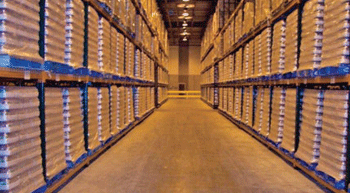
Bangladeshi spinners demand introduction of warehousing facility for cotton trade to reduce lead-time and ensure the timely sourcing of the fibre. Under the facility, merchants from different countries will store cotton at Chittagong port warehouses to sell out their cotton to the local cotton importers and spinners. The merchants can also re-export the cotton from the port to other destinations. The system is already in use by the Chinese government, which is the largest importer of cotton. Such warehouses will allow spinners to buy cotton at their doorstep and negate the huge risks that come with the long shipment times from origin, said Monowarul Hoque, managing director of Ashik Composite Textile Mills, a cotton importer and spinner.

For local spinners, the time lag between an actual purchase and collection varies from two weeks to 12 weeks, excluding the shipment delays. It takes two weeks to get cotton from India and Pakistan and up to 12 weeks from the US, and the West African and Latin American countries, excluding the shipment delays. This lag exposes the spinners to huge market volatility, as cotton prices tend to fluctuate drastically, the local spinners do not have the means to hedge such risks without the access to futures markets.

Previous ArticleIndia is a huge market for Avocet products
Next Article Taiwan eyes Indian tech textile market

Related Posts

CMAI’s 83rd National Garment Fair opens in Mumbai, uniting 25,000 retailers

July 13, 2026

Dollar Protect’s Rainguard collection blends monsoon protection with style

July 13, 2026

Call It Spring bolsters India presence with new 100% vegan collection

July 13, 2026
Recent Posts
  • Union Minister of State for Textiles Pabitra Margherita honors winners at CITI Awards 2026
  • Giriraj Singh launches CMAI and GATS’ the ‘India Textiles & Apparel CXO Blueprint 2030’
  • LMW receives strong response at Bharat Tex 2026
  • D.BADAMI debuts high-end collection at Bharat Tex 2026
  • DC Handlooms opens ‘Weave The Future 4.0’ at Dilli Haat
  • GHCL Textiles unveils premium yarn and fabric portfolio at Bharat Tex 2026
  • eVent Fabrics and PELLIOT partner to advance eco-conscious outdoor solutions
  • Trident Group accelerates growth at Bharat Tex 2026 through innovation and significant R&D commitment
Facebook X (Twitter) YouTube LinkedIn
  • About us
  • Contact us
  • Privacy Policy
  • Terms and Conditions

SISTER PUBLICATIONS

Construction World Equipment India Industrial Product Finder Infrastructure Today

© 2026 Indian Textile Journal. All Rights Reserved.

Type above and press Enter to search. Press Esc to cancel.