


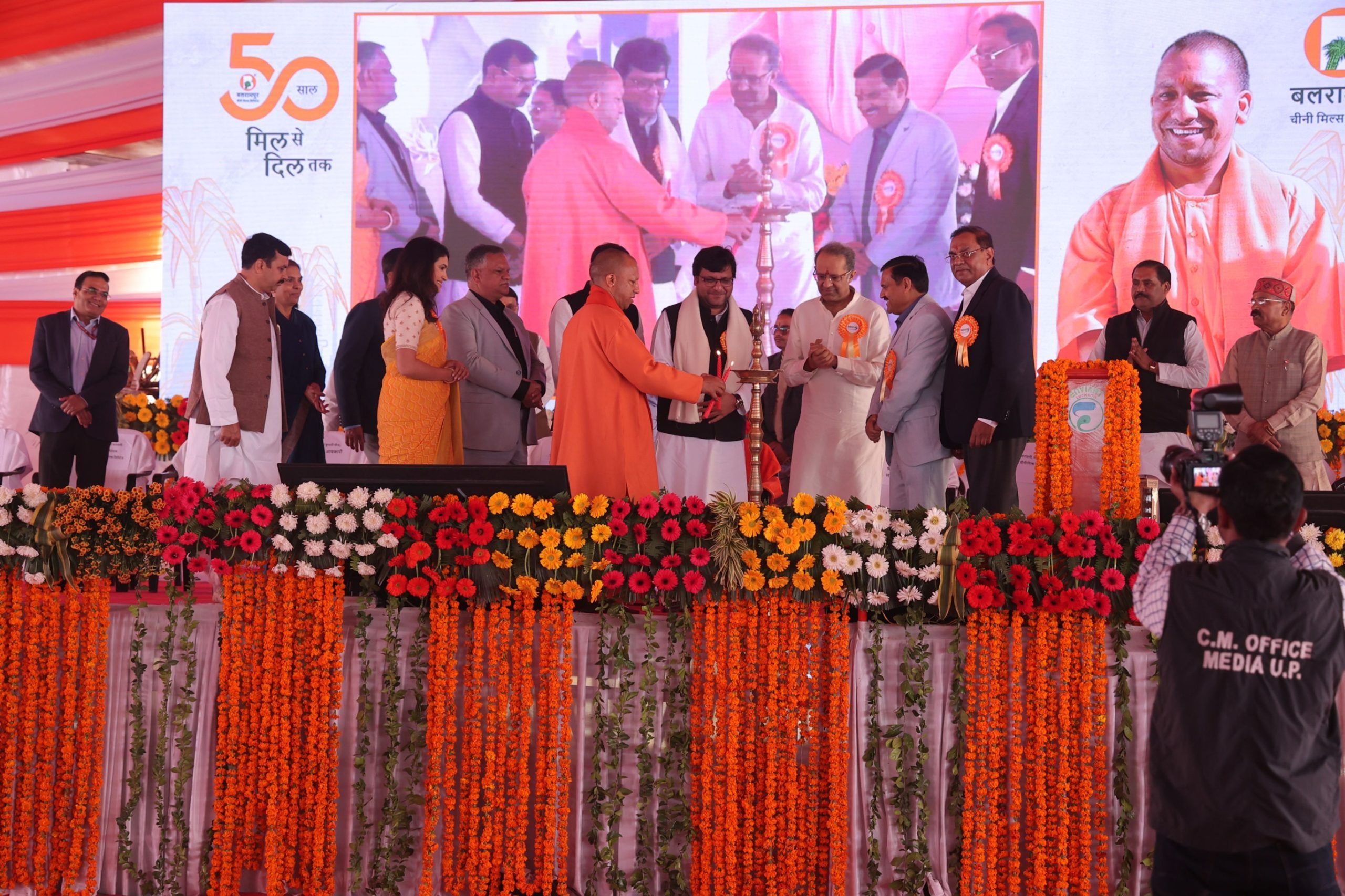
With a total investment of Rs 28.50 billion, the facility will run entirely on renewable energy, making it the world’s first PLA plant with a fully sustainable production process.
Balrampur Chini Mills (BCML) has laid the foundation stone for India’s first industrial-scale Polylactic Acid (PLA) biopolymer manufacturing facility in Kumbhi, Uttar Pradesh. The ceremony was held in the presence of Yogi Adityanath, Chief Minister, Uttar Pradesh. This landmark project positions Uttar Pradesh as a leader in sustainable industrial growth.
Strategically located next to BCML’s sugar factory in Kumbhi, the plant will integrate cutting-edge global technology and enhance resource efficiency. With a total investment of Rs 28.50 billion, the facility will run entirely on renewable energy, making it the world’s first PLA plant with a fully sustainable production process.
With an annual capacity of 80,000 tonne, the PLA produced will be 100 per cent bio-based and compostable, offering a viable alternative to single-use plastics such as straws, cutlery, food trays, and bottles. The plant’s production process emits sixty-eight per cent less greenhouse gases than conventional plastics. Additionally, PLA waste can be processed to generate biogas and fertiliser, further promoting a circular economy.
The project is expected to generate 225 direct jobs in manufacturing, R&D, and operations, along with over 2,000 indirect jobs across the value chain. BCML will also collaborate with technical institutions to develop skills in sustainable industries, particularly empowering women and young professionals.
Economically, the plant will strengthen Uttar Pradesh’s position as a biopolymer hub, attracting both domestic and foreign investment while reducing India’s reliance on imported plastics. It aligns with the Atmanirbhar Bharat and Swachh Bharat initiatives, reinforcing India’s leadership in green manufacturing.
Vivek Saraogi, Chairman & Managing Director, Balrampur Chini Mills, stated, “We are deeply honoured as the ground-breaking ceremony of this project commenced in the auspicious presence of Hon’ble CM Shri Yogi Adityanath Ji. The establishment of India’s first PLA biopolymer manufacturing facility represents a monumental leap in our nation’s industrial sustainability journey. By producing PLA at industrial scale, we are not only reducing dependence on fossil fuels but also setting new benchmarks for responsible manufacturing. I extend my heartfelt congratulations to our team for achieving this significant milestone. With this biggest investment in the company’s 50 years legacy, Balrampur Chini Mills Limited continues to pave the way for an eco-friendly, self-reliant India, positioning the country as a global leader in biopolymer manufacturing.â€
Avantika Saraogi, Executive Director, Balrampur Chini Mills, added, “This plant is a testament to the synergy between progressive policy frameworks and private sector innovation. This plant will augment in positioning Uttar Pradesh as a leader in biopolymer production, boosting industrial growth and making India a key player in the bio-based economy, globally by tapping into the rich biomass reserves of the country and paving the way for its emergence as a key export hub. By attracting both domestic and foreign investments, we can meaningfully contribute in strengthening India’s circular economy and reduce reliance on plastic imports.â€